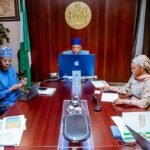
The National Economic Council (NEC) has endorsed a 90-day economic action plan aimed at easing the cost of living, improving food affordability and strengthening economic recovery across Nigeria. The plan, proposed by the Federal Ministry of Finance, seeks to consolidate the gains of President Bola Tinubu’s economic reforms through targeted interventions, improved coordination between federal and state governments, and the removal of barriers to investment. According to Channels Television, the endorsement followed a presentation by the Minister of Finance and Coordinating Minister of the Economy, Taiwo Oyedele, at the council’s 161st meeting, held virtually on Thursday and chaired by Vice President Kashim Shettima. The plan identifies five priority areas: food affordability, tax harmonisation, completion of high-impact projects, resolution of investment bottlenecks and regulated household support. NEC also approved a national dashboard to monitor ongoing projects across the country, with an emphasis on transparency, accountability and accurate reporting on the use of proceeds from fuel subsidy removal. NEC Targets Lower Inflation, Interest Rates Presenting the economic outlook, Oyedele said reducing headline inflation and interest rates to single digits by 2027 remained key policy objectives. He stressed the need for coordinated implementation across federal and state institutions to ensure that macroeconomic improvements translate into tangible benefits for households and businesses. The presentation also highlighted targeted interventions, improved fiscal coordination and the removal of barriers to investment as necessary measures to support economic recovery. Shettima urged state governors and relevant institutions to ensure that the government’s economic reforms result in better living conditions for Nigerians. He identified affordable transportation, improved healthcare, employment opportunities and greater financial security as areas requiring urgent attention. “The first dividend of prosperity should be the confidence to plan a life. Our task is to make such confidence less dependent on fortune,” the Vice President said. Shettima Tasks States on Affordable Transportation The Vice President called on state governments to support affordable transportation systems, particularly through the National Compressed Natural Gas (CNG) Bus Initiative. He said the success of the programme should be measured by its affordability and accessibility to commuters rather than the number of vehicles deployed. “The cost of reaching a livelihood should never consume the livelihood itself,” Shettima said, adding that public transport policies must prioritise passengers’ experiences and reduce the financial burden of commuting. He also urged governors to contribute local knowledge to national policy decisions, stressing that effective implementation required clear responsibilities and practical agreements among the different tiers of government. NEC subsequently resolved to establish a joint financing framework between the Federal Government and state governments to accelerate the deployment of CNG and electric vehicles. The council directed relevant authorities to engage transport unions and operators to ensure that savings from alternative-energy vehicles are passed on to commuters through lower fares. A committee will be constituted to coordinate the financing arrangement, engage stakeholders and develop measures to make the programme affordable, accessible and sustainable. NEC Reviews Ebola Preparedness At the meeting, NEC also received an update from the Minister of Health and Social Welfare, Professor Muhammad Ali Pate, on the reported Ebola outbreak in the Federal Capital Territory. Pate sought to reassure council members that Nigeria had the institutional capacity to contain the situation and prevent a major public health crisis. He outlined response measures covering coordination and governance, screening at points of entry, laboratory testing, the provision of essential medical kits and personal protective equipment, and public communication. The minister disclosed that 21 state governments had updated their response plans, while urging the remaining 15 states to establish appropriate preparedness and response mechanisms without delay. NEC Strengthens Polio Eradication Efforts The council also considered the report of its Ad Hoc Committee on Polio Eradication, chaired by Gombe State Governor Muhammadu Inuwa Yahaya. It directed states to conduct post-campaign reviews, particularly in communities where children were missed during immunisation exercises and areas affected by insecurity. NEC emphasised the need for timely release of counterpart funds, stronger routine immunisation programmes and improved coordination with security agencies. It also called for closer cooperation among states, alongside sustained commitment from governors, traditional rulers and security agencies, to improve immunisation coverage and eradicate polio. NEC Seeks Growth in Livestock Sector On livestock development, the council received a report from its ad hoc committee chaired by Kebbi State Governor Nasir Idris. NEC acknowledged the sector’s potential to stimulate economic growth, create jobs and improve livelihoods across the country. The council noted that all states had expressed interest in supporting the Federal Government’s livestock development initiatives. It resolved to strengthen collaboration between federal and state governments to accelerate reforms and unlock the sector’s economic potential. The decisions form part of NEC’s broader efforts to improve living standards, strengthen public services and ensure that economic reforms deliver measurable benefits to Nigerians.
Read more