/ Nov 18, 2026
/ Nov 18, 2026

Education

  • All
  • Africa
  • Agriculture
  • Aviation
  • Banking
  • Business
  • Crime
  • Economy
  • Education
  • Entertainment
  • fashion
  • Health
  • Home
  • International
  • Judiciary
  • lifestyle
  • Metro
  • News
  • Nigeria
  • Opinions
  • Politics
  • Religion
  • Security
  • Sport
  • sports
  • Tech
  • Technology
  • World News
Prev
123

Trending

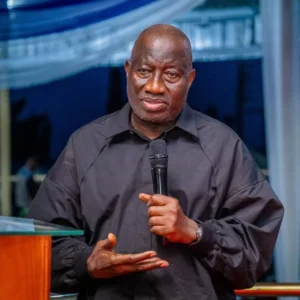
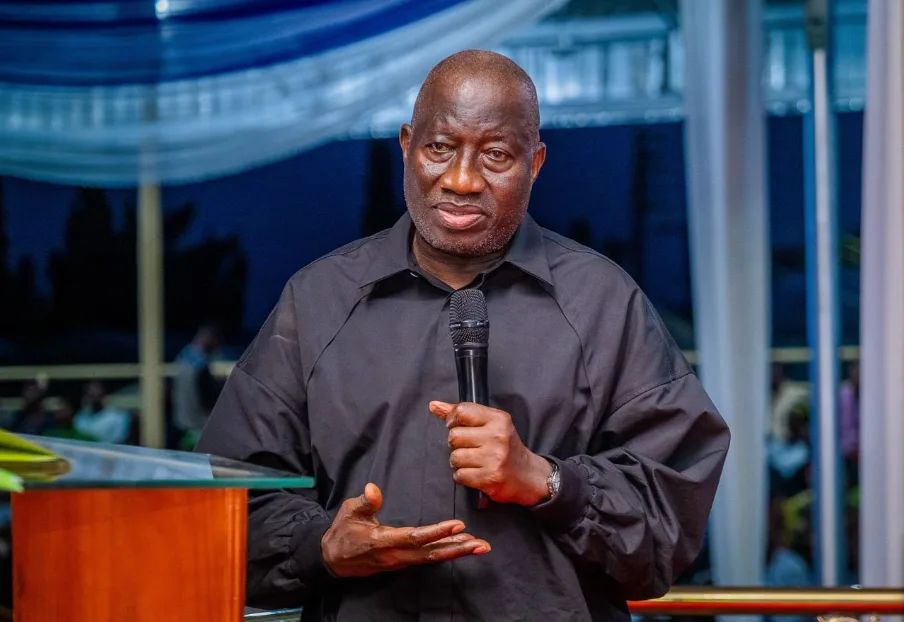
Former President Goodluck Jonathan speaking at the 2027 Peace and Security Conference in Abuja, where he warned against political violence ahead of Nigeria's general elections.

2027 elections: Jonathan warns of possible post-election violence

Former President Goodluck Jonathan has warned that growing political intolerance, campaign-related violence and inflammatory rhetoric could trigger a post-election crisis in Nigeria ahead of the 2027 general elections.   Jonathan raised the concern on Tuesday at the 2027 Peace and Security Conference in Abuja, organised by the Goodluck Jonathan Foundation. The conference, themed ‘Safeguarding Peace and Strengthening Social Cohesion in a Competitive Political Environment’, brought together political leaders, security officials and other stakeholders to discuss threats to national stability. The former President said he had received growing concerns from Nigerians and international observers about the country’s political direction, warning that the possibility of violence after the 2027 elections should not be ignored. He identified political intolerance, thuggery, the exploitation of young people for violence and attacks on political opponents as developments requiring urgent attention. According to Jonathan, political actors are increasingly unwilling to accommodate opposing views or recognise the right of others to contest for political power. His warning comes amid a series of reported attacks involving political candidates, supporters and campaign convoys across the country. On November 13, 2026, the convoy of President Bola Tinubu reportedly came under attack shortly after he observed Jumu’ah prayers in Garki, Abuja. Two days later, suspected thugs attacked the campaign convoy of Nigeria Democratic Congress vice-presidential candidate, Rabiu Kwankwaso, and Kano governorship candidate Aminu Gwarzo in Bichi Local Government Area, Kano State. Earlier in November, the convoy of NDC presidential candidate Peter Obi was attacked in Calabar, Cross River State. Some of his supporters were also reportedly assaulted during a town hall meeting in Lagos. Supporters of African Democratic Congress presidential hopeful Atiku Abubakar have equally reported attacks in Edo, Kaduna and Cross River states. Similarly, African Action Congress presidential candidate Omoyele Sowore and his entourage were attacked at a restaurant in Ado-Ekiti, Ekiti State, on October 30. Jonathan Raises Concerns Over Judiciary The former President also expressed concern over conflicting judicial pronouncements, particularly decisions by courts of coordinate jurisdiction. He warned that contradictory rulings on similar matters could undermine public confidence in the judiciary and encourage citizens to take the law into their own hands. Jonathan stressed the importance of protecting the independence and integrity of the judiciary, noting that declining trust in democratic institutions could create unnecessary tension. He also cautioned against the use of ethnic and religious sentiments during the 2027 elections. Calling for reforms in Nigeria’s political recruitment process, Jonathan urged voters to prioritise competence, credibility and national interest over prejudice and personal ambition. He said Nigeria needed leaders capable of uniting the country and advancing national development. Sambo, Defence Minister Urge Political Restraint Former Vice-President Namadi Sambo, who chaired the conference, urged political leaders to treat political differences as opportunities for constructive engagement rather than sources of division. Sambo advocated inclusive governance, responsible leadership and respect for the rule of law, stressing the need to build bridges across ethnic, religious and political differences. He expressed optimism that discussions at the conference would strengthen public trust, democratic institutions and national unity. Minister of Defence, General Christopher Musa (retd.), also warned against allowing political competition to fuel insecurity and national disunity. Represented by his Special Adviser on Strategic Communications, Mercy Bala, the minister urged political parties and candidates to prioritise peace, restraint and responsible political engagement. He also warned against inflammatory language, hate speech, misinformation and divisive narratives capable of deepening existing divisions. INEC Threatens Prosecution Over Electoral Violence The Chairman of the Independent National Electoral Commission, Professor Joash Amupitan, condemned reported attacks on campaign convoys and political supporters. Represented by INEC National Commissioner May Agbamuche-Mbu, Amupitan warned political actors, sponsors and supporters against violence and intimidation, declaring that perpetrators would face prosecution. He referenced Sections 96 and 97 of the Electoral Act 2026, which prohibit abusive and inflammatory campaign language, the deployment of thugs at political rallies and the use of force to intimidate voters or opponents. The INEC chairman also disclosed that the law increased penalties for electoral offences, prescribing fines of up to ₦5m or 12 months’ imprisonment for individuals and up to ₦10m for political parties. He urged political parties to discipline their supporters and use established platforms for dialogue to resolve disagreements. Foundation Raises Concerns Over Voter Confidence Meanwhile, former President of the ECOWAS Commission, Omar Touray, identified public trust in democratic institutions and electoral processes as essential to maintaining political stability. He urged political parties to pursue electoral grievances through constitutional and legal channels rather than intimidation or violence. Executive Director of the Goodluck Jonathan Foundation, Ann Iyonu, also warned that insecurity, economic pressures and declining public confidence could heighten political tensions ahead of the 2027 elections. Citing an Afrobarometer survey, she said fewer than four in 10 Nigerians believed the 2027 elections would be free and fair. Iyonu identified vote buying, electoral violence, violations of electoral laws and manipulation of results as some of the concerns troubling voters. She warned that a disputed or violence-marred election in Nigeria could have consequences beyond the country’s borders, potentially affecting democratic stability, regional security and economic activities across West Africa. The stakeholders called for credible elections, responsible political conduct and stronger democratic institutions to safeguard peace and national unity.
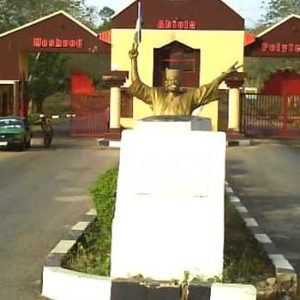
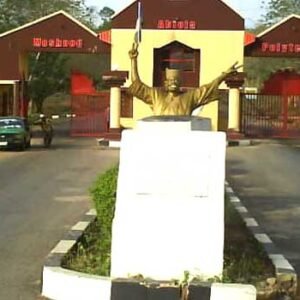
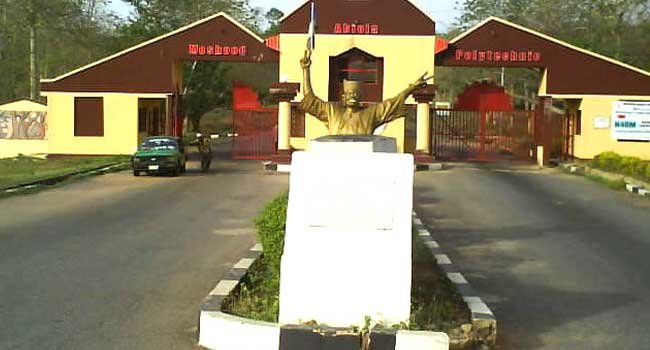
Deserted classrooms at Moshood Abiola Polytechnic, Abeokuta, following an indefinite strike by lecturers over unresolved welfare demands.

MAPOL indefinite strike: Lecturers shut down academic activities

Academic activities have been paralysed at the Ogun State-owned Moshood Abiola Polytechnic (MAPOLY), Abeokuta, following an indefinite strike by lecturers and other union members over unresolved welfare demands.   Members of the Academic Staff Union of Polytechnics (ASUP) commenced the industrial action on November 11, 2026, after the expiration of a 15-day ultimatum issued to state governments to address their outstanding demands. The union says its decision to embark on the strike followed the failure of the Ogun State Government to implement agreed welfare packages and other outstanding entitlements. Speaking on the development, ASUP Chairman, Adeleke Amos-Adebayo, listed the union’s demands to include the payment of Earned Academic Allowances, a review of monthly subventions to tertiary institutions and the implementation of the Consolidated Academic Staff Allowance. He explained that the union had written several letters to the state government, including one delivered to Governor Dapo Abiodun on August 5, followed by another reminder on September 21. Amos-Adebayo said the National Executive Council of ASUP, at its meeting in Abuja on October 22, directed state chapters to issue a 15-day ultimatum to their respective state governments. According to him, the ultimatum took effect on October 27, giving the governments until November 11 to address the union’s demands. He said the Ogun State chapter subsequently commenced the strike following approval from the union’s zonal and national leadership. The chairman appealed to Governor Abiodun to intervene in the dispute, expressing hope that the state government would address the outstanding demands to enable lecturers to return to the classrooms. He also maintained that the union was not interested in prolonging the industrial action, stressing that lecturers were willing to resume academic activities once their demands were met. Students Lament Disruption The strike has left classrooms deserted and academic activities grounded, with students expressing concern over the disruption of their academic programmes. One of the students, Tope Adeleke, said the industrial action would delay academic activities and undermine students’ motivation, particularly as the institution had resumed early and appeared to be making progress under its new leadership. He appealed to the state government and the lecturers to resolve their differences to enable students to continue their studies without further disruption. Other students also called on the relevant authorities to return to the negotiating table and find an amicable solution to the dispute. Meanwhile, efforts to obtain the reaction of the institution’s management proved unsuccessful, as the Rector, Dr Babatunde Jolaoso, was reportedly unavailable for an interview. The lecturers have maintained that they are ready to return to work once their demands are addressed by the institution’s management and the Ogun State Government.
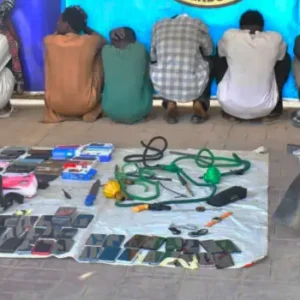
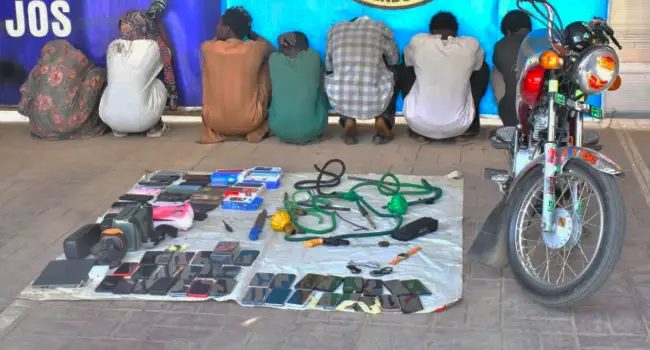
Nigerian Army officials present seven suspected criminals and recovered items, including 38 mobile phones and a Mercedes-Benz, in Jos, Plateau State.

Plateau army arrests seven suspects, recovers 38 phones

Troops of the Nigerian Army under Operation Enduring Peace have arrested seven suspected criminals and recovered 38 mobile phones, a Mercedes-Benz E350, a motorcycle and other items during separate security operations in Jos North Local Government Area of Plateau State.   The arrests followed intelligence-led operations conducted on November 6 and 10, 2026, targeting armed robbery, phone snatching and other criminal activities. The spokesperson for the Joint Task Force, Captain Chinonso Oteh, disclosed the development while presenting the suspects at the task force headquarters in Jos. According to Oteh, the first operation began after troops received a report of a phone-snatching incident involving a gunman. Investigations reportedly traced the location of the stolen phone to Prime House Hotel along Ring Road in Jos North. A subsequent raid on the hotel led to the arrest of five suspects. Items recovered included 26 mobile phones, 27 phone pouches, three MP3 devices, two earpods, an HP laptop, a dagger, four power banks and a Mercedes-Benz E350 with registration number Plateau BBK-01NB. The task force said a further search of the suspects’ vehicle at the Sector 1 headquarters yielded 12 additional mobile phones, bringing the total number recovered to 38. In a separate operation on November 10, troops deployed at Naraguta, working alongside members of the Vigilante Group of Nigeria, arrested two additional suspects during a routine patrol. The suspects were reportedly found with a suspected stolen Boxer motorcycle and a toy pistol. The seven suspects and recovered items will be handed over to the Plateau State Police Command for further investigation and possible prosecution. The Commander of Operation Enduring Peace, Major General Maxwell Dangana, reaffirmed the task force’s commitment to tackling criminal activities and maintaining peace across its operational area. He said the military would continue to deploy intelligence-driven operations and strengthen collaboration with other security agencies and local vigilante groups. Dangana also urged residents to remain vigilant and provide security agencies with credible and timely information to support efforts to achieve lasting peace in Plateau State.
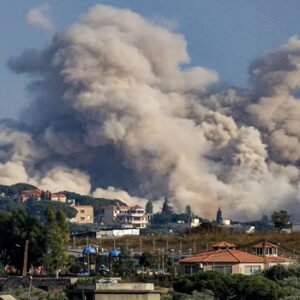
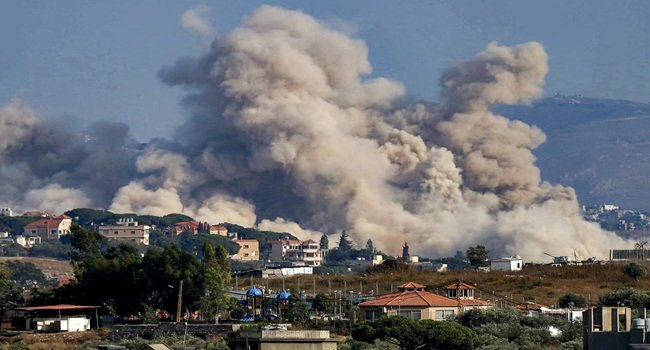
Smoke rises over a village in southern Lebanon following an Israeli-controlled explosion amid escalating Middle East tensions.

Gulf nations repel attacks after US strikes Iranian island

Bahrain and Kuwait have reported repelling aerial attacks following US military strikes on Iran’s Qeshm Island, raising fresh tensions across the Gulf region.   The attacks came as the Middle East conflict, which began with US-Israeli strikes on Iran in late February, continued to spread to neighbouring countries hosting American military installations. Iran’s military said on Wednesday that its drones targeted Patriot air defence systems and drone and missile launch platforms at Ali Al-Salem Air Base in Kuwait. The statement, broadcast by Iranian state television IRIB, described the installations as belonging to the US military. Kuwait’s military also confirmed that its air defence systems were responding to hostile drone threats, urging residents to follow security and safety instructions. Meanwhile, Bahrain said its air defences intercepted Iranian attacks early Wednesday, a day after Tehran’s Islamic Revolutionary Guard Corps (IRGC) claimed responsibility for an attack on a US-operated military facility. US Confirms Strike On Iranian Island The latest escalation followed US military strikes on Qeshm Island, located in the strategically important Strait of Hormuz. Iran’s official IRNA news agency quoted a regional official as saying the strikes caused no serious damage. However, an American official told AFP that US fighter jets had used precision munitions to target an IRGC missile launch site on the island. The official, who spoke anonymously, said the operation was carried out in response to Iranian aggression against US personnel and assets. The United States and Iran remain locked in a standoff over the Strait of Hormuz, a critical global shipping route. Washington has been deploying military escorts for vessels passing through the waterway despite Tehran’s attempts to restrict access. Elsewhere, the Saudi-led coalition fighting Yemen’s Houthi rebels said it intercepted a cruise missile launched towards the Riyadh area. Bahrain Reports Iranian Drone Attacks Explosions were heard across Bahrain’s capital on Tuesday, prompting mobile phone alerts warning residents to seek safety. Bahrain’s armed forces said they had intercepted and destroyed several Iranian aerial attacks before they could reach their intended targets. However, Iran’s Revolutionary Guards said their combat drones had carried out a precision operation against a radar system operated by American forces at Sheikh Isa Air Base. The Guards described the operation as retaliation for alleged repeated violations of Iranian airspace by US military drones. They also claimed to have intercepted and captured an American drone south of Qeshm Island. Bahrain hosts the US Navy’s Fifth Fleet and was among the Gulf countries heavily targeted earlier in the conflict. Although attacks had reduced for several weeks, Iranian drone strikes reportedly resumed on Friday and Sunday. Trump Raises Alleged Iranian Bomb Plot The escalating conflict has also been accompanied by allegations of an Iranian plot involving a so-called dirty bomb targeting Washington. US President Donald Trump said on Tuesday that he was taking the reports seriously. CNN, citing seven unnamed US officials, reported that Iran was allegedly exploring ways to target senior American administration figures with a bomb containing chemical or radioactive material. However, the officials reportedly stopped short of claiming that Iran intended to carry out such an attack. Trump warned that Iran would face unprecedented consequences if the threat proved genuine. Iranian Foreign Minister Abbas Araghchi dismissed the allegations, describing them as “Iraq War-style propaganda”. US Strengthens Military Presence In Gulf The United States has moved the USS Theodore Roosevelt into the region, bringing the number of American aircraft carrier strike groups deployed there to three. The deployment adds to an existing naval presence that includes the George H W Bush and George Washington aircraft carriers, alongside more than a dozen destroyers. The renewed Iranian drone attacks also come ahead of an unprecedented trilateral summit involving Trump, Chinese President Xi Jinping and Russian President Vladimir Putin. The leaders are expected to discuss global peace during the meeting in Shenzhen, China, with Trump indicating that the Iran conflict will be among the issues raised. The latest developments underscore growing tensions across the Gulf as military confrontations between Iran and the United States continue.

Must Read

Former President Goodluck Jonathan speaking at the 2027 Peace and Security Conference in Abuja, where he warned against political violence ahead of Nigeria's general elections.

2027 elections: Jonathan warns of possible post-election violence

Former President Goodluck Jonathan has warned that growing political intolerance, campaign-related violence and inflammatory rhetoric could trigger a post-election crisis in Nigeria ahead of the 2027 general elections.   Jonathan raised the concern on Tuesday at the 2027 Peace and Security Conference in Abuja, organised by the Goodluck Jonathan Foundation. The conference, themed ‘Safeguarding Peace and Strengthening Social Cohesion in a Competitive Political Environment’, brought together political leaders, security officials and other stakeholders to discuss threats to national stability. The former President said he had received growing concerns from Nigerians and international observers about the country’s political direction, warning that the possibility of violence after the 2027 elections should not be ignored. He identified political intolerance, thuggery, the exploitation of young people for violence and attacks on political opponents as developments requiring urgent attention. According to Jonathan, political actors are increasingly unwilling to accommodate opposing views or recognise the right of others to contest for political power. His warning comes amid a series of reported attacks involving political candidates, supporters and campaign convoys across the country. On November 13, 2026, the convoy of President Bola Tinubu reportedly came under attack shortly after he observed Jumu’ah prayers in Garki, Abuja. Two days later, suspected thugs attacked the campaign convoy of Nigeria Democratic Congress vice-presidential candidate, Rabiu Kwankwaso, and Kano governorship candidate Aminu Gwarzo in Bichi Local Government Area, Kano State. Earlier in November, the convoy of NDC presidential candidate Peter Obi was attacked in Calabar, Cross River State. Some of his supporters were also reportedly assaulted during a town hall meeting in Lagos. Supporters of African Democratic Congress presidential hopeful Atiku Abubakar have equally reported attacks in Edo, Kaduna and Cross River states. Similarly, African Action Congress presidential candidate Omoyele Sowore and his entourage were attacked at a restaurant in Ado-Ekiti, Ekiti State, on October 30. Jonathan Raises Concerns Over Judiciary The former President also expressed concern over conflicting judicial pronouncements, particularly decisions by courts of coordinate jurisdiction. He warned that contradictory rulings on similar matters could undermine public confidence in the judiciary and encourage citizens to take the law into their own hands. Jonathan stressed the importance of protecting the independence and integrity of the judiciary, noting that declining trust in democratic institutions could create unnecessary tension. He also cautioned against the use of ethnic and religious sentiments during the 2027 elections. Calling for reforms in Nigeria’s political recruitment process, Jonathan urged voters to prioritise competence, credibility and national interest over prejudice and personal ambition. He said Nigeria needed leaders capable of uniting the country and advancing national development. Sambo, Defence Minister Urge Political Restraint Former Vice-President Namadi Sambo, who chaired the conference, urged political leaders to treat political differences as opportunities for constructive engagement rather than sources of division. Sambo advocated inclusive governance, responsible leadership and respect for the rule of law, stressing the need to build bridges across ethnic, religious and political differences. He expressed optimism that discussions at the conference would strengthen public trust, democratic institutions and national unity. Minister of Defence, General Christopher Musa (retd.), also warned against allowing political competition to fuel insecurity and national disunity. Represented by his Special Adviser on Strategic Communications, Mercy Bala, the minister urged political parties and candidates to prioritise peace, restraint and responsible political engagement. He also warned against inflammatory language, hate speech, misinformation and divisive narratives capable of deepening existing divisions. INEC Threatens Prosecution Over Electoral Violence The Chairman of the Independent National Electoral Commission, Professor Joash Amupitan, condemned reported attacks on campaign convoys and political supporters. Represented by INEC National Commissioner May Agbamuche-Mbu, Amupitan warned political actors, sponsors and supporters against violence and intimidation, declaring that perpetrators would face prosecution. He referenced Sections 96 and 97 of the Electoral Act 2026, which prohibit abusive and inflammatory campaign language, the deployment of thugs at political rallies and the use of force to intimidate voters or opponents. The INEC chairman also disclosed that the law increased penalties for electoral offences, prescribing fines of up to ₦5m or 12 months’ imprisonment for individuals and up to ₦10m for political parties. He urged political parties to discipline their supporters and use established platforms for dialogue to resolve disagreements. Foundation Raises Concerns Over Voter Confidence Meanwhile, former President of the ECOWAS Commission, Omar Touray, identified public trust in democratic institutions and electoral processes as essential to maintaining political stability. He urged political parties to pursue electoral grievances through constitutional and legal channels rather than intimidation or violence. Executive Director of the Goodluck Jonathan Foundation, Ann Iyonu, also warned that insecurity, economic pressures and declining public confidence could heighten political tensions ahead of the 2027 elections. Citing an Afrobarometer survey, she said fewer than four in 10 Nigerians believed the 2027 elections would be free and fair. Iyonu identified vote buying, electoral violence, violations of electoral laws and manipulation of results as some of the concerns troubling voters. She warned that a disputed or violence-marred election in Nigeria could have consequences beyond the country’s borders, potentially affecting democratic stability, regional security and economic activities across West Africa. The stakeholders called for credible elections, responsible political conduct and stronger democratic institutions to safeguard peace and national unity.

Read more
Former President Goodluck Jonathan speaking at the 2027 Peace and Security Conference in Abuja, where he warned against political violence ahead of Nigeria's general elections.

2027 elections: Jonathan warns of possible post-election violence

Former President Goodluck Jonathan has warned that growing political intolerance, campaign-related violence and inflammatory rhetoric could trigger a post-election crisis in Nigeria ahead of the 2027 general elections.   Jonathan raised the concern on Tuesday at the 2027 Peace and Security Conference in Abuja, organised by the Goodluck Jonathan Foundation. The conference, themed ‘Safeguarding Peace and Strengthening Social Cohesion in a Competitive Political Environment’, brought together political leaders, security officials and other stakeholders to discuss threats to national stability. The former President said he had received growing concerns from Nigerians and international observers about the country’s political direction, warning that the possibility of violence after the 2027 elections should not be ignored. He identified political intolerance, thuggery, the exploitation of young people for violence and attacks on political opponents as developments requiring urgent attention. According to Jonathan, political actors are increasingly unwilling to accommodate opposing views or recognise the right of others to contest for political power. His warning comes amid a series of reported attacks involving political candidates, supporters and campaign convoys across the country. On November 13, 2026, the convoy of President Bola Tinubu reportedly came under attack shortly after he observed Jumu’ah prayers in Garki, Abuja. Two days later, suspected thugs attacked the campaign convoy of Nigeria Democratic Congress vice-presidential candidate, Rabiu Kwankwaso, and Kano governorship candidate Aminu Gwarzo in Bichi Local Government Area, Kano State. Earlier in November, the convoy of NDC presidential candidate Peter Obi was attacked in Calabar, Cross River State. Some of his supporters were also reportedly assaulted during a town hall meeting in Lagos. Supporters of African Democratic Congress presidential hopeful Atiku Abubakar have equally reported attacks in Edo, Kaduna and Cross River states. Similarly, African Action Congress presidential candidate Omoyele Sowore and his entourage were attacked at a restaurant in Ado-Ekiti, Ekiti State, on October 30. Jonathan Raises Concerns Over Judiciary The former President also expressed concern over conflicting judicial pronouncements, particularly decisions by courts of coordinate jurisdiction. He warned that contradictory rulings on similar matters could undermine public confidence in the judiciary and encourage citizens to take the law into their own hands. Jonathan stressed the importance of protecting the independence and integrity of the judiciary, noting that declining trust in democratic institutions could create unnecessary tension. He also cautioned against the use of ethnic and religious sentiments during the 2027 elections. Calling for reforms in Nigeria’s political recruitment process, Jonathan urged voters to prioritise competence, credibility and national interest over prejudice and personal ambition. He said Nigeria needed leaders capable of uniting the country and advancing national development. Sambo, Defence Minister Urge Political Restraint Former Vice-President Namadi Sambo, who chaired the conference, urged political leaders to treat political differences as opportunities for constructive engagement rather than sources of division. Sambo advocated inclusive governance, responsible leadership and respect for the rule of law, stressing the need to build bridges across ethnic, religious and political differences. He expressed optimism that discussions at the conference would strengthen public trust, democratic institutions and national unity. Minister of Defence, General Christopher Musa (retd.), also warned against allowing political competition to fuel insecurity and national disunity. Represented by his Special Adviser on Strategic Communications, Mercy Bala, the minister urged political parties and candidates to prioritise peace, restraint and responsible political engagement. He also warned against inflammatory language, hate speech, misinformation and divisive narratives capable of deepening existing divisions. INEC Threatens Prosecution Over Electoral Violence The Chairman of the Independent National Electoral Commission, Professor Joash Amupitan, condemned reported attacks on campaign convoys and political supporters. Represented by INEC National Commissioner May Agbamuche-Mbu, Amupitan warned political actors, sponsors and supporters against violence and intimidation, declaring that perpetrators would face prosecution. He referenced Sections 96 and 97 of the Electoral Act 2026, which prohibit abusive and inflammatory campaign language, the deployment of thugs at political rallies and the use of force to intimidate voters or opponents. The INEC chairman also disclosed that the law increased penalties for electoral offences, prescribing fines of up to ₦5m or 12 months’ imprisonment for individuals and up to ₦10m for political parties. He urged political parties to discipline their supporters and use established platforms for dialogue to resolve disagreements. Foundation Raises Concerns Over Voter Confidence Meanwhile, former President of the ECOWAS Commission, Omar Touray, identified public trust in democratic institutions and electoral processes as essential to maintaining political stability. He urged political parties to pursue electoral grievances through constitutional and legal channels rather than intimidation or violence. Executive Director of the Goodluck Jonathan Foundation, Ann Iyonu, also warned that insecurity, economic pressures and declining public confidence could heighten political tensions ahead of the 2027 elections. Citing an Afrobarometer survey, she said fewer than four in 10 Nigerians believed the 2027 elections would be free and fair. Iyonu identified vote buying, electoral violence, violations of electoral laws and manipulation of results as some of the concerns troubling voters. She warned that a disputed or violence-marred election in Nigeria could have consequences beyond the country’s borders, potentially affecting democratic stability, regional security and economic activities across West Africa. The stakeholders called for credible elections, responsible political conduct and stronger democratic institutions to safeguard peace and national unity.

Deserted classrooms at Moshood Abiola Polytechnic, Abeokuta, following an indefinite strike by lecturers over unresolved welfare demands.

MAPOL indefinite strike: Lecturers shut down academic activities

Academic activities have been paralysed at the Ogun State-owned Moshood Abiola Polytechnic (MAPOLY), Abeokuta, following an indefinite strike by lecturers and other union members over unresolved welfare demands.   Members of the Academic Staff Union of Polytechnics (ASUP) commenced the industrial action on November 11, 2026, after the expiration of a 15-day ultimatum issued to state governments to address their outstanding demands. The union says its decision to embark on the strike followed the failure of the Ogun State Government to implement agreed welfare packages and other outstanding entitlements. Speaking on the development, ASUP Chairman, Adeleke Amos-Adebayo, listed the union’s demands to include the payment of Earned Academic Allowances, a review of monthly subventions to tertiary institutions and the implementation of the Consolidated Academic Staff Allowance. He explained that the union had written several letters to the state government, including one delivered to Governor Dapo Abiodun on August 5, followed by another reminder on September 21. Amos-Adebayo said the National Executive Council of ASUP, at its meeting in Abuja on October 22, directed state chapters to issue a 15-day ultimatum to their respective state governments. According to him, the ultimatum took effect on October 27, giving the governments until November 11 to address the union’s demands. He said the Ogun State chapter subsequently commenced the strike following approval from the union’s zonal and national leadership. The chairman appealed to Governor Abiodun to intervene in the dispute, expressing hope that the state government would address the outstanding demands to enable lecturers to return to the classrooms. He also maintained that the union was not interested in prolonging the industrial action, stressing that lecturers were willing to resume academic activities once their demands were met. Students Lament Disruption The strike has left classrooms deserted and academic activities grounded, with students expressing concern over the disruption of their academic programmes. One of the students, Tope Adeleke, said the industrial action would delay academic activities and undermine students’ motivation, particularly as the institution had resumed early and appeared to be making progress under its new leadership. He appealed to the state government and the lecturers to resolve their differences to enable students to continue their studies without further disruption. Other students also called on the relevant authorities to return to the negotiating table and find an amicable solution to the dispute. Meanwhile, efforts to obtain the reaction of the institution’s management proved unsuccessful, as the Rector, Dr Babatunde Jolaoso, was reportedly unavailable for an interview. The lecturers have maintained that they are ready to return to work once their demands are addressed by the institution’s management and the Ogun State Government.

Editor's Pick

Trending News

Newsletter

Enter your email address and receive notifications of news by email.

You have been successfully Subscribed! Ops! Something went wrong, please try again.

© 2026 GongNews. All Rights Reserved.