/ May 14, 2026
/ May 14, 2026

TOP STORY

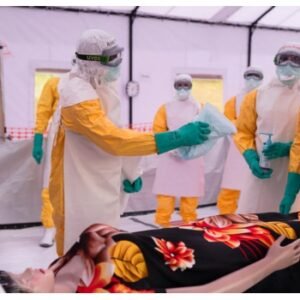
A transmission electron micrograph of the Sin Nombre Hantavirus. BSIP/Universal Images Group/Getty Images
  • May 12, 2026

WHO confirms new hantavirus cases after cruise ship evacuation

The evacuation of passengers from the virus-stricken cruise ship MV Hondius was completed on Monday after health authorities confirmed...

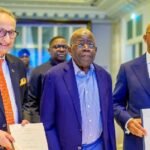
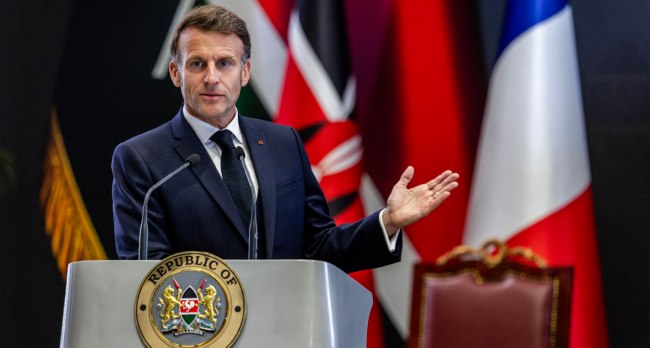
President Bola Tinubu speaking at the Africa Forward Summit in Nairobi on Nigeria-France trade and investment relations.

Tinubu hails $4.7bn Nigeria-France trade growth at summit

President Bola Tinubu has said trade between Nigeria and France reached $4.7 billion in 2025, describing it as a sign of stronger economic ties between both countries.   Speaking at the Africa Forward Summit in Nairobi, Tinubu said the partnership had moved beyond diplomatic discussions into what he called a phase of concrete economic execution, according to Channels Television. The president made the remarks after the 10th meeting of the France-Nigeria Business Council, held alongside the summit. He said Nigeria remained the largest destination for French investment in sub-Saharan Africa and urged that the growing trade relationship should lead to more jobs, industries and infrastructure. Tinubu said the rising trade volume showed that bilateral relations were becoming more significant economically and should now deliver direct benefits for citizens. The meeting was attended by Nigeria’s Minister of Industry, Trade and Investment, Jumoke Oduwole, and France’s Minister Delegate for Foreign Trade, Nicolas Forissier. Business leaders present included Aliko Dangote, Abdul Samad Rabiu, Tony Elumelu and Aigboje Aig-Imoukhuede, alongside executives from TotalEnergies, CMA CGM, Danone and Accor. A key outcome of the meeting was an agreement between Accor and Shoreline Group to create Nigeria’s first national hotel platform. Tinubu said the deal reflected investor confidence in the country’s tourism and hospitality sector. He added that the future of Africa-Europe relations would depend on investments in factories, ports, hotels, technology, farms and energy projects rather than diplomatic declarations. The summit, hosted by William Ruto and Emmanuel Macron, brought together more than 30 African leaders and business executives to discuss trade, innovation and sustainable development.
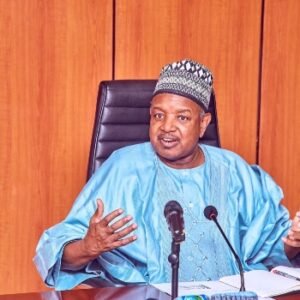
Former Power Minister Saleh Mamman during a court-related appearance after conviction over the Mambilla and Zungeru power project fraud case.

BREAKING: Court jails ex-Power Minister Saleh Mamman for 75 years

Former Nigerian Minister of Power, Saleh Mamman, has been sentenced to 75 years in prison by the Federal High Court in Abuja over corruption linked to the Mambilla and Zungeru hydroelectric power projects. Justice James Omotosho delivered the judgment on Wednesday, convicting Mamman on a 12-count charge tied to the alleged diversion of funds connected to the multi-billion naira power projects. According to reporting by Punch Newspapers, the court ordered that the prison terms run consecutively, resulting in a cumulative sentence of 75 years. The judge also directed security agencies to arrest the former minister wherever he is found and ruled that the sentence would begin from the date of his arrest. In addition, the court ordered the forfeiture of all monies and properties recovered from Mamman to the Federal Government. He was also directed to refund the outstanding balance from the alleged N22bn linked to the Mambilla and Zungeru hydroelectric power projects. The case is one of Nigeria’s most high-profile corruption prosecutions involving a former cabinet minister in recent years.
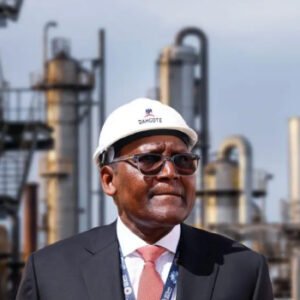
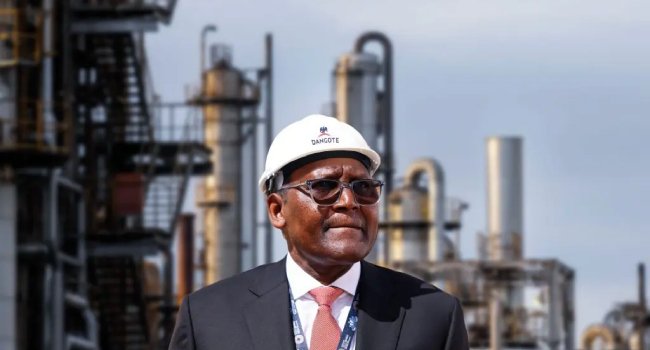
Aliko Dangote speaking on plans for Dangote refinery ownership and future public investment.

Dangote rejects NNPC refinery stake increase as IPO plans emerge

Aliko Dangote has disclosed that NNPC Limited sought to increase its 7.25 per cent ownership in the Dangote Petroleum Refinery, but the offer was turned down as the company prepares to open ownership to a wider pool of Nigerians.   Speaking in an interview with Nicolai Tangen, Dangote said the group wants to float shares in the refinery publicly rather than expand NNPC’s holding. He said the decision aligns with plans to broaden participation in the business ahead of a future listing.   According to Punch, NNPC bought its 7.25 per cent stake in 2021 for $1bn, with an option to acquire an additional 12.75 per cent. However, the company did not complete the purchase and remained at its current shareholding.   Dangote said future investors in the group’s businesses, including the refinery, cement, petrochemicals and fertiliser operations, would receive dividends in dollars because export revenue is expected to account for 80 per cent of earnings.   The billionaire industrialist also said the 650,000 barrels-per-day refinery has exceeded nameplate capacity, processing up to 661,000 barrels per day. He described the plant as proof of the group’s ability to deliver large-scale industrial projects in Nigeria.   Punch also reported that petrol supplied from domestic refineries reached 3.18 billion litres in the first quarter of 2026, while imports dropped to 965.52 million litres, according to data from the Nigerian Midstream and Downstream Petroleum Regulatory Authority.   Industry data showed domestic refining accounted for 76.7 per cent of total petrol supply in the first three months of the year. The refinery’s average ex-depot petrol price during the period was estimated at about ₦1,000 per litre, translating to roughly ₦3.2tn in domestic sales value.   Dangote said the business has also benefited from global supply disruptions linked to the US-Iran conflict. He noted that rising demand pushed fertiliser prices from $400 to $850 per tonne, while polypropylene prices climbed sharply, boosting export revenue.   He added that the group aims to inject about $45bn into expansion projects over the next few years, targeting $100bn in annual revenue and a market valuation above $250bn by 2030.
Read more
Aliko Dangote speaking on plans for Dangote refinery ownership and future public investment.

Dangote rejects NNPC refinery stake increase as IPO plans emerge

Aliko Dangote has disclosed that NNPC Limited sought to increase its 7.25 per cent ownership in the Dangote Petroleum Refinery, but the offer was turned down as the company prepares to open ownership to a wider pool of Nigerians.   Speaking in an interview with Nicolai Tangen, Dangote said the group wants to float shares in the refinery publicly rather than expand NNPC’s holding. He said the decision aligns with plans to broaden participation in the business ahead of a future listing.   According to Punch, NNPC bought its 7.25 per cent stake in 2021 for $1bn, with an option to acquire an additional 12.75 per cent. However, the company did not complete the purchase and remained at its current shareholding.   Dangote said future investors in the group’s businesses, including the refinery, cement, petrochemicals and fertiliser operations, would receive dividends in dollars because export revenue is expected to account for 80 per cent of earnings.   The billionaire industrialist also said the 650,000 barrels-per-day refinery has exceeded nameplate capacity, processing up to 661,000 barrels per day. He described the plant as proof of the group’s ability to deliver large-scale industrial projects in Nigeria.   Punch also reported that petrol supplied from domestic refineries reached 3.18 billion litres in the first quarter of 2026, while imports dropped to 965.52 million litres, according to data from the Nigerian Midstream and Downstream Petroleum Regulatory Authority.   Industry data showed domestic refining accounted for 76.7 per cent of total petrol supply in the first three months of the year. The refinery’s average ex-depot petrol price during the period was estimated at about ₦1,000 per litre, translating to roughly ₦3.2tn in domestic sales value.   Dangote said the business has also benefited from global supply disruptions linked to the US-Iran conflict. He noted that rising demand pushed fertiliser prices from $400 to $850 per tonne, while polypropylene prices climbed sharply, boosting export revenue.   He added that the group aims to inject about $45bn into expansion projects over the next few years, targeting $100bn in annual revenue and a market valuation above $250bn by 2030.
Read more
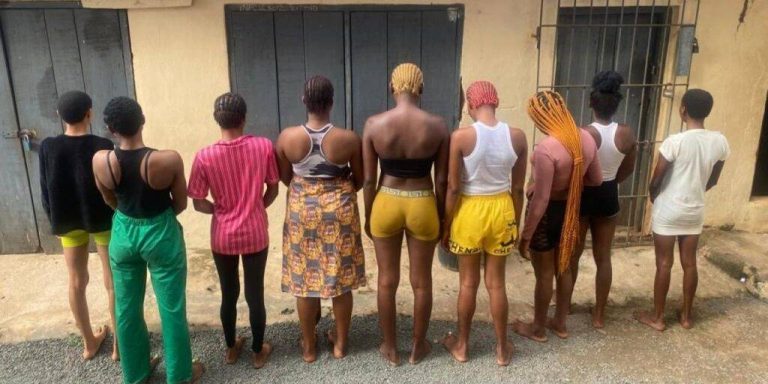
NAPTIP officials during an operation that rescued 15 suspected trafficking victims in Nasarawa State.

NAPTIP rescues 15 in Nasarawa over suspected online trafficking ring

Nigeria’s anti-human trafficking agency, National Agency for the Prohibition of Trafficking in Persons, has rescued 15 people from a suspected human trafficking syndicate allegedly operating under the cover of an online marketing business in Nasarawa State.   According to PUNCH, the operation took place in the Keffi and Karu local government areas following intelligence reports on suspicious activities linked to fraudulent online recruitment.   In a statement shared on its official X account on Wednesday, NAPTIP said officers from its Investigation Department and Intelligence and International Cooperation Unit carried out the raid on May 7. The agency said those rescued included four women and 11 men, with some of the victims identified as foreign nationals.   The agency said preliminary findings suggested the suspects used the online marketing front to recruit and harbour unsuspecting individuals under conditions linked to human trafficking, cyber exploitation and other organised criminal activities.   NAPTIP described the case as both a security and humanitarian concern, warning that deceptive recruitment schemes continue to expose vulnerable people to abuse and exploitation.   The agency said investigations are ongoing to uncover the full network and identify additional collaborators. It also urged Nigerians to report suspicious recruitment operations and unusual movements in their communities to law enforcement authorities.   PUNCH reported that the rescue highlights growing concerns over traffickers exploiting digital job offers and online business schemes to lure victims into criminal networks.
Read more
Court Freezes Alerzo Accounts as Moniepoint Seeks N4.38bn Debt

Court Freezes Alerzo Accounts as Moniepoint Seeks N4.38bn Debt

Moniepoint Microfinance Bank Limited has sued Alerzo Limited and its directors over an alleged N4.38 billion loan default. The Federal High Court in Lagos granted an interim Mareva injunction freezing all accounts linked to the defendants. Justice Daniel Osiagor also ordered banks to disclose account balances and approved substituted service on local defendants. A foreign affiliate of Alerzo will be served court papers in Singapore. The case is awaiting further hearing.
Read more

Most Popular

Recent News

Aliko Dangote speaking on plans for Dangote refinery ownership and future public investment.

Dangote rejects NNPC refinery stake increase as IPO plans emerge

Aliko Dangote has disclosed that NNPC Limited sought to increase its 7.25 per cent ownership in the Dangote Petroleum Refinery, but the offer was turned down as the company prepares to open ownership to a wider pool of Nigerians.   Speaking in an interview with Nicolai Tangen, Dangote said the group wants to float shares in the refinery publicly rather than expand NNPC’s holding. He said the decision aligns with plans to broaden participation in the business ahead of a future listing.   According to Punch, NNPC bought its 7.25 per cent stake in 2021 for $1bn, with an option to acquire an additional 12.75 per cent. However, the company did not complete the purchase and remained at its current shareholding.   Dangote said future investors in the group’s businesses, including the refinery, cement, petrochemicals and fertiliser operations, would receive dividends in dollars because export revenue is expected to account for 80 per cent of earnings.   The billionaire industrialist also said the 650,000 barrels-per-day refinery has exceeded nameplate capacity, processing up to 661,000 barrels per day. He described the plant as proof of the group’s ability to deliver large-scale industrial projects in Nigeria.   Punch also reported that petrol supplied from domestic refineries reached 3.18 billion litres in the first quarter of 2026, while imports dropped to 965.52 million litres, according to data from the Nigerian Midstream and Downstream Petroleum Regulatory Authority.   Industry data showed domestic refining accounted for 76.7 per cent of total petrol supply in the first three months of the year. The refinery’s average ex-depot petrol price during the period was estimated at about ₦1,000 per litre, translating to roughly ₦3.2tn in domestic sales value.   Dangote said the business has also benefited from global supply disruptions linked to the US-Iran conflict. He noted that rising demand pushed fertiliser prices from $400 to $850 per tonne, while polypropylene prices climbed sharply, boosting export revenue.   He added that the group aims to inject about $45bn into expansion projects over the next few years, targeting $100bn in annual revenue and a market valuation above $250bn by 2030.
Fire-damaged main library building at Kano State Polytechnic after blaze destroyed books and academic records

Fire guts Kano Polytechnic library, destroys books and records

A fire has destroyed the main library at Kano State Polytechnic, raising concerns over the loss of academic materials and the impact on students and staff.   The blaze broke out on Tuesday at the institution’s library complex along Yahaya Gusau Road in Kano, destroying books, equipment and institutional records before emergency efforts brought it under control.   According to The Guardian Nigeria, the incident has sparked concern among students, lecturers and education stakeholders, with fears that the loss of research materials and records could affect teaching and academic work at the school.   The chairman of the National Library Staff Union in Kano State, Nazir Muhammad, described the incident as a major setback for academic development and knowledge preservation. He said the library housed vital resources used by students, lecturers and researchers.   Witnesses said thick smoke spread across the campus during the incident, while staff and residents attempted to salvage materials from the building. Authorities have not yet confirmed the full extent of the damage or the cause of the fire.   The union appealed to the Kano State Government, education agencies and donor groups to support rebuilding efforts. It also called for stronger fire safety measures in public schools, citing repeated fire incidents at the institution in recent years. The Guardian reported that investigations are expected to begin to determine what caused the outbreak.
NAPTIP officials during an operation that rescued 15 suspected trafficking victims in Nasarawa State.

NAPTIP rescues 15 in Nasarawa over suspected online trafficking ring

Nigeria’s anti-human trafficking agency, National Agency for the Prohibition of Trafficking in Persons, has rescued 15 people from a suspected human trafficking syndicate allegedly operating under the cover of an online marketing business in Nasarawa State.   According to PUNCH, the operation took place in the Keffi and Karu local government areas following intelligence reports on suspicious activities linked to fraudulent online recruitment.   In a statement shared on its official X account on Wednesday, NAPTIP said officers from its Investigation Department and Intelligence and International Cooperation Unit carried out the raid on May 7. The agency said those rescued included four women and 11 men, with some of the victims identified as foreign nationals.   The agency said preliminary findings suggested the suspects used the online marketing front to recruit and harbour unsuspecting individuals under conditions linked to human trafficking, cyber exploitation and other organised criminal activities.   NAPTIP described the case as both a security and humanitarian concern, warning that deceptive recruitment schemes continue to expose vulnerable people to abuse and exploitation.   The agency said investigations are ongoing to uncover the full network and identify additional collaborators. It also urged Nigerians to report suspicious recruitment operations and unusual movements in their communities to law enforcement authorities.   PUNCH reported that the rescue highlights growing concerns over traffickers exploiting digital job offers and online business schemes to lure victims into criminal networks.

Most Popular

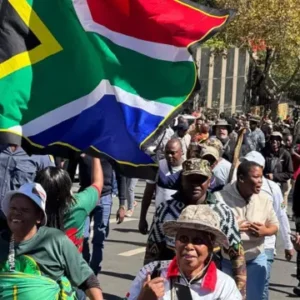
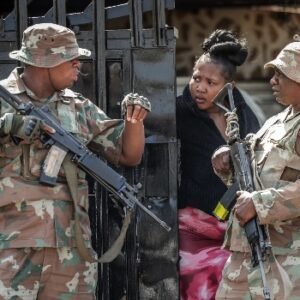
Oshiomhole speaking in Senate as lawmakers debate xenophobic attacks and proposed sanctions on South African firms

Xenophobia crisis: Oshiomhole seeks MTN, DSTV ban

Senator Adams Oshiomhole has called for the revocation of licences held by South African firms MTN roup and MultiChoice, operators of DStv, following renewed xenophobic attacks against Nigerians in South Africa. Speaking during plenary on Tuesday, the Edo North lawmaker urged Nigeria to adopt firm retaliatory measures, including nationalising MTN and withdrawing its operating licence. He argued that the company repatriates significant revenue while Nigerians face hostility abroad. “I don’t want this Senate to be shedding tears,” Oshiomhole said. “If you hit me, I’ll hit you. It is an economic struggle.” The Senate’s position comes amid widespread condemnation of the latest attacks, with lawmakers urging the Federal Government to take urgent diplomatic and protective steps to safeguard Nigerian citizens. Contributing to the debate, Senator Victor Umeh described the situation as alarming, noting that Nigerians in South Africa were living in fear and unable to move freely. He called on the African Union to intervene and impose sanctions. Similarly, Senator Abdul Ningi warned that Nigeria could escalate its response if attacks persist, stressing that the country has “options” to protect its citizens. Presiding over the session, Senate President Godswill Akpabio condemned the violence, describing it as “barbaric” and “unacceptable”. He disclosed that the National Assembly would send a joint delegation to engage with South Africa’s parliament. The motion prompting the debate, sponsored by Senator Osita Izunaso, highlighted growing concerns over the safety of Nigerians and called for urgent diplomatic and humanitarian action. Oshiomhole linked the recurring tensions to domestic political dynamics in South Africa, where anti-immigrant rhetoric has increasingly shaped public attitudes. He maintained that economic retaliation would serve as both a deterrent and an opportunity to strengthen indigenous Nigerian firms. The development, reported by national media, reflects mounting pressure on the Federal Government to adopt a tougher stance as repeated xenophobic incidents continue to strain relations between Nigeria and South Africa.
President Tinubu meets global investors in Paris to discuss Nigeria’s economic reforms

Tinubu assures investors of policy stability, next reform phase

President Bola Ahmed Tinubu has outlined the next phase of his administration’s economic reforms, pledging stronger fiscal discipline, transparency and policy consistency during a meeting with global investors in Paris, France. Speaking at a high-level engagement with international investment firms, Tinubu said his post-2027 outlook would focus on consolidating ongoing reforms while ensuring stability in policy execution. According to a statement by his Special Adviser on Information and Strategy, Bayo Onanuga, the President assured investors that continuity in governance and reform implementation remains central to his administration’s agenda. “The focus remains on policy stability and diligent execution to ensure these strategic shifts translate into concrete benefits for all Nigerians,” Tinubu said. The meeting formed part of the President’s three-nation diplomatic tour, during which he highlighted sweeping economic reforms aimed at eliminating structural distortions, stabilising macroeconomic indicators and driving inclusive growth. Tinubu also reiterated plans to deepen reforms across key sectors, including improving transparency in the oil value chain and strengthening security through measures such as police decentralisation and efforts to curb terrorist financing. At the session, Minister of Finance and Coordinating Minister of the Economy, Taiwo Oyedele, presented macroeconomic data showing Nigeria recorded 11.2 per cent GDP growth in dollar terms in 2025. He said the figures support Nigeria’s ambition to grow its economy to $1tn by 2030, adding that the government is focused on translating reforms into tangible benefits for citizens. Oyedele also disclosed plans to publish quarterly financial data to boost transparency and investor confidence. Similarly, Director-General of the Debt Management Office, Patience Oniha, reaffirmed the government’s commitment to responsible borrowing and sustainable debt practices. The investor group included representatives from Citibank and Amundi, led by Valerie Baudson, alongside BlueCrest, Ninety One, Kirkoswald Capital, Principal Finisterre, Prudential Global Investment Management and Mesarete Capital. Several investors commended the administration’s reform programme, describing it as transformative and expressing optimism about Nigeria’s economic outlook.
UK police investigate arson at former London synagogue

UK police investigate arson at former London synagogue

British counter-terrorism officers have launched an investigation into an arson incident at a former synagogue in east London, amid growing concern over a string of attacks targeting Jewish sites. According to Reuters, police were called earlier on Tuesday after reports of a fire at the building. Authorities said the blaze caused minor damage to the front gates and a lock, with no injuries reported. The Metropolitan Police confirmed that specialist counter-terrorism officers are now leading enquiries, reflecting heightened sensitivity following several recent arson attacks linked to Jewish locations across the city. Officials have not yet confirmed a motive, but the incident is being treated seriously as part of a broader pattern under investigation. Security has been a growing concern for Jewish communities in parts of London, particularly in the east of the capital. Police are appealing for information as efforts continue to determine whether the fire is connected to other recent incidents.
LinkedIn logo on smartphone screen representing data privacy complaint in Austria

LinkedIn under fire as Noyb challenges user data practices

A privacy rights group has filed a formal complaint against LinkedIn in Austria, alleging the platform is failing to properly grant users access to their personal data. The Vienna-based organisation Noyb confirmed on Tuesday that it submitted the complaint to the Austrian Data Protection Authority on behalf of a LinkedIn user seeking full disclosure of his data. According to Noyb, the user is demanding a “complete response” to his access request, alongside regulatory action that could include a financial penalty for the platform. The group claims LinkedIn, owned by Microsoft, has cited data protection concerns as grounds for not fully complying with such requests. However, it argues this position is inconsistent with the company’s own practices. Noyb further alleged that LinkedIn encourages users to subscribe to its premium service to view profile visitors, raising questions about how user data is handled and monetised. “People have the right to receive their own data free of charge,” said Noyb data protection lawyer Martin Baumann, stressing that access rights are a core principle under European law. The organisation also questioned the legality of LinkedIn’s visitor tracking system, noting that users may not be providing explicit consent for such data processing. The complaint is the latest in a series of legal actions by Noyb, which has pursued multiple cases against major technology firms since its founding in 2018. Its work aligns with the enforcement of the General Data Protection Regulation, designed to strengthen individuals’ control over personal data across the European Union. LinkedIn has yet to publicly respond to the latest complaint.
Nigerian officials meet South African diplomat over killings of Nigerians abroad

Nigeria demands probe, autopsy over killings in South Africa

The Federal Government has demanded a thorough investigation and autopsy reports following the killing of two Nigerians in South Africa, amid rising concerns over the safety of citizens abroad. The spokesperson of the Ministry of Foreign Affairs, Kimiebi Ebienfa, disclosed this during a press briefing after a meeting between the ministry’s Permanent Secretary, Dunoma Ahmed, and South Africa’s Acting High Commissioner, Lesoli Machele. Ebienfa said Nigeria’s mission in South Africa is closely monitoring developments after the victims, identified as Nnaemeka Matthew Andrew Ekpeyong and Kelvin Chidiebere Amaramiro, were killed in violent incidents. He noted that the South African authorities had condemned the attacks and pledged a full investigation. According to him, the killings have heightened anxiety within the Nigerian community, prompting the government to request comprehensive autopsy reports, post-mortem documentation, and access to relevant case files. “The Government of Nigeria condemned the violence against Nigerians in South Africa… These incidents require urgent, credible remedial action,” Ebienfa said. He added that Nigeria is seeking impartial investigations, prompt sharing of findings, and regular updates, as well as cooperation in facilitating legal access for the victims’ families. The government also stressed the need for accountability, including disciplinary and prosecutorial action where wrongdoing is established. Ebienfa recalled an existing Memorandum of Understanding between both countries on early warning mechanisms and urged authorities in South Africa to fast-track its implementation to prevent further incidents. He said Lesoli Machele assured that Nigeria’s concerns would be conveyed to authorities in Pretoria, with further steps expected. On possible evacuation, about 130 Nigerians have indicated interest in returning home. The process is currently self-funded, with affected citizens advised to contact the Nigerian mission in Pretoria, although government intervention may be considered later for those unable to afford travel. Ebienfa confirmed that no arrests have been made so far but said South African authorities have assured that perpetrators will be brought to justice.
Celebrities on the Met Gala 2026 red carpet wearing sculptural and artistic fashion inspired by the Costume Art theme

Met Gala 2026: Celebrities turn fashion into art

Global celebrities have delivered striking fashion statements at the 2026 Met Gala, interpreting the “Costume Art” theme with bold, sculptural and highly creative designs. The annual fashion event, held on Monday, May 4 in New York, brought together designers, entertainers and cultural figures at the Metropolitan Museum of Art for one of the industry’s most anticipated nights. This year’s theme aligns with the Costume Institute’s spring exhibition, which explores the “dressed body” across 5,000 years of art history. The accompanying dress code, “Fashion Is Art”, set the tone for imaginative and boundary-pushing looks on the red carpet. Early arrivals showcased flowing fabrics, feathered textures and sculptural silhouettes. Ayo Edebiri appeared in ethereal drapery inspired by classical Greco-Roman statues, while Olympic athlete Eileen Gu opted for a futuristic Iris Van Herpen design blending technology with art. As the evening progressed, high-profile attendees elevated the spectacle. Blake Lively wore a multi-toned gown inspired by painted canvases, while Kim Kardashian debuted a body-moulded metallic look that blurred the line between sculpture and fashion. Rapper Doechii introduced performance-art elements into her ensemble, reinforcing the “body as canvas” concept. The arrival of co-chairs marked a defining moment of the night. Beyoncé made a highly anticipated return after a decade, accompanied by Jay-Z and Blue Ivy Carter. She wore a diamond-encrusted gown inspired by the human ribcage, symbolising the body as armour. Nicole Kidman opted for refined elegance, Venus Williams combined athletic grace with couture, and Anna Wintour maintained her signature style in a feathered Chanel piece. The red carpet later embraced theatricality, with Madonna presenting a gothic, shipwreck-inspired look and Cher making a surprise appearance in a leather and tulle ensemble. Teyana Taylor, Sabrina Carpenter and Doja Cat added youthful and experimental energy to the event. Closing the carpet in dramatic fashion, Rihanna and A$AP Rocky arrived late, drawing widespread attention. Rihanna wore a gunmetal couture outfit reportedly inspired by her Caribbean heritage, while Rocky complemented her with a layered design. Following the red carpet, guests moved into the museum for a private viewing of the exhibition, a cocktail reception, dinner and exclusive performances. The event maintains a strict no-phone policy and continues to serve as a major fundraiser for the Costume Institute, generating more than $30 million annually. Source: ChannelsTV

International

Telecommunications mast in Nigeria as ATCON addresses network service disruptions

ATCON says network issues in Nigeria should end in 2026

The Association of Telecommunications Companies of Nigeria (ATCON) has assured Nigerians that persistent network disruptions affecting telecom users across the country should not continue beyond this year. Speaking during an interview on Channels Television’s The Morning Brief, Tony Emoekpere said operators and regulators are already implementing measures to tackle recurring service failures. He said telecom operators had made commitments to regulators and that several improvement projects were already underway. According to Emoekpere, discussions are ongoing among stakeholders across the sector, including mobile network operators, infrastructure providers and service providers, to improve network quality. He said: “There have been positive things already being done, projects have already been put in place, and commitments have already been made to regulators by the Mobile Network Operator. Most in general, I don’t think these issues should surpass this year.” The assurance comes after growing complaints from subscribers over poor call quality, unstable internet service, rapid data depletion and increased tariffs. The Federal Government of Nigeria recently increased pressure on telecom companies to improve service delivery, warning that subscribers deserve better connectivity and value for money. Bosun Tijani, Minister of Communications, Innovation and Digital Economy, said reforms had already been introduced to stabilise the telecom sector, while operators were expected to resolve ongoing service failures. Emoekpere also addressed concerns over data subscription renewals, saying unused data is not lost once users renew their plans. He explained that existing data balances are rolled over and added to newly purchased subscriptions. He added that the Nigerian Communications Commission has a dedicated consumer protection arm that handles complaints from subscribers and works with operators to resolve issues. Emoekpere said no telecom company intentionally delivers poor service, stressing that operators are equally affected by the sector’s challenges.
Nigerian House of Representatives session debating poor telecom service quality and NCC oversight

Reps slam NCC over poor telecom services, dropped calls

Nigeria’s House of Representatives has criticised the Nigerian Communications Commission over what lawmakers described as weak regulatory oversight, blaming the agency for persistently poor telecom services nationwide. The lawmakers warned that unreliable connectivity, including frequent dropped calls and slow data speeds, poses risks to lives and property, particularly during emergencies. The resolution followed a motion of urgent public importance moved by Ahmadu Jaha, representing Chibok, Damboa and Gwoza Federal Constituency of Borno State. Speaking during the debate, Jaha highlighted the growing importance of telecommunications to Nigeria’s economy and daily life, noting a widening gap between subscriber expectations and actual service delivery. “Telecommunication has become a vital part of everyday life in Nigeria. It connects families, supports businesses, enhances education, and drives economic growth. However, despite its importance, the quality of service provided by many telecom companies remains unsatisfactory,” he said. Lawmakers cited recurring issues such as dropped calls, poor data speeds and failed message delivery as evidence of systemic inefficiencies in the sector. They also criticised the mismatch between rising telecom costs and the quality of services delivered. “The high cost of data and call tariffs does not match the quality of service delivered,” Jaha added, noting that unstable connections often lead to rapid data depletion and financial losses for users. Concerns were also raised over weak customer service systems, with subscribers reportedly facing delays in resolving complaints. Lawmakers said this could worsen outcomes in emergencies such as medical incidents, fires and road accidents. Supporting the motion, Deputy Minority Whip George Ozodinobi accused telecom operators of prioritising profit over service improvement, while also faulting the NCC for regulatory complacency. “It is like these companies have made enough profits in billions, and so, they don’t care about improving the network anymore. The NCC has become complacent,” he said. Nigeria’s telecom sector has grown rapidly since liberalisation in the early 2000s, expanding from fewer than one million lines to over 200 million active subscriptions. However, infrastructure development has lagged behind subscriber growth. Industry analysts attribute the poor service quality to inadequate base stations, unreliable power supply and high operating costs. Telecom operators also face challenges such as multiple taxation, vandalism of infrastructure and right-of-way constraints, particularly in rural and conflict-affected areas. Despite these constraints, critics argue that the NCC has failed to enforce its Quality of Service regulations effectively, with penalties often seen as insufficient to drive compliance. The House has now called on telecom operators to invest in modern infrastructure, expand coverage to underserved areas, improve customer service and adopt fair pricing that reflects service quality. Lawmakers also directed the NCC to enforce stricter standards and hold service providers accountable, signalling a potential shift towards stronger legislative oversight. An ad hoc committee is expected to be constituted to investigate the root causes of poor telecom service delivery and recommend further legislative action.
GSMA: Africa records world’s lowest mobile Internet use

GSMA: Africa records world’s lowest mobile Internet use

Sub-Saharan Africa remains the world’s least connected region, with just a quarter of its population using mobile Internet, according to the latest GSMA report. The State of Mobile Internet Connectivity 2025 revealed that the region also has the largest coverage gap globally, at 10 per cent. While more than three-quarters of people in North America, Europe, and East Asia are online through their mobile devices, Africa continues to struggle with low access, widening inequality, and a growing digital divide. Nigeria ranked among the top 20 countries with the largest number of people offline, with 130 million citizens still unconnected. India tops the list with a staggering 690 million people unable to access the Internet, followed by China with 240 million and Pakistan with 130 million. Other countries with high numbers of unconnected citizens include Ethiopia, Indonesia, Egypt, Congo, the United States, and Brazil. The report found that connectivity remains far lower in least developed countries (LDCs), landlocked developing countries (LLDCs), and small island developing states (SIDS), where only a quarter to a third of the population use mobile Internet. None of these regions have recorded progress since 2021. GSMA also flagged persistent inequalities within low- and middle-income countries (LMICs). People in rural areas are still 25 per cent less likely to use mobile Internet than urban dwellers, while women remain 14 per cent less likely than men to connect. In Sub-Saharan Africa, the gender gap stands at 29 per cent, among the widest globally. Despite these challenges, mobile Internet use continues to grow globally. By the end of 2024, 4.4 billion people were using smartphones to access the Internet, with most on 4G or 5G networks. However, in Africa, six in ten users still rely on 3G devices or basic feature phones, further limiting access to the digital economy.
Restoring Confidence In Fire Safety, gong-news.com

Restoring confidence in fire safety, by Adewole Oluwasope

In recent times, the Federal Fire Service (FFS) has experienced a transformational shift that is redefining fire emergency management in Nigeria. At the heart of this renewed commitment is the visionary leadership of Hon. Olubunmi Tunji-Ojo, the Minister of Interior, whose strategic oversight and dedication to excellence has revitalized the institution. Under his watch, the Controller-General of the Federal Fire Service, Engr. Abdulganiyu Jaji, and his team have demonstrated that with the right direction, even the most complex institutions can deliver efficiently. The gains made so far are not just on paper—they are visible, measurable, and increasingly appreciated by the public. One of the most noticeable achievements is the significant improvement in the response time to fire incidents. Across major cities and even some rural communities, FFS trucks now arrive faster and better equipped to tackle emergencies. This is a direct result of strategic investments, staff training, and logistical upgrades. A silent but revolutionary improvement has taken place in the way fire officers communicate. The launch of modern Walkie-Talkie systems has significantly enhanced coordination and real-time responses. Communication gaps, which previously led to delays and confusion, are rapidly closing. Recognizing that effective service delivery starts with capable personnel, the Ministry and the FFS leadership have begun the construction of a world-class Fire Academy. This institution will train a new generation of fire officers in modern firefighting, safety protocols, and emerging technologies. Equally commendable is the commissioning of advanced firefighting vehicles. These vehicles are fitted with modern safety tools and tailored for both urban and difficult terrains. From state capitals to smaller towns, citizens are seeing new trucks on standby and on duty. Behind every successful rescue is a motivated fire officer. The leadership has also made deliberate strides in improving staff welfare, ranging from training to promotions, housing, and recognition of outstanding service. What’s most telling about the current transformation in the Federal Fire Service is how Nigerians are reacting. Across social media, particularly on X (formerly Twitter), citizens are openly acknowledging the change, offering commendations that reflect not just approval but renewed trust. “The Minister of Interior, Hon. Olubunmi Tunji-Ojo has given the Federal Fire Service a new facelift. The #FFS has experienced a tremendous change since his appointment, from buying trucks to handheld radios to quick response and so on,”_ said @JaniceBaby23, who, like many Nigerians, has observed the shift firsthand. Similarly, @Afooolarry praised the leadership, saying, _“Kudos to the Hon. Olubumi Tunji-Ojo BTO, CG Engr Abdulganiyu Jaji, and leadership of #FFS for the strides made — faster emergency response, launch of the Walkie-Talkie system, fire academy project underway, new fire trucks commissioned, and improved staff welfare.”_ That same spirit of approval was echoed by @BadmusFranca, who noted, _“The federal fire service has enhanced its operations under the leadership of the Hon. Minister of Interior, Dr. Olubunmi Tunji-Ojo, and the CC, #FFS, Engr. Jaji with the introduction of walkie-talkie phones for improved communication, the establishment of a new fire academy, the commissioning of new fire vehicles, and enhanced staff welfare. We commend these efforts and call for continued improvements to safeguard lives and properties.” Reflecting on how far the agency has come, @eniolaofLagos tweeted, “For so long, the Federal Fire Service, #FFS, seemed non-functional, but for another magic wand of the #RenewedHope under President Bola Ahmed Tinubu, the Minister of Interior, Hon. Olubunmi Tunji-Ojo, has taken the #FirePrevention game to another level. A good job by the CG.” Speaking to the operational capacity and training, @Omobaba_saki shared, “The #FFS under the leadership of Hon Olubunmi Tunji-Ojo and CG Engr. AbdulGaniyu Jaji has been able to respond rapidly to fire incidents with state of the art fire service trucks, with modern facilities to help combat fire. Also the Federal Fire Service to get World Class Academy. This will enable them train men and women of the fire service in modern ways and introduce them to new technologies and also fire service safety precautions to observe when there is an incident.” And in a more policy-forward tone, @AbuAbdulHameed7 tweeted, “Under the leadership of CG FFS Engr. Jaji and HMI Olubunmi Tunji-Ojo, the Federal Fire Service has witnessed transformative reforms including deployment of new response vehicles, reduced emergency response time, upgrade of the National Fire Academy, staff promotions, and structural expansion plans. With the proposed Federal Fire & Rescue Service Bill, the service has the potential to become a self-sufficient, revenue-generating institution capable of massive employment.” These real, unfiltered statements demonstrate just how much progress has been made—and how well it is being received by the very people the agency was established to protect. While we celebrate these achievements, it is important to remember that this must be the beginning, not the peak. Fire outbreaks remain a significant risk in homes, markets, schools, and industries across Nigeria, especially during the harmattan and festive seasons, as well as power surges. The Federal Fire Service must continue to expand its reach to underserved regions, intensify fire safety education, improve partnerships with state and local authorities, and sustain the momentum of innovation. The proposed Fire & Rescue Service Bill must also receive wide support to ensure the agency becomes more autonomous, responsive, and accountable. In my opinion, the leadership of Hon. Olubunmi Tunji-Ojo and CG Engr. Abdulganiyu Jaji has ushered in a new era of excellence within the Federal Fire Service. From faster response times to technology upgrades, training investments, and staff motivation, the Service is clearly undergoing a transformation rooted in vision, discipline, and action. But there is still work to be done. The FFS must build on these foundations and rise to meet even greater expectations. Nigerians are not just hopeful, they are watching. Now more than ever, we must keep the fire of progress burning.
New Android anti-theft feature helps curb phone theft in Nigeria

Google’s new android feature could kill Nigeria’s phone theft market

In a bold move to curb smartphone theft, Google has unveiled a powerful new feature that could render stolen Android devices useless — and unsellable. With over 25 million phones reportedly stolen in Nigeria in just one year, this development could be a game-changer. The new security tool, called “Theft Detection Lock”, uses artificial intelligence to detect suspicious behaviour, such as someone forcefully taking a phone and running. Once triggered, the phone locks automatically, preventing access or resale. The feature also includes offline device locking, meaning even if thieves switch off mobile data or Wi-Fi, the phone stays protected. This is a major leap from previous measures that relied heavily on network connection to track or lock stolen devices. Tech experts and law enforcement officials in Nigeria have hailed the move, saying it could significantly deter phone snatching and organised theft rings that thrive on reselling stolen smartphones. “The resale value is the primary motivation. If the phone is worthless after theft, the crime loses appeal,” says Ifeanyi Obiora, a Lagos-based cybersecurity analyst. Google confirmed the feature will roll out later this year, starting with Android 15. It’s expected to make its way to millions of devices, offering hope to users in high-theft regions like Nigeria. As the nation grapples with phone-related crime, this could be the biggest digital intervention yet.
TVC unveils Nigeria’s first AI news anchors

TVC unveils Nigeria’s first AI news anchors

In a move that is set to redefine the face of broadcasting in Nigeria, TVC Communications has unveiled the country’s first set of Artificial Intelligence (AI) news anchors. The media company made this known in a press release on Wednesday night. This groundbreaking innovation, spearheaded by its flagship brand TVC News, introduces AI-driven bulletins in English, Yoruba, Hausa, Igbo, and Pidgin. The move positions TVC Communications at the forefront of tech-driven journalism in Africa, as it aims to bridge linguistic gaps across Nigeria’s diverse population of over 240 million people. According to the media company, the development aligns with its strategic goal of expanding coverage and delivering news in languages familiar to its wide-ranging audience. It, however, noted that the AI anchors were designed to complement the work of human journalists, not replace them. Verydarkman receives blast from Actor Stanley Ontop over TVC request, shares alleged evidence “We are excited to be at the forefront of this innovation in Nigeria’s broadcast industry,” said the Chief Executive Officer of TVC Communications, Victoria Ajayi. “Our AI news anchors will enable us to take our news coverage to the next level as we showcase our commitment to leveraging technology to drive growth using innovation.” Ajayi emphasised that the integration of AI is a support mechanism for human talent within the organisation, which she described as a “constellation of seasoned professionals.” While the introduction of AI in media has sparked concerns globally ranging from misinformation to deep fakes, TVC Communications assured the public that proactive steps were already in place to mitigate such risks. These include watermarking of AI-generated content and implementing robust verification processes. “Our commitment is to continue to raise the standard and maintain the highest sense of integrity, professionalism, and the assurance to our audience that we will always take proactive steps to mitigate the risks that these challenges may pose,” the company stated. The organisation also noted that all AI-delivered content will be thoroughly reviewed and approved by a team of trained journalists and editors, in full compliance with the Nigerian Broadcasting Code. Editorial oversight, the company added, will ensure that AI-generated content maintains accuracy, balance, neutrality, and cultural sensitivity. The fusion of technology and journalism, TVC believes, marks a leap toward the future of news broadcasting on the continent.

Technology

President Bola Tinubu speaking at the Africa Forward Summit in Nairobi on Nigeria-France trade and investment relations.

Tinubu hails $4.7bn Nigeria-France trade growth at summit

President Bola Tinubu has said trade between Nigeria and France reached $4.7 billion in 2025, describing it as a sign of stronger economic ties between both countries.   Speaking at the Africa Forward Summit in Nairobi, Tinubu said the partnership had moved beyond diplomatic discussions into what he called a phase of concrete economic execution, according to Channels Television. The president made the remarks after the 10th meeting of the France-Nigeria Business Council, held alongside the summit. He said Nigeria remained the largest destination for French investment in sub-Saharan Africa and urged that the growing trade relationship should lead to more jobs, industries and infrastructure. Tinubu said the rising trade volume showed that bilateral relations were becoming more significant economically and should now deliver direct benefits for citizens. The meeting was attended by Nigeria’s Minister of Industry, Trade and Investment, Jumoke Oduwole, and France’s Minister Delegate for Foreign Trade, Nicolas Forissier. Business leaders present included Aliko Dangote, Abdul Samad Rabiu, Tony Elumelu and Aigboje Aig-Imoukhuede, alongside executives from TotalEnergies, CMA CGM, Danone and Accor. A key outcome of the meeting was an agreement between Accor and Shoreline Group to create Nigeria’s first national hotel platform. Tinubu said the deal reflected investor confidence in the country’s tourism and hospitality sector. He added that the future of Africa-Europe relations would depend on investments in factories, ports, hotels, technology, farms and energy projects rather than diplomatic declarations. The summit, hosted by William Ruto and Emmanuel Macron, brought together more than 30 African leaders and business executives to discuss trade, innovation and sustainable development.
Former Power Minister Saleh Mamman during a court-related appearance after conviction over the Mambilla and Zungeru power project fraud case.

BREAKING: Court jails ex-Power Minister Saleh Mamman for 75 years

Former Nigerian Minister of Power, Saleh Mamman, has been sentenced to 75 years in prison by the Federal High Court in Abuja over corruption linked to the Mambilla and Zungeru hydroelectric power projects. Justice James Omotosho delivered the judgment on Wednesday, convicting Mamman on a 12-count charge tied to the alleged diversion of funds connected to the multi-billion naira power projects. According to reporting by Punch Newspapers, the court ordered that the prison terms run consecutively, resulting in a cumulative sentence of 75 years. The judge also directed security agencies to arrest the former minister wherever he is found and ruled that the sentence would begin from the date of his arrest. In addition, the court ordered the forfeiture of all monies and properties recovered from Mamman to the Federal Government. He was also directed to refund the outstanding balance from the alleged N22bn linked to the Mambilla and Zungeru hydroelectric power projects. The case is one of Nigeria’s most high-profile corruption prosecutions involving a former cabinet minister in recent years.
Nigerian Democratic Congress officials announcing the timetable and fees for the party’s 2027 primary elections in Abuja.

NDC sets May 29 presidential primary, pegs forms at N60m

The Nigerian Democratic Congress (NDC) has pegged its presidential nomination and expression of interest forms at N60m ahead of the 2027 general elections, with its presidential primary scheduled for May 29 in Abuja. According to a statement issued on Tuesday by the party’s National Chairman, Moses Cleopas, the sale of forms will run from May 13 to May 18 as part of preparations for the party’s internal electoral process. Cleopas disclosed that aspirants seeking the party’s presidential ticket would pay N20m for the expression of interest form and N40m for the nomination form, bringing the total cost to N60m. The party also released its timetable for the conduct of primary elections across all elective positions. Under the schedule, screening of aspirants will precede the sale of nomination forms, which is expected to take place between May 21 and May 23. Completed forms must be returned on or before May 25, while appeals arising from the screening exercise will be heard on May 25 and 26. Primary elections for state and federal legislative positions are slated for May 27 and 28, while the presidential primary will hold on May 29 in Abuja. The party said aspirants for state Houses of Assembly would be screened in their respective states, while screening for National Assembly and presidential hopefuls would take place at the party’s national headquarters in Abuja. Cleopas added that all aspirants would be required to sign an undertaking in line with the party’s code of conduct and guidelines. The NDC also announced plans to adopt an “open secret ballot” system for its primaries, saying the move was aimed at ensuring credibility, fairness and internal democracy. Under the approved fee structure, aspirants for state Houses of Assembly are expected to pay N2.5m, House of Representatives hopefuls N6m, Senate aspirants N8m, and governorship contenders N30m for nomination and expression of interest forms. Female aspirants and persons living with disabilities will enjoy discounted rates, paying 50 per cent and 25 per cent of the fees respectively across all categories. The party maintained that its nomination fees remain lower than those charged by several major political parties in the country.
APC party flag displayed during a political gathering amid controversy over aspirant disqualifications ahead of the 2027 elections.

APC screening crisis deepens as over 150 aspirants disqualified

The ruling All Progressives Congress (APC) is facing mounting internal tensions after more than 150 aspirants were reportedly disqualified during ongoing screening exercises ahead of the 2027 general elections. According to a report by Punch Newspapers, the screening process has triggered protests, resignations, threats of legal action and accusations of candidate imposition across several states. States affected include Taraba State, Kano State, Jigawa State, Benue State, Kogi State, Kaduna State, Ebonyi State, Rivers State and Plateau State. Taraba backlash over endorsements In Taraba North, youth groups and stakeholders rejected the endorsement of Senator Shuaibu Isa Lau, accusing him of poor performance. Stakeholders from Karim Lamido Local Government Area described his tenure as lacking impactful projects and warned that another endorsement could alienate voters. Party insiders said several aggrieved aspirants were already preparing petitions and considering legal action over alleged irregularities and attempts to impose consensus candidates. Kano consensus sparks protests In Kano, more than 20 aspirants for Senate, House of Representatives and State Assembly tickets were screened out despite earlier consensus talks. The state APC confirmed that six aspirants stepped down for former governor Ibrahim Shekarau after reconciliation meetings. However, groups opposed to the arrangement accused party leaders of sidelining loyal members in favour of political convenience. Defections and resignations In Jigawa, former Speaker Isah Idris resigned from the APC after being disqualified and later defected to the Peoples Democratic Party. Another former speaker, Idris Garba, and serving lawmaker Abubakar Sadiq were also reportedly edged out. In Ebonyi, senatorial aspirant Christian Nwali resigned from the APC after losing out in a consensus arrangement linked to allies of Works Minister David Umahi. Rivers records highest disqualifications The biggest controversy emerged in Rivers, where 65 aspirants were disqualified while only 33 were cleared for the House of Assembly primaries. Chairman of the appeal panel, Abdul Mahmud, said the committee had already received numerous petitions from aspirants challenging their disqualification. He criticised the party for allegedly failing to officially notify aspirants about their status, with many learning of their disqualification through social media. Concerns over internal democracy In Kaduna, disputes also erupted over moves to adopt former senator Shehu Sani as a consensus candidate for Kaduna Central. Critics, including former Speaker Yusuf Zailani and activist Yarima Shettima, rejected the arrangement, warning against political imposition. Political analysts told Punch that the wave of grievances exposed growing tensions between party leadership control and internal democracy within the APC ahead of the 2027 elections.
President Bola Tinubu

Tinubu urges Africa to process its own resources, boost industrial growth

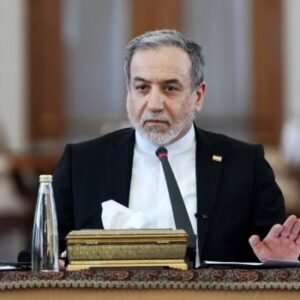
President Bola Tinubu has called for stronger economic integration across Africa, urging the continent to prioritise industrialisation, local processing of raw materials, and fair participation in global trade. Speaking at the Africa Forward Summit in Nairobi, Kenya, Tinubu said Africa must move away from exporting raw materials while importing finished products at higher costs. The summit was co-hosted by Emmanuel Macron and William Ruto. According to a statement by presidential spokesperson Bayo Onanuga, Tinubu said Africa’s current trade structure was driven by a global financial system that limits industrial growth across the continent. “Africa’s share of global manufacturing value added remains below 2 per cent,” Tinubu said, adding that the continent continued to suffer from high borrowing costs and limited access to affordable long-term finance. The Nigerian leader said his administration had introduced major economic reforms, including fuel subsidy removal, exchange rate unification, banking recapitalisation, and Nigeria’s exit from the Financial Action Task Force grey list. Tinubu stated that Nigeria’s debt-to-GDP ratio was projected at 32.3 per cent in 2026, while external reserves had risen to $45.5 billion. However, he argued that African countries still faced unfair treatment from creditors and global rating agencies. “Nigeria is not asking for charity. We are demanding a financial system that intentionally enables Africa to industrialise,” Tinubu said. The President also highlighted Nigeria’s blue economy potential, saying maritime security and stronger regional cooperation were critical to unlocking investment and economic growth in the Gulf of Guinea. Tinubu pledged to expand Nigeria’s Deep Blue Project maritime intelligence infrastructure and make it available as a shared data hub for willing regional partners. He said improved maritime governance, secure sea lanes, and harmonised regional laws would help attract private capital and modernise Africa’s maritime sector. On migration, Tinubu said African governments must address the root causes pushing young people to leave the continent, including unemployment and lack of economic opportunities. He called on international partners to increase investments in climate adaptation, energy access, digital skills, and job creation across Africa. The President also urged stronger African cooperation in shaping global migration policies, describing current international migration frameworks as insufficient because they remain non-binding. The summit brought together leaders and officials from more than 30 countries, including António Guterres and Mahamoud Ali Youssouf. Tinubu also held talks with CAF President Patrice Motsepe, where he reaffirmed Nigeria’s readiness to host the 2026 CAF Awards. The President was accompanied by senior government officials and leading Nigerian business figures, including Aliko Dangote, Tony Elumelu, Abdulsamad Rabiu, and Aigboje Aig-Imoukhuede.
Yoweri Museveni taking oath of office during inauguration for seventh term as Uganda president in Kampala

JUST IN: Museveni sworn in for seventh term as Uganda president at 81

Yoweri Museveni has been sworn in for a seventh term as president of Uganda, extending his four-decade grip on power after winning the January 2026 election. According to The Nation, the 81-year-old leader took the oath of office on Tuesday at Kololo Independence Grounds in Kampala. Official election results showed Museveni secured 71.65 per cent of the vote, defeating opposition candidate Bobi Wine, 43, who polled 24.72 per cent. Museveni, born in 1944 in Mbarara district, first took power in 1986 after leading a guerrilla war that toppled the previous government. His latest inauguration means he will remain in office for another five-year term, reinforcing his position as one of Africa’s longest-serving leaders. The veteran politician began his education at Kyamate Boys School before attending Mbarara High School and later University of Dar es Salaam, where he studied political science. During his student years, he was involved in pan-African activism and founded the University Students’ African Revolutionary Front. Museveni’s extended rule has continued to draw scrutiny from opposition groups and rights campaigners, with critics raising concerns over democratic freedoms and political succession in Uganda.

Politics

President Bola Tinubu arriving in Nairobi, Kenya, for the Africa-France Summit on economic cooperation and investment.

Tinubu in Kenya for Africa-France summit on economic cooperation

President Bola Ahmed Tinubu has arrived in Nairobi for the Africa-France Summit, where African leaders and international partners are meeting to discuss investment, innovation and economic growth across the continent. According to The Nation, Tinubu landed at Jomo Kenyatta International Airport shortly after midnight local time and was received by Nigerian and Kenyan officials ahead of the summit, which begins today and runs through Wednesday. The meeting is being co-chaired by Emmanuel Macron and William Ruto under the theme Africa Forward: Africa-France Partnerships for Innovation and Growth. The summit is expected to focus on major development priorities including energy transition, green industrialisation, digital transformation, climate action and reforms to global financing systems. Nigerian officials say Tinubu’s participation highlights the country’s push to deepen economic ties with African neighbours and France while attracting more foreign investment. Tinubu’s visit to Kenya is part of his ongoing three-country diplomatic tour. After the Nairobi meeting, he is scheduled to travel to Kigali for the Africa CEO Forum, taking place from May 14 to 15. The forum is expected to bring together more than 2,000 business leaders, investors and policymakers to discuss regional integration and cross-border investment opportunities, with a strong focus on accelerating economic transformation across Africa.
Officials distribute bags of rice, beans and relief supplies to victims of the recent attack in Bassa, Plateau State.

Plateau attack victims receive FG food relief after deadly assault

The Federal Government has donated food items to victims of the recent attack on Ngbrazongo community in Kwall District, Bassa Local Government Area of Plateau State, following the deadly assault that left several residents dead and others injured. According to The Nation, the donation was delivered on Monday by Dr Benard Doro, who represented the Federal Ministry of Humanitarian Affairs and Poverty Reduction, alongside Caleb Mutfwang. The aid followed the May 8 attack by gunmen on the community, which triggered fresh concerns over insecurity in parts of the state. Doro, who is from the affected area, said the intervention was meant to provide immediate support to residents displaced or affected by the violence. He added that the administration of Bola Tinubu was taking steps to address the worsening security situation in Plateau. Mutfwang described the killings as an act of terrorism, saying the violence was aimed at forcing residents off their ancestral land and disrupting livelihoods. He said the state government would continue working with federal authorities and security agencies to restore peace. The governor also urged local youths to cooperate with security forces, while praising ongoing efforts to secure vulnerable communities. Jushua Riti said repeated attacks had paralysed economic activities across the area, while Irigwe Development Association president Rev. Daniel Gya called for stronger security action and improved infrastructure in rural communities. The donated relief materials included 100 bags each of rice, beans and maize, along with cooking oil and other essentials, the News Agency of Nigeria reported.
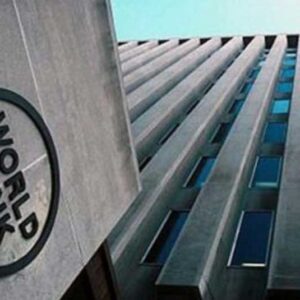
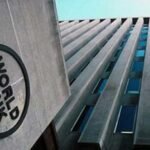
World Bank headquarters as Nigeria seeks approval for a new $1.25bn loan to support economic reforms and job creation.
Nigeria moves to secure $1.25bn World Bank loan before 2027 election

Nigeria’s Federal Government is in advanced talks with World Bank over a fresh $1.25bn loan package, which would become the second-largest single World Bank facility approved under Bola Tinubu if cleared next month. According to a report by Punch Newspapers, the proposed financing, titled Nigeria Actions for Investment and Jobs Acceleration, is scheduled for presentation to the World Bank board on June 26, 2026. The facility is intended to support reforms aimed at boosting job creation, investment and competitiveness. At the current exchange rate of about N1,361.4 to the dollar, the loan would add roughly N1.70tn to Nigeria’s debt stock. If fully approved and disbursed, external debt could rise from N74.43tn ($51.86bn) recorded at the end of 2025 to at least N76.13tn ($53.11bn), while total public debt could climb to N160.98tn. The World Bank’s Programme Information Document shows the loan has moved into the lender’s decision meeting stage, a late phase in its internal approval cycle. This indicates appraisal and negotiations are largely complete before final board consideration. The lender said the facility would help expand access to finance, electricity and digital services, while also supporting tax, trade and agricultural reforms. It described the programme as part of Nigeria’s broader economic reform agenda. The loan would push total World Bank approvals to Nigeria under Tinubu’s administration to about $10.6bn, according to Punch. Previous approvals since June 2023 cover sectors including education, health, agriculture, social protection and renewable energy. Debt concerns grow Economists have raised concerns about Nigeria’s rising borrowing despite government claims of improved revenue after the fuel subsidy removal. Adewale Abimbola said concessional loans are not inherently harmful if invested in projects that generate long-term growth and revenue. Aliyu Ilias questioned why the government was increasing debt despite reporting stronger income after economic reforms. Muda Yusuf warned that foreign loans expose Nigeria to exchange rate risks and could worsen fiscal vulnerability if revenue generation remains weak. The Nigerian Economic Summit Group also warned in its latest debt report that Nigeria remains in a high-risk fiscal environment. It said while some indicators suggest temporary stability, underlying debt pressure remains elevated. The group noted that public debt-to-GDP rose to 40.6 per cent in 2024 and that debt burden remained volatile through 2025, reflecting what it called persistent structural weakness. Election timing flagged The World Bank itself acknowledged political risks around the loan. In its internal document, it warned that the approach of the 2027 election could affect implementation of sensitive reforms. The proposed board consideration comes around six months before Nigeria’s January 16, 2027 presidential election, according to the timetable released by Independent National Electoral Commission. The World Bank stated that political and governance risks are high, warning that election pressures may delay or reverse planned reforms.
Politics

Popular Read

Nollywood actor Alex Ekubo

Nollywood actor Alex Ekubo dies at 40

Popular Nollywood actor and model Alexx Ekubo has reportedly died at the age of 40, throwing Nigeria’s entertainment industry into mourning. Multiple Nigerian media outlets reported on Tuesday that the actor passed away on Monday, May 11, after battling an illness believed to be cancer-related, although official confirmation from his family or management was still limited at the time of reporting. Ekubo, born Alex Ekubo-Okwaraeke, was widely known for his roles in Nollywood romantic dramas and comedy films. He rose to prominence after emerging as the first runner-up in the 2010 Mr Nigeria contest and later starred in hit productions including Weekend Getaway, The Bling Lagosians, A Sunday Affair and Áfàméfùnà: An Nwa Boi Story. Reports said concerns about his health had grown in recent months after he disappeared from social media and public events. His last known social media activity was reportedly in December 2024. Tributes have continued to pour in from colleagues, fans and members of the entertainment industry, many describing him as one of Nollywood’s most charismatic and recognisable stars. The reports were first circulated by Nigerian entertainment blogs and later picked up by several news organisations, including Punch Newspapers, Vanguard News and The Sun Nigeria.
Former Boko Haram members during a rehabilitation and reintegration programme in Borno State, Nigeria.

Repentant terrorists must swear on Quran before return to society, says Borno govt

The Borno State government says former insurgents enrolled in the federal deradicalisation programme swear an oath on the Quran before they are released back into society, insisting the process is meant to stop them from returning to terrorism. According to Punch Newspaper, the state government said the oath-taking is a final stage in its rehabilitation process for ex-members of Boko Haram and other armed groups, amid public concerns about the safety of reintegrating former fighters. Speaking on News Central television, Zuwaira Gambo, Commissioner for Women Affairs and Social Development, said those who complete the Borno model undergo several rehabilitation steps before taking the religious oath. She said swearing by the Quran carries serious consequences for those involved and claimed that anyone who returns to armed groups after surrendering would face rejection from their former allies. Gambo added that once a former insurgent leaves the bush and surrenders to authorities, extremist groups often regard that person as an outsider, making a return difficult. She said this was one reason the state believed the reintegration model remained effective. Her comments come after criticism over the reintegration of 744 former terrorists under Operation Safe Corridor, a federal programme designed to rehabilitate and reintegrate ex-combatants. Of that number, 597 were from Borno, while others came from Adamawa State, Yobe State, Kano State and other states. The scheme has triggered debate over transparency, accountability and justice for victims of extremist violence. Afam Osigwe, president of the Nigerian Bar Association, said reintegration without addressing the suffering of victims risked rewarding perpetrators while leaving survivors without closure. Isa Sanusi of Amnesty International Nigeria also raised concerns, saying the government should be more transparent about the identities and roles of those passing through the programme. Gambo acknowledged funding remained a major challenge, saying the programme requires resources to provide food, clothing, education and support services for participants.
Telecommunications mast in Nigeria as ATCON addresses network service disruptions

ATCON says network issues in Nigeria should end in 2026

The Association of Telecommunications Companies of Nigeria (ATCON) has assured Nigerians that persistent network disruptions affecting telecom users across the country should not continue beyond this year. Speaking during an interview on Channels Television’s The Morning Brief, Tony Emoekpere said operators and regulators are already implementing measures to tackle recurring service failures. He said telecom operators had made commitments to regulators and that several improvement projects were already underway. According to Emoekpere, discussions are ongoing among stakeholders across the sector, including mobile network operators, infrastructure providers and service providers, to improve network quality. He said: “There have been positive things already being done, projects have already been put in place, and commitments have already been made to regulators by the Mobile Network Operator. Most in general, I don’t think these issues should surpass this year.” The assurance comes after growing complaints from subscribers over poor call quality, unstable internet service, rapid data depletion and increased tariffs. The Federal Government of Nigeria recently increased pressure on telecom companies to improve service delivery, warning that subscribers deserve better connectivity and value for money. Bosun Tijani, Minister of Communications, Innovation and Digital Economy, said reforms had already been introduced to stabilise the telecom sector, while operators were expected to resolve ongoing service failures. Emoekpere also addressed concerns over data subscription renewals, saying unused data is not lost once users renew their plans. He explained that existing data balances are rolled over and added to newly purchased subscriptions. He added that the Nigerian Communications Commission has a dedicated consumer protection arm that handles complaints from subscribers and works with operators to resolve issues. Emoekpere said no telecom company intentionally delivers poor service, stressing that operators are equally affected by the sector’s challenges.
Nollywood actor Alex Ekubo

Nollywood actor Alex Ekubo dies at 40

Popular Nollywood actor and model Alexx Ekubo has reportedly died at the age of 40, throwing Nigeria’s entertainment industry into mourning. Multiple Nigerian media outlets reported on Tuesday that the actor passed away on Monday, May 11, after battling an illness believed to be cancer-related, although official confirmation from his family or management was still limited at the time of reporting. Ekubo, born Alex Ekubo-Okwaraeke, was widely known for his roles in Nollywood romantic dramas and comedy films. He rose to prominence after emerging as the first runner-up in the 2010 Mr Nigeria contest and later starred in hit productions including Weekend Getaway, The Bling Lagosians, A Sunday Affair and Áfàméfùnà: An Nwa Boi Story. Reports said concerns about his health had grown in recent months after he disappeared from social media and public events. His last known social media activity was reportedly in December 2024. Tributes have continued to pour in from colleagues, fans and members of the entertainment industry, many describing him as one of Nollywood’s most charismatic and recognisable stars. The reports were first circulated by Nigerian entertainment blogs and later picked up by several news organisations, including Punch Newspapers, Vanguard News and The Sun Nigeria.

Trending News

Gunmen kill 4, injure 15 at burial ceremony of 18-year-old in Anambra

Vigilante group kills three armed hoodlums in Anambra

Three gunmen have been shot dead by members of the Anambra Vigilante Group, (AVG). It was reported that the incident took place on Monday morning in Okija, Ihiala local government area of the state around 3.30 am. The gunmen numbering about 15 stormed the camp of the vigilante members, thinking they were sleeping. According to one of the AVG members, the gunmen came with AK-47 riffles and different charms. The charms, according to the source, were hung on their necks, waists, hands and legs. “When they came, they opened fire on us without knowing they stepped into the lion’s den. “Let them continue coming we are ready for them, nonsense people.” The report was confirmed by one of the Senior Police officers in the state, when the state police public relation’s officer, Tochukwu Ikenga could not be reached. The officer, said the command was working in tandem with the vigilance groups in the state and other sister agencies to make Anambra state the safest state in the country. Anambra: Two die in vigilante, gunmen shootout He said the vigilance group would hand over the corpses of the suspects to the command, including the arms recovered from them. Meanwhile, members of the community were in jubilant mood over the killing of the suspects. One of the residents, who gave her name as Patience, said the hoodlums had been terrorizing Okija for a long, the reason, according to her, the people constituted a committee. “That decision has started paying dividends. “Our people are determined to succeed on this project,” she said.
Read more

Anambra: Police raid brothel, rescue 9 underage sex workers

Operatives of the Anambra State Police Command on Monday raided a hotel and rescued nine underaged girls used as sex workers. The girls who are said to be within the age bracket of 15 – 23 years were taken away from the hotel while the owner of the brothel was arrested. The state police spokesman, DSP Tochukwu Ikenga, in a statement on Monday, informed that the police carried out the operation on the Awka-based hotel, following a reliable information from the state Ministry of Women and Social Welfare. Ikenga assured that the rescued girls found in the brothel will be rehabilitated before they repatriated to their various states of origin. He disclosed that the girls were lured with some money to Awka from Ebonyi, Enugu, Akwa Ibom and Rivers states by the proprietor of the brothel, and with a promise to given them more money to send to their parents in the village. Ikenga stated, “Following the information received from Anambra State Ministry of Women and Social Welfare on Sunday at 6:00pm, police operatives stormed a hotel in Awka and rescued nine girls within the ages of 15-23years, used for sex slaves and arrested the proprietor of the hotel. “Meanwhile, further interrogations/confessions of the rescued girls, revealed that the respective persons that brought them to the brothel lured/enticed them on the assurances of giving them jobs to alleviate poverty/needs of their parents and dependents. Vigilante group kills three armed hoodlums in Anambra “They further confessed to being taken from Ebonyi, Enugu, Akwa-Ibom, and Rivers States. Also, the Police Command is in collaboration with the Anambra State Ministry of Women and Social Welfare to make sure the girls are taken care of and safely returned to their parents/guardians. “The Command has condemned the act and frowned at such persons who take advantage of vulnerable individuals to make money and describe such places as a den where criminals take refuge. “We urge the good people of Anambra to continue to provide the police with information about such places as the joint operations to weed such harbour has commenced,” he narrated. He police spokesman encouraged members of the public to call the Command’s control room number on 07039194332 or PRO on 08039334002 while assuring them that all information passed through these channels will be treated with the utmost confidentiality. “The case has since been transferred to State Criminal Investigation Department Awka SCID, for comprehensive investigation and shall be charged to court afterwards,” he added.
Read more

Charly Boy to sue record company of breaching contract signed 35 yrs ago

Veteran entertainer Charles Oputa, popularly known as Charly Boy, has threatened to sue Premier Records Limited over alleged violation of terms of an agreement in musical contracts signed about 35 years ago. He made this known in a letter written to the record label by his lawyer, Mr Rockson Igelige, which was made available to the News Agency of Nigeria on Wednesday in Abuja. In the letter dated June 19, 2023, the lawyer said Charly Boy had signed Artists Recording Contracts with the company in 1988, 1990 and also recently. He, however, alleged that the contracts had since expired, but Premier Records was still breaching his client’s copyrights to the musical works. “On our client’s instructions, we demand that your company hand over our client’s master tapes, artworks, promo collateral for the music and other relevant and confidential information with your company within 30 days of the date of this letter. Sophia Momodu, Davido’s baby mama, hints at changing daughter’s surname “We also demand your company’s payment of our client’s outstanding royalties,” the letter read in parts. According to Igelige, the albums affected included, the one recorded in 1990 containing songs such as Big Bottom, Aids, Sexy Lady, Mama, and Nwata Miss. He also listed an album titled “U-Turn” with songs including Akula, Sheri, Comfort, Civilian Barrack, Akula (Instrumental). Also in the list is an album titled “Reality” which contains songs such as Monkey, Family Support, No.6 Man, Give Mv Life, Lagos Life and Baby Come Back. He contended that the terms of the contracts entered with the company as Polydor Record in 1988, Polygram Records Limited in 1990, and currently Premier Records Limited had ended by expiration of time. “In this wise, we have our client’s instructions to formally inform your company to stop further breach of our client’s copyrights to the musical works under the musical albums and single(s) produced during the aforesaid expired contract period. “This is a result of the fact that the condition precedent as well as the consideration for the contracts were not met and furnished. “This serves as a legal notice that further breach after the receipt of this letter will attract legal action.“We hope and trust that your company will comply with our client’s modest demands,” he said.
Read more
Aliko Dangote speaking on plans for Dangote refinery ownership and future public investment.

Dangote rejects NNPC refinery stake increase as IPO plans emerge

Aliko Dangote has disclosed that NNPC Limited sought to increase its 7.25 per cent ownership in the Dangote Petroleum Refinery, but the offer was turned down as the company prepares to open ownership to a wider pool of Nigerians.   Speaking in an interview with Nicolai Tangen, Dangote said the group wants to float shares in the refinery publicly rather than expand NNPC’s holding. He said the decision aligns with plans to broaden participation in the business ahead of a future listing.   According to Punch, NNPC bought its 7.25 per cent stake in 2021 for $1bn, with an option to acquire an additional 12.75 per cent. However, the company did not complete the purchase and remained at its current shareholding.   Dangote said future investors in the group’s businesses, including the refinery, cement, petrochemicals and fertiliser operations, would receive dividends in dollars because export revenue is expected to account for 80 per cent of earnings.   The billionaire industrialist also said the 650,000 barrels-per-day refinery has exceeded nameplate capacity, processing up to 661,000 barrels per day. He described the plant as proof of the group’s ability to deliver large-scale industrial projects in Nigeria.   Punch also reported that petrol supplied from domestic refineries reached 3.18 billion litres in the first quarter of 2026, while imports dropped to 965.52 million litres, according to data from the Nigerian Midstream and Downstream Petroleum Regulatory Authority.   Industry data showed domestic refining accounted for 76.7 per cent of total petrol supply in the first three months of the year. The refinery’s average ex-depot petrol price during the period was estimated at about ₦1,000 per litre, translating to roughly ₦3.2tn in domestic sales value.   Dangote said the business has also benefited from global supply disruptions linked to the US-Iran conflict. He noted that rising demand pushed fertiliser prices from $400 to $850 per tonne, while polypropylene prices climbed sharply, boosting export revenue.   He added that the group aims to inject about $45bn into expansion projects over the next few years, targeting $100bn in annual revenue and a market valuation above $250bn by 2030.
Aliko Dangote speaking on plans for Dangote refinery ownership and future public investment.

Dangote exports 1.66bn litres of fuel amid US-Iran tensions

The Dangote Petroleum Refinery & Petrochemicals exported about 1.66 billion litres of refined petroleum products in April 2026 amid growing tensions between the United States and Iran, according to fresh data from the Nigerian Midstream and Downstream Petroleum Regulatory Authority. The exports included 513 million litres of Premium Motor Spirit, also known as petrol, 534 million litres of diesel, and 615 million litres of aviation fuel. The figures were contained in the NMDPRA’s April 2026 fact sheet, which showed that the Lekki-based 650,000 barrels-per-day refinery recorded its highest monthly export volume since commencing operations. The report said the refinery exported an average of 55.4 million litres of petroleum products daily during the period under review. The surge in exports comes as fears grow over possible disruptions to global oil supply routes following escalating tensions involving the United States and Iran, particularly around the Strait of Hormuz, a major global oil shipping route. Industry experts quoted in the report said geopolitical uncertainty had increased demand for refined products from alternative suppliers, with Nigeria emerging as a key source for parts of Africa, Europe and Asia. The NMDPRA said local refineries achieved an average capacity utilisation of 99.12 per cent in April, with the Dangote refinery accounting for most of the production. The regulator added that the refinery operated at 100 per cent capacity “for most of the days in April.” The report also showed that domestic refineries received 18.37 million barrels of crude oil in April, compared to 13.11 million barrels in March. Despite meeting local supply obligations, the refinery maintained strong export activity. Average daily petrol production stood at 53.6 million litres, with 40.7 million litres supplied locally and 17.1 million litres exported daily. Diesel production averaged 23.6 million litres daily, while exports accounted for 17.8 million litres per day, more than twice the domestic supply volume of eight million litres daily. For aviation fuel, exports stood at 20.5 million litres daily compared to local supply of 2.6 million litres per day. The development comes weeks after domestic airline operators raised concerns over rising aviation fuel costs. The report also noted that Nigeria may have become a net exporter of petrol for the first time in decades following increased output from the Dangote refinery. In March, the refinery reportedly exported about 434 million litres of petrol after production exceeded domestic demand. According to the NMDPRA, Nigerians consumed an average of 51.1 million litres of petrol daily in April, while diesel and aviation fuel consumption stood at 17.3 million litres and 2.5 million litres daily respectively. The regulator attributed continued high petrol prices partly to global crude oil costs, which averaged $120.55 per barrel in April, while gasoline prices stood at $1,074.97 per metric tonne. The report said the refinery is expected to play a major role in Nigeria’s energy security and foreign exchange earnings as global fuel trade patterns continue to shift. Dangote refinery, Nigeria fuel exports, US-Iran tensions, NMDPRA, refined petroleum products, Nigeria petrol exports

President Bola Tinubu

Tinubu urges Africa to process its own resources, boost industrial growth

President Bola Tinubu has called for stronger economic integration across Africa, urging the continent to prioritise industrialisation, local processing of raw materials, and fair participation in global trade. Speaking at the Africa Forward Summit in Nairobi, Kenya, Tinubu said Africa must move away from exporting raw materials while importing finished products at higher costs. The summit was co-hosted by Emmanuel Macron and William Ruto. According to a statement by presidential spokesperson Bayo Onanuga, Tinubu said Africa’s current trade structure was driven by a global financial system that limits industrial growth across the continent. “Africa’s share of global manufacturing value added remains below 2 per cent,” Tinubu said, adding that the continent continued to suffer from high borrowing costs and limited access to affordable long-term finance. The Nigerian leader said his administration had introduced major economic reforms, including fuel subsidy removal, exchange rate unification, banking recapitalisation, and Nigeria’s exit from the Financial Action Task Force grey list. Tinubu stated that Nigeria’s debt-to-GDP ratio was projected at 32.3 per cent in 2026, while external reserves had risen to $45.5 billion. However, he argued that African countries still faced unfair treatment from creditors and global rating agencies. “Nigeria is not asking for charity. We are demanding a financial system that intentionally enables Africa to industrialise,” Tinubu said. The President also highlighted Nigeria’s blue economy potential, saying maritime security and stronger regional cooperation were critical to unlocking investment and economic growth in the Gulf of Guinea. Tinubu pledged to expand Nigeria’s Deep Blue Project maritime intelligence infrastructure and make it available as a shared data hub for willing regional partners. He said improved maritime governance, secure sea lanes, and harmonised regional laws would help attract private capital and modernise Africa’s maritime sector. On migration, Tinubu said African governments must address the root causes pushing young people to leave the continent, including unemployment and lack of economic opportunities. He called on international partners to increase investments in climate adaptation, energy access, digital skills, and job creation across Africa. The President also urged stronger African cooperation in shaping global migration policies, describing current international migration frameworks as insufficient because they remain non-binding. The summit brought together leaders and officials from more than 30 countries, including António Guterres and Mahamoud Ali Youssouf. Tinubu also held talks with CAF President Patrice Motsepe, where he reaffirmed Nigeria’s readiness to host the 2026 CAF Awards. The President was accompanied by senior government officials and leading Nigerian business figures, including Aliko Dangote, Tony Elumelu, Abdulsamad Rabiu, and Aigboje Aig-Imoukhuede.
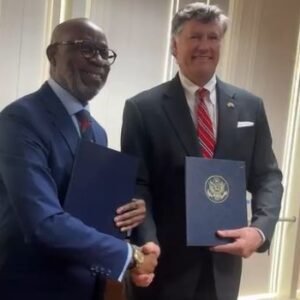
French President Emmanuel Macron speaks during the Africa-France summit in Nairobi, Kenya, advocating increased investment and economic partnerships in Africa.

Macron urges fresh investment push across Africa

French President Emmanuel Macron has called for stronger investment partnerships in Africa, saying the continent needs economic opportunities rather than dependence on aid. Speaking at the University of Nairobi during the Africa-France summit in Kenya,said Africa required increased investment to become “more sovereign”, stressing that old approaches by European leaders were no longer suitable. According to Channels Television, theleader said European governments previously lectured African nations on development priorities, but acknowledged that such rhetoric no longer reflected Africa’s expectations. “This is no longer what Africa needs or wants to hear,” Macron said while speaking in French. The summit in Nairobi forms part of France’s renewed diplomatic and economic engagement with African nations after years of strained relations with some former colonies. Macron also defended Europe’s role on the continent, arguing that European nations were not “the predators of this century”. He contrasted Europe’s approach with the growing rivalry between the United States and China, which he accused of disregarding international trade rules. The French president criticised China’s handling of critical minerals and rare earth resources, claiming Beijing’s policies created global dependencies by concentrating processing activities at home. He said Europe instead supported a “strategy of autonomy” aimed at strengthening both African and European economies through investment and partnerships. Macron further called for reforms to international finance systems to encourage more private sector investment in Africa through financial guarantees and improved funding mechanisms. The Channels Television report noted that Macron also addressed France’s military withdrawals from Mali, Burkina Faso and Niger following coups in those countries between 2020 and 2023. He maintained that France’s presence in the Sahel had originally been requested to help combat jihadist threats and insisted the troop withdrawals were a “logical response” once local authorities no longer wanted French support. Macron expressed optimism that the Sahel region would eventually return to democratic governance led by elected leaders focused on citizens’ welfare. The summit also featured bilateral agreements between France and Kenya, including cooperation on nuclear energy.
Former Vice President Atiku Abubakar speaking during a political event in Abuja.

Atiku demands suspension of NNPC refinery deal with Chinese firms

Former Vice President Atiku Abubakar has called for the immediate suspension and public scrutiny of the Nigerian National Petroleum Company Limited’s proposed “Technical Equity Partnership” involving Chinese firms Sanjiang Chemical Company Limited and Xingcheng (Fuzhou) Industrial Park Operation and Management Co. Ltd. In a statement issued on Friday by his Senior Special Assistant on Public Communication, Phrank Shaibu, Atiku described the agreement as “another dangerous gamble” with Nigeria’s economic future. According to the statement reported by Punch Newspapers, the former Peoples Democratic Party presidential candidate accused the administration of President Bola Tinubu of attempting to mortgage key national assets through arrangements he claimed lacked transparency, accountability and technical credibility. Atiku questioned the competence of the two Chinese firms selected for the rehabilitation and management of the Port Harcourt and Warri refineries. “We are demanding an immediate suspension and public scrutiny of the ‘Technical Equity Partnership’ announced by the Nigerian National Petroleum Company Limited involving two Chinese firms,” he stated. He argued that despite billions of dollars reportedly spent on refinery rehabilitation over the years, Nigerians were again being asked to trust what he called another “experiment built on secrecy and questionable competence.” The former vice president claimed that independent assessments showed neither company possessed the global reputation or technical expertise associated with managing large-scale crude oil refineries. Atiku said Sanjiang Chemical mainly specialises in petrochemicals such as surfactants, methanol-to-olefins and light hydrocarbon processing, rather than crude oil refining. “There is no publicly available evidence anywhere in the world showing that Sanjiang has ever built, operated, or managed a full-scale crude oil refinery of the magnitude and complexity of Port Harcourt or Warri refineries,” he said. He also criticised Xingcheng (Fuzhou) Industrial Park Operation and Management Co. Ltd., alleging that available records did not show verifiable experience in petroleum engineering or refinery operations. According to Atiku, the Federal Government and the Nigerian National Petroleum Company Limited should have considered globally recognised refinery engineering and EPC firms instead of companies whose expertise he said remained unclear. He warned that the arrangement could turn Nigeria’s refineries into “another expensive black hole of failed promises, reckless experimentation, and opaque transactions.” The ADC chieftain further raised concerns about Sanjiang Chemical’s financial standing, alleging that reports indicated declining revenues, shrinking profitability and rising debt exposure. “This raises a fundamental question: if a company is already battling financial compression and liquidity concerns in its own operations, how exactly does it intend to shoulder the burden of reviving two of Africa’s most troubled refineries?” he queried. Atiku maintained that Nigerians should not allow what he described as another cycle of opaque refinery agreements after years of failed turnaround maintenance projects. The NNPC has yet to officially respond to Atiku’s remarks as of the time of filing this report.
Food items including eggs, beans, rice and onions displayed in a Nigerian market as prices rise in March 2026.

Nigerians Pay More for Eggs, Beans, Rice as Food Costs Increase

According to Channels Television, Nigerians paid more for key food items in March 2026 as prices of eggs, beans, local rice, garri, onions and ginger recorded month-on-month increases despite some year-on-year declines. The report, released by the National Bureau of Statistics, showed that a crate of eggs averaged ₦6,127.62 in March, up by 2% from February. Brown beans rose by 1.41% month-on-month to ₦1,325.85 per kilogram, while white garri increased by 1.38% to ₦801.54. Fresh ginger recorded one of the sharpest increases, climbing 20.46% year-on-year to ₦5,541.25 per kilogram. Onion prices also rose by 1.59% compared to February, although they remained lower than March 2025 levels. State-by-state analysis revealed major price differences nationwide. Taraba recorded the highest egg prices, while Oyo had the highest average price for brown beans. Abia posted the highest prices for garri and onions. Regional data showed the South-East recorded the highest average egg and onion prices, while the South-West and South-South zones led in bean prices. The latest figures come amid persistent inflationary pressure in Nigeria. Earlier data from the NBS showed the country’s headline inflation rate rose to 15.38% in March 2026, with food inflation standing at 14.31%.

Business

President Bola Tinubu meets CAF president Patrice Motsepe during talks on Nigeria’s bid to host the 2026 CAF Awards and CAF General Assembly

Tinubu approves Nigeria’s bid to host 2026 CAF awards

President Bola Tinubu has approved Nigeria’s bid to host the 2026 CAF Awards, strengthening the country’s push to stage two major African football events. According to Channels Television, the approval was confirmed by the Nigeria Football Federation in a statement released on Monday. The federation also disclosed that Tinubu endorsed Nigeria’s proposal to host the 48th CAF Ordinary General Assembly later this year. The president announced the decisions during the Africa Forward Summit in Nairobi following a meeting with Patrice Motsepe, president of the Confederation of African Football. Others present at the meeting included Nigeria’s Minister of Foreign Affairs Bianca Odumegwu-Ojukwu, acting CAF General Secretary Samson Adamu, NFF President Ibrahim Gusau and former NFF president Amaju Pinnick. The CAF Ordinary General Assembly, scheduled for October, will bring together leaders of CAF’s 54 member associations, representatives of its six zonal unions, and senior football administrators across Africa. The CAF Awards is regarded as one of African football’s biggest annual ceremonies, recognising outstanding players, coaches and contributors on the continent. Nigeria last hosted the event on January 6, 2017, when Riyad Mahrez won the men’s African Player of the Year award, while Asisat Oshoala claimed the women’s prize. The 2025 CAF Awards ceremony took place in Rabat, Morocco, with Achraf Hakimi and Ghizlane Chebbak emerging as winners in the men’s and women’s categories respectively. Nigeria’s Victor Osimhen and Ademola Lookman won the men’s African Footballer of the Year awards in 2023 and 2024 respectively, while Oshoala also secured the women’s award in 2023 to extend her record to six titles. CAF is expected to announce the final host city for both events in the coming months.
Fans React as Mbappe Petition Explodes After Real Madrid Setback

Real Madrid under pressure as ‘Mbappe out’ petition surpasses 70 million

A petition linked to Kylian Mbappé has reportedly gathered more than 70 million signatures following growing frustration among supporters during Real Madrid’s turbulent season, according GOAL. The online campaign gained momentum amid growing frustration over Real Madrid’s disappointing season, with criticism intensifying after the club’s defeat to rivals FC Barcelona in El Clasico. Mbappe, who arrived in Madrid amid huge expectations, has remained one of the most talked-about figures in European football despite the team’s struggles. The French forward has continued to deliver goals, but pressure has mounted on the club after disappointing results in key competitions. The petition, which spread rapidly across social media, reflects the growing frustration among sections of the fanbase as Madrid risk ending the campaign without major silverware. Questions have also been raised over the club’s tactical approach and whether the current squad is capable of competing consistently at the highest level. Attention has turned to manager Alvaro Arbeloa’s and the club hierarchy as scrutiny intensifies in the Spanish capital. Despite the backlash, Mbappe remains a central figure in Madrid’s long-term plans, with the club expected to rebuild and strengthen ahead of next season.
Barcelona clinch 29th LaLiga title with El Clasico win over Real Madrid

Barcelona clinch 29th LaLiga title with El Clasico win over Real Madrid

FC Barcelona sealed their 29th LaLiga crown after a commanding 2-0 win over rivals Real Madrid CF in El Clasico at Camp Nou on Sunday. According to Reuters, the victory moved Barcelona to 91 points, 14 clear of Real Madrid with only three matches left, confirming back-to-back league titles under coach Hansi Flick. Barcelona took control early when Marcus Rashford curled a stunning free-kick into the top corner in the ninth minute after a foul on Ferran Torres. Torres doubled the lead nine minutes later, finishing off a slick attacking move involving Dani Olmo and Fermin Lopez. Real Madrid, missing several key players including Kylian Mbappe, struggled to respond as Barcelona dominated possession and created the better chances throughout the match. Goalkeeper Thibaut Courtois made several saves to prevent a heavier defeat. The occasion was emotional for Flick, who took charge of the match just hours after the death of his father. Before kick-off, Camp Nou observed a minute’s silence in tribute, with television images showing the German coach visibly emotional on the touchline. Barcelona’s latest triumph continues their dominance in Spanish football, with Flick’s side now winning consecutive league titles and further cementing their superiority over their fiercest rivals this season.
Man United Fernandes wins Football Writers' men's award

Man United Fernandes wins Football Writers’ men’s award

Bruno Fernandes has been named the men’s Footballer of the Year by the Football Writers’ Association following an impressive campaign for Manchester United. The Portugal midfielder earned 45 per cent of the votes cast by the FWA’s more than 900 members after contributing eight goals and 20 assists in 34 appearances across all competitions this season. Fernandes finished ahead of Declan Rice, who came second, while Erling Haaland placed third in the voting. The 30-year-old has been central to United’s improved performances under interim manager Michael Carrick, helping the club move towards a third-place finish in the Premier League and qualification for next season’s UEFA Champions League. Despite the turnaround in form, United are set to end the campaign without silverware for a second consecutive season. Fernandes also becomes the first Manchester United player to win the prestigious award since Wayne Rooney claimed it in 2010. The FWA award is regarded as one of English football’s most respected individual honours, voted for annually by football journalists across the country.
Aston Villa players celebrate after defeating Nottingham Forest to reach the Europa League final in front of home fans.

Aston Villa crush Forest to reach Europa League final

Aston Villa demolished Nottingham Forest’s hopes to charge into the Europa League final and edge closer to ending a 30-year major trophy drought. John McGinn’s late double added to Emi Buendia’s penalty and Ollie Watkins’ opener to complete Villa’s comeback against Nottingham Forest after last week’s 1-0 first-leg defeat. The hosts booked a final against Bundesliga side Freiburg, who beat Braga 4-3 on aggregate, in Istanbul on 20 May. Villa head coach Unai Emery is chasing his fifth Europa League title, having joined the club as a serial winner of this competition. His team will be looking to lift Villa’s first major silverware since the 1996 League Cup, and with it book a Champions League spot. They are still fifth in the Premier League and if they finish there and win the Europa League, the team in sixth – currently Bournemouth – will also qualify for the Champions League. This was a deserved victory for the hosts, in front of fan Prince William, with Forest rarely threatening without Morgan Gibbs-White. The playmaker was only fit enough for the bench following a head injury which required extensive stitches in Monday’s win at Chelsea. It took Villa until seven minutes before the break to level on aggregate when Watkins turned in Buendia’s centre from the left. They went ahead overall 13 minutes after the break when referee Glenn Nyberg awarded a penalty after reviewing the monitor following a VAR check when Nikola Milenkovic tugged Pau Torres. Watkins had a goal disallowed for offside, while Emi Martinez denied Chris Wood at the other end, before McGinn ‘s quickfire two goals wrapped up victory.
Crystal Palace players celebrate after defeating Shakhtar Donetsk to reach the Conference League final at Selhurst Park.

Crystal Palace reach first European final after beating Shakhtar Donetsk

Crystal Palace created club history as they defeated Shakhtar Donetsk in the Conference League semi-finals to move into their first ever European final. The Eagles led 3-1 after the first leg a week ago in Poland, and thought they had stretched their advantage when Yeremy Pino raced through and slotted a calm finish into the net. However, the winger was ruled offside following an extremely tight offside decision when he collected Jean-Philippe Mateta’s flick-on. But, at a raucous Selhurst Park for the second-leg tie, Palace took the lead in the 25th minute. Adam Wharton’s powerful 25-yard strike was pushed away by goalkeeper Dmytro Riznyk, but it dropped for Daniel Munoz, whose low cross from a tight angle was steered into his own net by Pedro Henrique. Shakhtar battled back to make it 1-1 on the night when Eguinaldo collected a Pedro Henrique pass and curled a fine effort into the top corner. Mateta then went close to restoring Palace’s three-goal overall advantage just before half-time, only to hit the post with a spectacular scissor-kick. But Ismaila Sarr sealed his side’s 5-2 aggregate success when he stretched to slide the ball into the net from Tyrick Mitchell’s low left-wing cross. It was his ninth goal in the competition to make him the outright top scorer this term. Palace will face Rayo Vallecano in the final on Wednesday, 27 May in Leipzig, Germany, after the Spanish side defeated French outfit Strasbourg – managed by Gary O’Neil – 2-0 on aggregate in the other semi-final.

Sports

Sports

World News

Education

Fire-damaged main library building at Kano State Polytechnic after blaze destroyed books and academic records

Fire guts Kano Polytechnic library, destroys books and records

A fire has destroyed the main library at Kano State Polytechnic, raising concerns over the loss of academic materials and the impact on students and staff.   The blaze broke out on Tuesday at the institution’s library complex along Yahaya Gusau Road in Kano, destroying books, equipment and institutional records before emergency efforts brought it under control.   According to The Guardian Nigeria, the incident has sparked concern among students, lecturers and education stakeholders, with fears that the loss of research materials and records could affect teaching and academic work at the school.   The chairman of the National Library Staff Union in Kano State, Nazir Muhammad, described the incident as a major setback for academic development and knowledge preservation. He said the library housed vital resources used by students, lecturers and researchers.   Witnesses said thick smoke spread across the campus during the incident, while staff and residents attempted to salvage materials from the building. Authorities have not yet confirmed the full extent of the damage or the cause of the fire.   The union appealed to the Kano State Government, education agencies and donor groups to support rebuilding efforts. It also called for stronger fire safety measures in public schools, citing repeated fire incidents at the institution in recent years. The Guardian reported that investigations are expected to begin to determine what caused the outbreak.
Japanese flag waving outside a government building as Japan tightens student visa and documentation requirements for foreign students.

Japan tightens student visa rules with tougher documentation demands

International students planning to study in Japan will now face a stricter and more documentation-heavy visa process, according to updated guidance highlighted by the Economic Times and official Japanese education authorities.   The report, citing the “Study in Japan” portal operated by the Japan Student Services Organization, said applicants must complete several mandatory stages before being allowed entry into the country for long-term studies. The revised process includes securing admission into a recognised institution, obtaining a Certificate of Eligibility, applying for a student visa, and completing residence registration after arrival. Certificate of Eligibility now central to process A major requirement is the Certificate of Eligibility, commonly known as the COE. Under Japan’s immigration rules, the document must be processed through a regional immigration services bureau in Japan, usually by the admitting university or language school acting on behalf of the student. The COE serves as proof that the applicant satisfies Japan’s immigration conditions for study purposes. Without it, securing a student visa may become difficult. Students have also been advised to work closely with their institutions to meet documentation requirements and avoid delays. Proof of funds mandatory Japan now requires students to show evidence that they can financially support themselves throughout their stay. Applicants may need to provide bank statements, income records, or sponsorship documents covering tuition, accommodation, and living costs. The measure is intended to ensure foreign students can sustain themselves without financial hardship during their studies. Visa application requirements Once the COE is issued, students can apply for a visa through a Japanese embassy or consulate in their country of residence.   Standard requirements include: Valid passport Completed visa application form Passport photographs Copy of the Certificate of Eligibility Additional supporting documents if requested   Travellers are also expected to carry the documents during immigration checks upon arrival in Japan. Residence registration after arrival Students staying longer than three months will receive a residence card, known as a zairyu card, at major airports including Narita International Airport, Haneda Airport, Kansai International Airport and Fukuoka Airport. Students must register their address at a local municipal office within 14 days of arrival and are required to carry the residence card at all times. “My Number” identification system Foreign residents will also be assigned a 12-digit identification code under Japan’s “My Number” system after completing residence registration. The number is used for taxation, employment, banking, and other administrative services. Students may additionally apply for a My Number card as an official means of identification. Short-term rules for entrance exams Prospective students travelling only to sit entrance examinations must apply for a Temporary Visitor visa using an official examination voucher from the institution involved. Depending on nationality, permitted stays may range from 15 to 90 days. In some cases, successful applicants may still need to return home to obtain a formal student visa before resuming studies in Japan. The updated framework reflects Japan’s tighter approach to regulating international student entry, with stronger emphasis on financial verification, documentation, and post-arrival compliance.

JAMB officials and education stakeholders during the 2026 admission policy meeting in Abuja.

JAMB retains 150 Cut-Off mark for university admissions

The Joint Admissions and Matriculation Board (JAMB) has retained 150 as the minimum cut-off mark for admission into Nigerian universities for the 2026/2027 academic session. According to Channels Television, the decision was announced during JAMB’s policy meeting held in Abuja on Monday. The board said the benchmark followed a vote by vice-chancellors and other stakeholders at the meeting. JAMB also approved 150 as the minimum score for Colleges of Nursing, while Polytechnics will maintain 100 as their minimum admissible score. The annual policy meeting determines admission guidelines and benchmark scores for tertiary institutions across Nigeria. Stakeholders at the event included vice-chancellors, rectors, provosts, registrars, and officials from education regulatory agencies.
Minister of Education Tunji Alausa announcing new drug testing measures for secondary school students in Nigeria.

FG mandates drug tests for secondary school students

The Federal Government has introduced compulsory drug testing for students in secondary schools as part of new measures aimed at tackling substance abuse among adolescents in Nigeria. Under the new policy, all newly admitted students will undergo mandatory drug integrity tests at the point of entry, while returning students will also be subjected to periodic and unannounced screenings at least once every academic session. The directive is contained in the National Implementation Guidelines Against Drug and Substance Use in Schools in Nigeria for secondary schools, according to a report by Punch Newspapers. The guideline states that the policy seeks to create a safer learning environment and reduce the impact of substance abuse on students’ mental health and academic performance. It added that all tests must be conducted in collaboration with approved federal or state health facilities and follow established procedures. The policy also bans students from possessing or using narcotic drugs, controlled substances or other drugs of abuse without approval from school authorities. However, students who require controlled medication for medical reasons must disclose such drugs through their parents or guardians during admission. According to the guideline, students who test positive will undergo a three-stage intervention process involving counselling, treatment and rehabilitation. Students who fail the first drug test will receive counselling and initial treatment determined by school authorities. A second positive result will lead to referral to medical professionals for specialised care. The document further states that students who test positive for a third time may face temporary suspension from school while undergoing rehabilitation and treatment from qualified professionals. The policy also introduces compulsory pre-test and post-test counselling for students undergoing screening. It explained that pre-test counselling is designed to prepare students for the process, reduce anxiety and build trust, while post-test counselling aims to help students accept their results and connect them with appropriate support services. To ensure compliance, schools are expected to establish disciplinary committees headed by school administrators. The guideline added that violent incidents linked to substance abuse, including fighting and inflicting injuries, must be reported to law enforcement agencies. It also warned that students who refuse treatment or rehabilitation procedures could be temporarily removed from the school environment until they are considered stable. The development comes amid growing concerns among education and health stakeholders over rising cases of drug and substance abuse among young people and its impact on discipline, security and academic performance in schools nationwide. Supporters of the policy believe it could help curb substance abuse among students, while critics are expected to raise concerns over implementation, students’ rights and the readiness of schools and healthcare facilities to enforce the measures effectively.
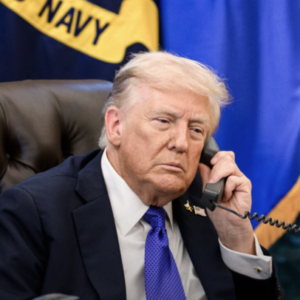
NECO celebrates 25 years, says 35 million candidates sat examinations

NECO celebrates 25 years, says 35 million candidates sat examinations

The National Examinations Council (NECO) has disclosed that more than 35 million candidates have participated in its various examinations over the past 25 years. Registrar and Chief Executive of NECO, Dantani Wushishi, made the disclosure during the Gala and Awards Night organised as part of activities marking the council’s 25th anniversary in Minna. Speaking on the theme, “Celebrating 25 Years of NECO’s Excellence in Educational Assessment,” Wushishi said the council was established on July 10, 1999, after years of public demand for a credible, efficient and nationally responsive examination body. According to him, the establishment of NECO followed recommendations by several government panels and committees between 1977 and 1997, which highlighted the need for a national examination institution capable of addressing Nigeria’s growing educational demands. “Over the last 25 years, our work has touched the lives of almost 35 million Nigerians through various examinations. This reflects the trust reposed in NECO and our unwavering commitment to fairness, credibility, and integrity in examination administration,” he said. Wushishi described the silver jubilee celebration as an opportunity not only to celebrate the council’s achievements but also to reflect on its journey and recommit to innovation and continuous improvement in educational assessment. He said NECO would continue to uphold high standards in examination administration through the adoption of modern technology, stronger collaboration with stakeholders and sustained investment in human capital and institutional processes. As part of the anniversary celebration, NECO conferred its highest honour, the Lifetime Achievement Award, on Dibu Ojerinde, former Registrar of the Joint Admissions and Matriculation Board and pioneer Registrar of NECO from 1999 to 2007.
Minister of Education Tunji Alausa announcing ban on ‘Dr’ title for honorary degree holders in Abuja

BREAKING: FG bans ‘Dr’ title for honorary degree holders

The Federal Government has banned recipients of honorary degrees from using the “Dr” title, declaring the practice a misrepresentation of academic credentials and warning it will now be treated as fraud. The Minister of Education, Tunji Alausa, announced the directive on Wednesday at the Presidential Villa in Abuja while briefing State House correspondents, following approvals by the Federal Executive Council. He said the new policy introduces a uniform framework for the award and use of honorary degrees by Nigerian universities, aimed at curbing abuse and restoring the credibility of academic titles. Alausa explained that honorary degree holders must no longer prefix “Dr” to their names in any official, academic, or professional setting. Instead, recipients are required to use the full honorary designation after their names to clearly indicate the nature of the award. “For instance, you can write Chief Louis Clark, D.Lit. (Doctor of Literature, Honoris Causa) or Mrs Miriam Adamu, LL.D. Hons,” he said. He added that any attempt to present honorary degrees as earned qualifications would be regarded as academic fraud, with legal and reputational consequences. The minister noted that the policy seeks to address longstanding concerns about the politicisation and commercialisation of honorary degrees, which he said have often been awarded for financial or political patronage rather than merit. Under the new rules, universities are restricted to awarding only four types of honorary doctorates: Doctor of Laws, Doctor of Letters, Doctor of Science, and Doctor of Humanities. Institutions without active PhD programmes are barred from conferring honorary degrees, a move targeting newer universities that lack postgraduate research capacity. Alausa also said all honorary degrees must clearly state “honorary” or “Honoris Causa” on certificates and in all references. The minister recalled that previous efforts by the Association of Vice-Chancellors of Nigerian Universities, including the 2012 Keffi Declaration, failed due to lack of legal backing. He said the latest policy now has full executive approval, giving it enforceable authority. The Federal Ministry of Education, alongside the National Universities Commission, will issue guidelines to universities and monitor compliance, including during convocation ceremonies. The government also plans to publish an annual list of legitimate honorary degree recipients and work with the media to discourage misuse of academic titles.

Education

Education

Arts & Entertainment

Nollywood actor Alex Ekubo

Nollywood stars pay emotional tribute to Alex Ekubo

Veteran filmmaker Mo Abudu, actress Omoni Oboli and several Nollywood stars have paid emotional tributes to late actor Alex Ekubo following news of his death. The actor’s passing, reported on Tuesday, has thrown Nigeria’s entertainment industry into mourning, with colleagues and fans sharing messages of grief across social media platforms. According to The Guardian Nigeria, Oboli described the actor, popularly known as “Ikuku,” as her “bestie” in an emotional Instagram post. “I’m devastated. My bestie! Why? We had a plan! Where do I start from?” she wrote. Abudu, Chief Executive Officer of EbonyLife Group, reflected on their relationship and revealed that Ekubo fondly called her “Mum.” “We hadn’t spoken in a while… I never imagined there wouldn’t be another chance,” she wrote, describing the late actor as “loving, real, kind, and always so respectful.” Actress Kate Henshaw said Ekubo supported her during the loss of her mother two years ago. “I wanted a chance to repay you for your kindness… but not like this, Alex,” she wrote. Actress Yvonne Jegede also expressed shock, saying she struggled to process the news. “Are you telling me I will never see Ikuku again? So I won’t hear him scream CHOCO with a big smile again?” she wrote. Actor Kunle Remi described Ekubo as “a good man,” while actress Ruth Kadiri said she had regularly checked on him and feared the day would come. Other entertainers, including Ini Dima-Okojie, Bucci Franklin, Dayo Amusa and Johnny Drille, also mourned the late actor. Ekubo’s death was announced by colleagues including actress and filmmaker Funke Akindele, who disclosed that she had tried to see him before his passing.
Nollywood actor Alex Ekubo

Nollywood actor Alex Ekubo dies at 40

Popular Nollywood actor and model Alexx Ekubo has reportedly died at the age of 40, throwing Nigeria’s entertainment industry into mourning. Multiple Nigerian media outlets reported on Tuesday that the actor passed away on Monday, May 11, after battling an illness believed to be cancer-related, although official confirmation from his family or management was still limited at the time of reporting. Ekubo, born Alex Ekubo-Okwaraeke, was widely known for his roles in Nollywood romantic dramas and comedy films. He rose to prominence after emerging as the first runner-up in the 2010 Mr Nigeria contest and later starred in hit productions including Weekend Getaway, The Bling Lagosians, A Sunday Affair and Áfàméfùnà: An Nwa Boi Story. Reports said concerns about his health had grown in recent months after he disappeared from social media and public events. His last known social media activity was reportedly in December 2024. Tributes have continued to pour in from colleagues, fans and members of the entertainment industry, many describing him as one of Nollywood’s most charismatic and recognisable stars. The reports were first circulated by Nigerian entertainment blogs and later picked up by several news organisations, including Punch Newspapers, Vanguard News and The Sun Nigeria.
Davido speaking during a livestream interview, discussing his music career and possible government role, referencing Michel Martelly.

Government role won’t end my music career – Davido

Grammy-nominated Nigerian singer Davido has said that taking up a government position would not stop him from continuing his music career. According to The Nation Online Nigeria, the artist made the remark during a livestream conversation with Davrel, where he explained that he could still perform even while serving in public office. Davido said that balancing both roles would be possible, though he expects his performance schedule would be reduced if he ever joined government service. “I would still be performing if I ever chose to work for the government. That doesn’t stop anything, in my opinion,” he said. He referenced former Haitian President Michel Martelly as an example, noting that Martelly continued his music career while in office, including performing and touring during his presidency. Davido, however, clarified that he is no longer actively pursuing a political career. He said observing Nigerian entertainers who transitioned into politics influenced his decision, adding that many have not achieved notable success in the space. The singer remains focused on his music career, which has continued to earn him international recognition.

Celebrities on the Met Gala 2026 red carpet wearing sculptural and artistic fashion inspired by the Costume Art theme

Met Gala 2026: Celebrities turn fashion into art

Global celebrities have delivered striking fashion statements at the 2026 Met Gala, interpreting the “Costume Art” theme with bold, sculptural and highly creative designs. The annual fashion event, held on Monday, May 4 in New York, brought together designers, entertainers and cultural figures at the Metropolitan Museum of Art for one of the industry’s most anticipated nights. This year’s theme aligns with the Costume Institute’s spring exhibition, which explores the “dressed body” across 5,000 years of art history. The accompanying dress code, “Fashion Is Art”, set the tone for imaginative and boundary-pushing looks on the red carpet. Early arrivals showcased flowing fabrics, feathered textures and sculptural silhouettes. Ayo Edebiri appeared in ethereal drapery inspired by classical Greco-Roman statues, while Olympic athlete Eileen Gu opted for a futuristic Iris Van Herpen design blending technology with art. As the evening progressed, high-profile attendees elevated the spectacle. Blake Lively wore a multi-toned gown inspired by painted canvases, while Kim Kardashian debuted a body-moulded metallic look that blurred the line between sculpture and fashion. Rapper Doechii introduced performance-art elements into her ensemble, reinforcing the “body as canvas” concept. The arrival of co-chairs marked a defining moment of the night. Beyoncé made a highly anticipated return after a decade, accompanied by Jay-Z and Blue Ivy Carter. She wore a diamond-encrusted gown inspired by the human ribcage, symbolising the body as armour. Nicole Kidman opted for refined elegance, Venus Williams combined athletic grace with couture, and Anna Wintour maintained her signature style in a feathered Chanel piece. The red carpet later embraced theatricality, with Madonna presenting a gothic, shipwreck-inspired look and Cher making a surprise appearance in a leather and tulle ensemble. Teyana Taylor, Sabrina Carpenter and Doja Cat added youthful and experimental energy to the event. Closing the carpet in dramatic fashion, Rihanna and A$AP Rocky arrived late, drawing widespread attention. Rihanna wore a gunmetal couture outfit reportedly inspired by her Caribbean heritage, while Rocky complemented her with a layered design. Following the red carpet, guests moved into the museum for a private viewing of the exhibition, a cocktail reception, dinner and exclusive performances. The event maintains a strict no-phone policy and continues to serve as a major fundraiser for the Costume Institute, generating more than $30 million annually. Source: ChannelsTV
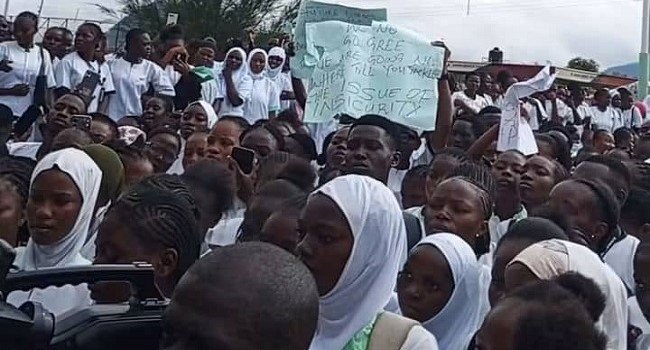
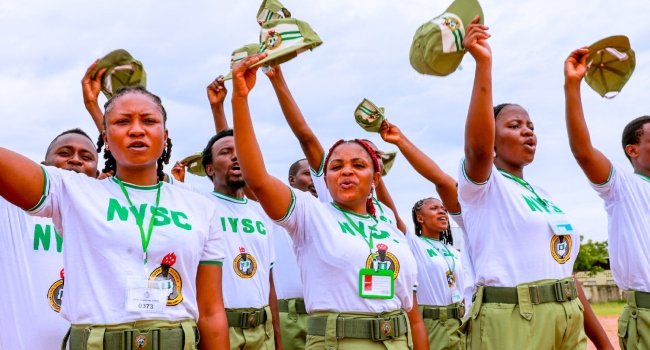
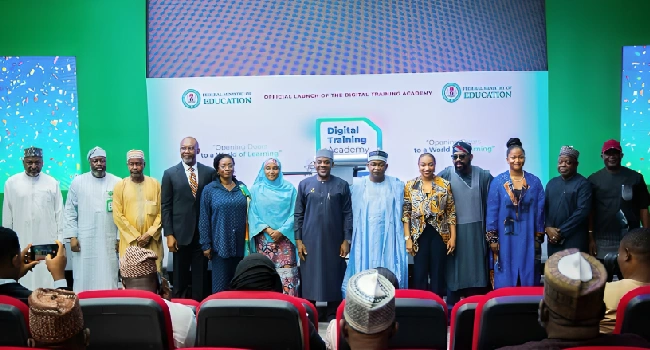
Abuja DJ completes 72-hour set in Guinness Record attempt

An Abuja-based disc jockey, VDJ Mobi, has completed a 72-hour non-stop performance in a bid to set a new Guinness World Record. The DJ, whose real name is Amaobi Udeh, described the feat as physically demanding but deeply rewarding after months of preparation. According to The Nation, the event, tagged Mobi’s Mixathon, featured an uninterrupted DJ set that lasted three consecutive days. The performance followed strict technical guidelines required for Guinness World Records validation. Speaking after the session, VDJ Mobi said the experience pushed her limits but delivered a strong sense of fulfilment. “I feel an overwhelming sense of gratitude and relief. Standing here after 72 hours, the physical exhaustion is real, but the mental fulfilment is on another level,” she said. She added that maintaining energy throughout the marathon was a key achievement. “We didn’t just play music, we curated an experience that stayed high-energy until the very last second. To see a vision that started as a draft on paper turn into a successful 72-hour reality gives me a deep sense of peace and personal victory.” VDJ Mobi credited the audience for sustaining momentum, noting that the turnout challenged perceptions about nightlife engagement in the Federal Capital Territory. “The response was electric and quite humbling. The Abuja crowd completely shattered the stereotype that they are reserved. They were the heartbeat of this marathon,” she said. On compliance with Guinness World Records requirements, she expressed confidence that all protocols were followed, including proper documentation and witness coordination. “We were incredibly disciplined with the GWR protocols, from the logbooks to the witness transitions. We didn’t take any shortcuts,” she said, while acknowledging the role of sponsors and partners in ensuring seamless logistics. Beyond the record attempt, the DJ said the event also served as a platform to advocate for the girl-child. “This wasn’t just about entertainment; it was a 72-hour broadcast for a cause. We used the platform to emphasise that the girl child deserves every opportunity to dream and achieve,” she said. She urged aspiring record breakers to prioritise purpose and preparation. “Your ‘why’ must be stronger than your fatigue. Prepare meticulously, respect the protocols, and build a team that believes in you,” she added.
Beyonce becomes billionaire at 44

Beyonce becomes billionaire at 44

American singer Beyoncé Knowles Carter has become a billionaire at the age of 44, according to Forbes magazine. The publication disclosed this on Monday, saying the global music star is now one of only five musicians to reach billionaire status. She joins an elite list that includes her husband, rapper Jay Z, as well as Taylor Swift, Bruce Springsteen and Rihanna. Forbes said Beyoncé reached the milestone after several highly profitable years powered largely by global tours, music sales and ownership of her catalogue. In 2023, her Renaissance World Tour grossed nearly $600m, ranking among the highest-grossing tours in music history. She followed this with the release of her Grammy-winning country album, Cowboy Carter, in 2024, marking a major shift in her musical direction. In 2025, Beyoncé staged the world’s highest-grossing tour of the year, further boosting her earnings. Combining income from touring, music rights and other deals, Forbes estimated that she earned $148m in 2025 before taxes, making her the third highest-paid musician globally. While the publication did not give an exact figure for her net worth, it said most of her wealth comes from music, global tours and control of her back catalogue. Beyoncé also runs Parkwood Entertainment, the company that manages her career and creative productions. Although she has expanded into other businesses, including a hair care brand, a whiskey label and a clothing line, Forbes said music remains the backbone of her fortune. The billionaire announcement adds to a growing list of milestones for the singer. In December 2024, Beyoncé became the most certified female artist in the history of the Recording Industry Association of America. RIAA confirmed that she crossed 100 certified titles following a new round of certifications. Her Diamond-certified songs include Halo and Single Ladies (Put a Ring on It), while albums such as Sasha Fierce and Dangerously in Love earned seven times Platinum, Lemonade four times Platinum and Renaissance double Platinum status. She has been announced as a co-chair of the 2026 Met Gala, scheduled for May 4 in New York, alongside tennis star Venus Williams and Oscar-winning actress Nicole Kidman. The event will be chaired by Vogue editor-in-chief, Anna Wintour, and will serve as a fundraiser for the Metropolitan Museum of Art’s Costume Institute. The 2026 edition will mark Beyoncé’s first Met Gala appearance in a decade, after previously serving as an honorary co-chair in 2013.

Diet & Health

Armed EFCC operatives outside the University of Uyo Teaching Hospital during an investigation in Akwa Ibom.

EFCC says operatives were stoned during UUTH probe

The Economic and Financial Crimes Commission (EFCC) has accused staff members at the University of Uyo Teaching Hospital of attacking its operatives during an investigation linked to an alleged fraud case involving multiple microfinance banks. According to a report by TheCable, the incident occurred on Tuesday after EFCC officials visited the hospital to verify a medical report submitted by a suspect currently in custody. The anti-graft agency said the suspect is being investigated for allegedly defrauding several microfinance institutions, including the University of Uyo Microfinance Bank. Panic reportedly broke out within the hospital premises after EFCC operatives arrived in two saloon vehicles and a tinted bus. Videos circulating online showed patients, visitors and workers fleeing as teargas canisters were fired during the commotion. A professor of cardiothoracic surgery, Eyo Ekpe, was also reportedly arrested during the operation. In a statement issued by EFCC spokesperson Dele Oyewale, the commission said it had earlier written two letters to the hospital management seeking clarification on the medical report but received no response. Oyewale said the agency’s investigating officer had also previously visited the hospital for further enquiries before the latest operation. The EFCC alleged that its officers were “locked in” at the facility and attacked by some hospital staff members. “As a last resort, operatives of the Commission visited the Chief Medical Director of the hospital on Tuesday to make further enquiries, only to be locked in with a false alarm and subjected to unprovoked attack by misguided staff of the facility who pelted them with stones and other dangerous objects,” the statement said. The commission further claimed that the hospital’s chief medical director ordered the gates shut, preventing the operatives from leaving peacefully despite intervention from the police. The EFCC said its officers exercised restraint and exited the premises without disrupting hospital activities. The agency also reminded public institutions and corporate organisations of their obligation to cooperate with lawful investigations.
Armed EFCC operatives outside the University of Uyo Teaching Hospital during an investigation in Akwa Ibom.

EFCC says operatives were stoned during UUTH probe

The Economic and Financial Crimes Commission (EFCC) has accused staff members at the University of Uyo Teaching Hospital of attacking its operatives during an investigation linked to an alleged fraud case involving multiple microfinance banks. According to a report by TheCable, the incident occurred on Tuesday after EFCC officials visited the hospital to verify a medical report submitted by a suspect currently in custody. The anti-graft agency said the suspect is being investigated for allegedly defrauding several microfinance institutions, including the University of Uyo Microfinance Bank. Panic reportedly broke out within the hospital premises after EFCC operatives arrived in two saloon vehicles and a tinted bus. Videos circulating online showed patients, visitors and workers fleeing as teargas canisters were fired during the commotion. A professor of cardiothoracic surgery, Eyo Ekpe, was also reportedly arrested during the operation. In a statement issued by EFCC spokesperson Dele Oyewale, the commission said it had earlier written two letters to the hospital management seeking clarification on the medical report but received no response. Oyewale said the agency’s investigating officer had also previously visited the hospital for further enquiries before the latest operation. The EFCC alleged that its officers were “locked in” at the facility and attacked by some hospital staff members. “As a last resort, operatives of the Commission visited the Chief Medical Director of the hospital on Tuesday to make further enquiries, only to be locked in with a false alarm and subjected to unprovoked attack by misguided staff of the facility who pelted them with stones and other dangerous objects,” the statement said. The commission further claimed that the hospital’s chief medical director ordered the gates shut, preventing the operatives from leaving peacefully despite intervention from the police. The EFCC said its officers exercised restraint and exited the premises without disrupting hospital activities. The agency also reminded public institutions and corporate organisations of their obligation to cooperate with lawful investigations.
A transmission electron micrograph of the Sin Nombre Hantavirus. BSIP/Universal Images Group/Getty Images

WHO confirms new hantavirus cases after cruise ship evacuation

The evacuation of passengers from the virus-stricken cruise ship MV Hondius was completed on Monday after health authorities confirmed new hantavirus infections linked to the outbrea According to Reuters, Spain coordinated the final repatriation flights from Tenerife for passengers aboard the Dutch-flagged luxury expedition vessel, which had been affected by a deadly outbreak of the Andes strain of hantavirus. The outbreak has killed three passengers, identified as a Dutch couple and a German national. The World Health Organization said several additional cases had either been confirmed or were under investigation. Health officials said two more passengers tested positive after evacuation from the ship. One infected passenger was transferred to France, while another was taken to the United States for monitoring and treatment. The MV Hondius had been travelling from Argentina when the outbreak emerged. The vessel was temporarily stranded near Cape Verde before Spain agreed to oversee a controlled evacuation operation in the Canary Islands. The WHO confirmed that the virus involved is the Andes hantavirus strain, which is rare because it can spread between humans through prolonged close contact. However, authorities stressed that the risk to the wider public remains low. Passengers were transported from the ship in small groups under strict biosecurity measures before boarding repatriation flights to their home countries. Some evacuees may remain under quarantine and medical observation for up to 42 days due to the virus’s incubation period. After the final passengers and some crew members disembarked in Tenerife, the ship departed for the Netherlands carrying a reduced crew and onboard medical staff.
A transmission electron micrograph of the Sin Nombre Hantavirus. BSIP/Universal Images Group/Getty Images

What to know about Hantavirus outbreak — WHO

Hantavirus, a rare disease typically caused by exposure to infected rodents’ urine or feces, is suspected in the deaths of three people after an outbreak aboard a cruise ship in the Atlantic Ocean. CNN reported that one hantavirus case has been confirmed, according to the World Health Organization (WHO), with five more suspected cases under investigation. The ship had been traveling from Argentina to Cape Verde, a group of island off the coast of West Africa. At first, it can feel like the flu, with patients suffering from fatigue, fevers, chills and aches. But over time, as the virus damages the heart, lungs or kidneys, patients can suffer severe shortness of breath, organ failure and even die. WHO said Monday that there is no need for alarm and that the risk to the wider public remains low. Still, experts are puzzled as to how the disease could have spread on the cruise ship. Here’s what to know about hantavirus. What is hantavirus? It refers to a strain of viruses spread by rodents through their bodily fluids and excrement. Humans often become infected when they inhale particles from dried rodent droppings. Typically, this happens when someone attempts to dispose of rodent droppings by sweeping them up, causing the particles to become airborne. The most common hantavirus in the United States is spread by the deer mouse. Humans can also become infected by touching contaminated objects and then touching their mouth or nose. It can also spread through rodent bites or scratches, though this is rare. Only one Hantavirus – the Andes strain, native to South America is known to have spread from person-to-person, and this is rare.
Nipah virus outbreak in India triggers Asia-wide health alert

Nipah virus outbreak in India triggers Asia-wide health alert

A rare and deadly virus has re-emerged in India, putting health authorities across Asia on edge. India has confirmed two cases of the Nipah virus, a zoonotic disease carried by fruit bats and known for its high fatality rate. The cases were detected in West Bengal, with both patients identified as healthcare workers. Nipah virus can spread through contact with infected animals, contaminated food such as raw date palm sap, and close human contact—particularly in hospital settings. Symptoms include fever, headache, breathing difficulties and confusion, with severe cases leading to brain inflammation, coma and death. There is no approved vaccine or cure, making early detection and supportive care critical. Countries including Thailand, Vietnam and Indonesia have tightened airport screening for travellers from India. China has also strengthened border surveillance. The World Health Organisation says the risk of international spread remains low and has not advised travel restrictions.
Child obesity: UK bans junk food adverts on TV, online

Child obesity: UK bans junk food adverts on TV, online

A junk food adverts ban has come into effect across the UK from Monday as part of government efforts to reduce childhood obesity. Under the new rules, food and drinks high in fat, salt, and sugar (HFSS) can no longer be advertised on television before 21:00 or at any time online. The restriction applies nationwide and targets products linked to childhood obesity, including soft drinks, chocolates, sweets, pizzas and ice creams. The Food and Drink Federation (FDF) said it supports healthier eating and has been complying with the restrictions voluntarily since October. The ban also applies to some breakfast cereals and porridges, sweetened bread products, as well as certain main meals and sandwiches. Whether a product is restricted depends on a government scoring system that weighs nutrient content against levels of saturated fat, salt and sugar. Plain oats and most porridge, muesli and granola products are not affected, although versions containing added sugar, chocolate or syrup may fall under the ban. Companies are still allowed to advertise healthier versions of restricted products, a move the government hopes will encourage reformulation. Josh Tilley, brand strategy director at marketing agency Initials CX, said companies can continue promoting their brands but not individual HFSS products. Adverts featuring “things like the PepsiCo logo or the McDonald’s arches” will not be banned, he said, meaning that larger companies may be less affected by the new restrictions. Smaller companies “can’t necessarily afford those bigger brand campaigns,” Tilley said. Their adverts are based on “educating people” about specific products, “and they’re no longer going to be able to do that.” The rules only apply where unhealthy products are visible in adverts, allowing fast-food firms to continue advertising brand names alone. Previously, HFSS adverts were restricted only on platforms where more than 25 per cent of the audience was under 16. Companies that breach the new rules may face enforcement action by the Advertising Standards Authority (ASA). NHS figures show that 9.2 per cent of reception-aged children in England are living with obesity, while one in five children experience tooth decay by age five. Obesity is estimated to cost the NHS more than £11bn annually Research shows that exposure to unhealthy food advertising can shape children’s eating habits and increase obesity risk. The government estimates the ban could prevent around 20,000 cases of childhood obesity. Katherine Brown, professor of behaviour change in health at the University of Hertfordshire, said the ban was “long overdue and a move in the right direction”. She said: “Children are highly susceptible to aggressive marketing of unhealthy foods and exposure to them puts them at greater risk of developing obesity and associated chronic diseases.” Ms Brown also urged the government to make healthier food options “more affordable, accessible and appealing”. The FDF said manufacturers remain “committed to working in partnership with the government and others to help people make healthier choices”. It added: “Investing in developing healthier products has been a key priority for food and drink manufacturers for many years and as a result, our members’ products now have a third of the salt and sugar and a quarter of the calories then they did ten years ago.”
FCT resident doctors to join NARD indefinite strike Saturday

Resident doctors: FCTA has met 90% demands – Official

The Federal Capital Territory Administration (FCTA) says it has met 90 per cent of the demands made by resident doctors in its workforce, pending full implementation. Dr Adedolapo Fasawe, Mandate Secretary, Health and Environment Services Secretariat, disclosed this in an interview with the News Agency of Nigeria (NAN) on Friday in Abuja. Fasawe was reacting to claims by the Association of Resident Doctors (ARD-FCTA) that none of their demands had been met. This was in spite of the suspension of their indefinite strike on Sept. 22, following the intervention of the Senate. She explained that while most of the demands had been approved on paper, the remaining 10 per cent would be handled directly by the FCT Minister, Mr Nyesom Wike. “I want to make it categorically clear that the Honourable Minister, Barrister Nyesom Wike, has approved 90 per cent of their demands, and this is verifiable. “On paper, approval has been given to their requests, and I have the document with me. The remaining 10 per cent is left for the Minister to handle. “It is a systemic process, and if it appears slow, it is due to government bureaucracy. However, with this renewed attention, we will follow up with the Minister to fast-track implementation,” she said. Fasawe appealed to the doctors to exercise patience and formally communicate with the administration by sending a follow-up letter with reasonable timelines. According to her, embarking on another strike will only hurt patients and further strain the FCT health system. “The doctors themselves are not happy with incessant strikes. No one wants to see patients suffer or die. But strikes are not the best solution,” she added. She acknowledged that doctors in Nigeria’s public health sector were not adequately remunerated but assured that the government was taking steps to address the situation. According to her, the Federal Government is working hard to curb the ‘Japa’ syndrome by implementing reforms that will encourage health workers to remain in the country. “Reforms in the health sector cannot be achieved overnight, but progress is being made gradually,” she said. Fasawe also called on the Nigerian Medical Association (NMA) to formally write to the FCT Minister on its demand for an access road to its landed property at Mamusa North District, Sabon Lugbe.

More News

Explore More Categories

Newsletter

Enter your email address and receive notifications of news by email.

You have been successfully Subscribed! Ops! Something went wrong, please try again.

© 2026 GongNews. All Rights Reserved.