

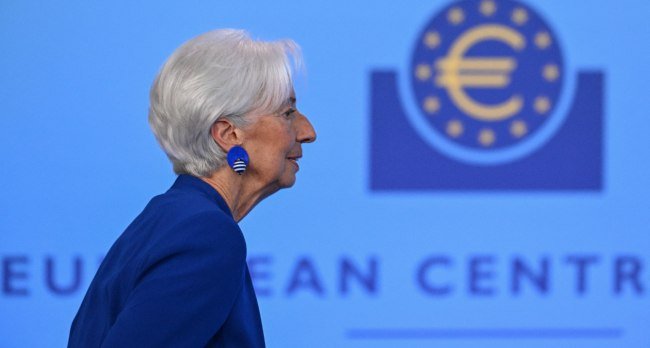
The European Central Bank (ECB) has raised its benchmark interest rate for the first time since 2023, lifting it by 0.25 percentage points to 2.25 per cent as inflation pressures linked to the Middle East conflict intensify.
The decision, announced at its Frankfurt headquarters on Thursday, marks a shift in monetary policy after months of stability and comes amid rising economic uncertainty across the eurozone.
Inflation in the 21-member currency bloc has climbed to 3.2 per cent in May, above the ECB’s 2 per cent target, with policymakers attributing part of the surge to energy shocks triggered by the ongoing US-Israeli war with Iran. The central bank also revised its inflation forecast for 2026 upward to 3 per cent, from 2.6 per cent in March.
ECB President Christine Lagarde said the war in the Middle East is “generating inflation pressures”, warning that the outlook remains uncertain, with risks tilted towards higher inflation and weaker growth. The bank also cut its eurozone growth projection to 0.8 per cent from 0.9 per cent.
Energy markets remain under strain, with the Strait of Hormuz, a key global oil and gas route, reported to be heavily disrupted. The ECB said the scale and duration of the energy shock will determine how long inflationary pressure persists.
The move makes the ECB the first major central bank to tighten policy in response to the current energy-driven inflation wave. However, the decision has drawn debate among economists, some of whom argue that higher interest rates may do little to address inflation caused by supply shocks rather than demand.
Higher borrowing costs are expected to weigh further on eurozone growth, which has already shown signs of contraction, while investors now await signals on whether further tightening will follow.