
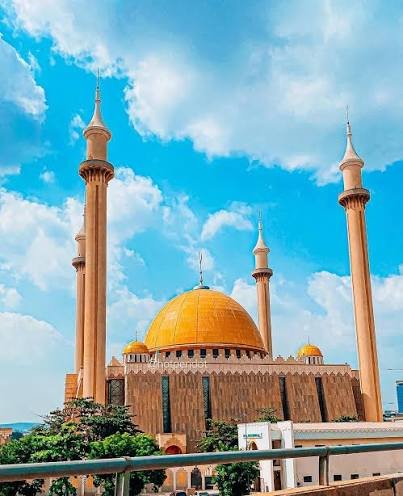
About 78 Federal Government Ministries, Departments and Agencies (MDAs) have collectively allocated nearly N400 billion in the 2026 budget for the construction and rehabilitation of community halls, mosques, traditional rulers’ palaces, village market squares and civic centres, according to an investigation by The PUNCH.
The report found that more than half of the allocation is for projects regarded as non-developmental, including the supply of grains, motorcycles and tricycles, sponsorship of community thrift societies, construction of museums and mini-stadia, alongside other community-based interventions.
Among the MDAs listed are the Defence Headquarters, Nigerian Air Force, Nigerian Defence Academy, Technical Aid Corps, Federal Ministry of Information and National Orientation, Federal Ministry of Industry, Trade and Investment, National Building and Road Research Institute, National Productivity Centre, Industrial Training Fund, and several research institutions.
Analysts criticised the spending priorities, arguing that the projects do not align with Nigeria’s pressing developmental needs. They contend that resources could be better invested in healthcare, education, security, power, roads and other critical infrastructure capable of delivering wider economic and social benefits.
The investigation also highlighted several projects considered unrelated to the statutory mandates of the agencies implementing them. For instance, the National Building and Road Research Institute reportedly budgeted for the construction of village halls, traditional rulers’ palaces, international markets, market stalls and the remodelling of mosques across different states.
Similarly, the National Productivity Centre’s budget reportedly includes funding for support to Ijaw musicians, palace construction and refurbishment, an abattoir in Gombe State, and an econometrics laboratory in Ekiti State. The National Mathematical Centre was also listed as funding the construction of a Sociology Department building at Ahmadu Bello University, Zaria.
Consultant economist and former central banker Chukwunonso Ihuma blamed the National Assembly for what he described as weak oversight and the insertion of projects that contribute little to national development. He advocated a return to zero-based budgeting, arguing that every expenditure should be justified and that irrelevant projects should be removed from agency budgets.
He maintained that markets, civic centres and traditional rulers’ palaces are primarily responsibilities of state governments, local governments and community organisations rather than federal agencies.
The report comes despite Nigeria’s ongoing implementation of the 2025 budget, whose capital expenditure timeline was recently extended to September 30, 2026, to allow completion of ongoing projects.
Economists have also questioned the assumptions underpinning the N68.32 trillion 2026 budget, citing ambitious revenue targets, a sizeable fiscal deficit and continued pressure on public finances.
Media strategist and former adviser to former Vice President Umar Sambo, Umar Sani, noted that some budgeted projects are never implemented by the executive, despite being inserted during the legislative process.