

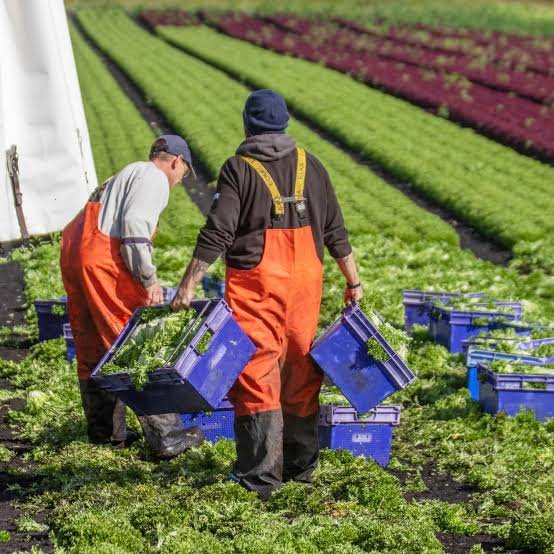
Food security concerns are growing in the United Kingdom as farmers grapple with one of the driest summers on record, leaving crop yields sharply reduced and raising fears over future food supplies.
According to an AFP report published by Punch Newspapers, farmers across England have been hit hard by the country’s driest July since records began, with prolonged drought damaging staple crops including wheat, oats and peas.
John Pawsey, an organic farmer in Suffolk, said his farm’s harvest was between 25 and 30 per cent lower than expected after weeks without meaningful rainfall.
“All of our fears were realised when we got our combines into the field,” Pawsey said, describing the impact of the prolonged dry spell.
The 62-year-old farmer warned that climate change is forcing growers to rethink traditional farming methods. His farm has introduced drought-tolerant crops such as chickpeas and fava beans while adopting techniques designed to improve soil resilience and moisture retention.
Food security expert Timothy Benton said Britain’s farming system must evolve to cope with worsening climate conditions. He advocated more diverse and sustainable agricultural practices that reduce dependence on imported food, fertilisers and other inputs.
“We’re not investing enough in the forms of technological innovation to address a larger crisis,” Benton said, adding that climate impacts on food production are expected to intensify.
Professor Nicola Cannon of the Royal Agricultural College said this year’s pea harvest reached only about half of expected levels because of the lack of rainfall since March. She added that climate change could also reshape British diets, with crops such as soya becoming more common.
Pawsey revealed that his farm lost an entire quinoa crop due to the severe drought.
National Farmers’ Union president Tom Bradshaw warned that continued dry conditions could lead to shortages of some food products, urging greater attention to domestic food production.
The UK government acknowledged the growing challenge, with Prime Minister Andy Burnham’s spokesperson describing food security as national security and highlighting plans for record investment in water infrastructure, including nine new reservoirs.
Experts warned that without stronger government support and continued investment in climate adaptation, more farmers could struggle to remain profitable as extreme weather becomes increasingly common.