
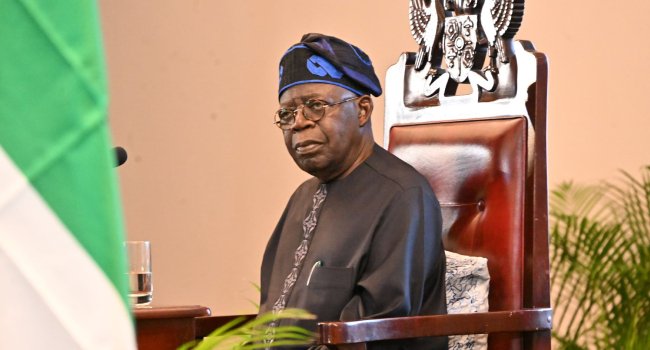
President Bola Tinubu has approved a new framework aimed at attracting up to $50bn in fresh investment into Nigeria’s deep offshore oil and gas sector.
The development, announced on Tuesday by the President’s Special Adviser on Information and Strategy, Bayo Onanuga, is designed to replace the previous system in which oil companies negotiated individual agreements with the Federal Government.
According to The PUNCH, the new framework introduces common eligibility criteria, clear implementation procedures and standard rules for qualifying deep offshore projects. The government said the previous project-by-project approach had contributed to delays and uncertainty that stalled major investments for years.
Bonga South West among projects targeted
The framework is expected to help revive major offshore developments, beginning with Shell’s approximately $10bn Bonga South West project.
The reform takes effect through the Deep Offshore Oil and Gas Projects Incentives (Tax Remission) Order, 2026. It also allows NNPC Limited, acting as the government’s nominated counterparty under Production Sharing Contracts, to make the necessary amendments to eligible contracts.
Special Adviser to the President on Oil and Gas, Olu Arowolo-Verheijen, said qualifying projects would prioritise execution within Nigeria where commercially and technically feasible.
She said the policy would support Nigerian engineering, fabrication, marine logistics, technical services and project management, while creating skilled jobs and strengthening domestic supply chains.
Government seeks greater investment certainty
Tinubu said the reform was intended to provide investors with greater certainty while ensuring that Nigeria derives long-term value from its offshore resources.
“The countries that attract long-term investment are not necessarily those with the greatest natural resources. They are the ones that provide the greatest certainty,” the President said.
He added that the framework was designed to create conditions for increased capital flows, business growth and greater national value from Nigeria’s natural resources.
The President commended the Ministries of Justice, Finance and Petroleum Resources, the Nigeria Revenue Service, NNPC Limited, the Nigerian Upstream Petroleum Regulatory Commission, the Nigerian Content Development and Monitoring Board, and other industry stakeholders involved in developing the framework.