
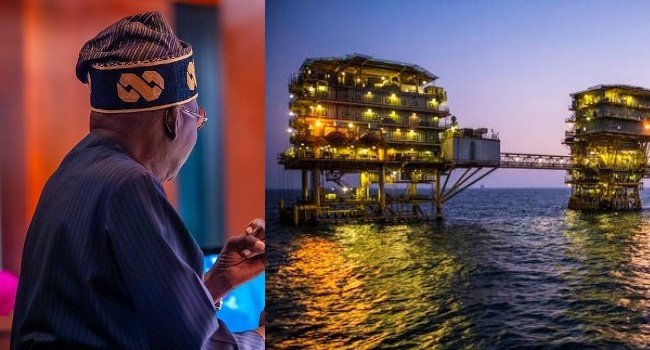
Nigeria is stepping up efforts to attract major investment into its deep offshore oil and gas sector, with a new framework designed to unlock up to $50 billion in capital for deepwater developments.
The reform, approved by President Bola Ahmed Tinubu, replaces project-by-project negotiations with a more transparent, rules-based investment framework aimed at giving investors greater certainty while protecting Nigeria’s long-term petroleum revenues.
The framework is being implemented through the Deep Offshore Oil and Gas Projects Incentives (Tax Remission) Order, 2026. It will initially support the approximately $10 billion Bonga South West project, while creating a pathway for other capital-intensive offshore developments.
Reforms Target Oil Revenue Protection
The latest initiative follows a series of oil and gas reforms introduced by the Tinubu administration.
In February, the President issued an Executive Order aimed at safeguarding and increasing oil and gas revenues accruing to the Federation. The measures sought to eliminate duplicative structures, reduce revenue leakages and ensure that funds meant for the three tiers of government are protected.
The reforms also seek to reposition NNPC Limited as a strictly commercial entity while protecting the interests of the Federation, alongside a review of aspects of the Petroleum Industry Act to address fiscal and structural issues.
Nigeria Records Improved Oil Production
The investment drive comes as Nigeria records signs of improved crude oil production.
According to the report by Channels Television, Nigeria recorded its third consecutive month of meeting or exceeding its OPEC crude production quota in July.
The country produced an average of 1.505 million barrels per day of crude oil and 0.17 million barrels per day of condensate, bringing combined daily production to 1.67 million barrels.
Production was achieved despite operational challenges affecting the Erha and Akpo fields.
In June, Nigeria produced 1.56 million barrels per day of crude and 0.18 million barrels per day of condensate, with crude output reaching 104 per cent of its 1.5 million barrels per day OPEC quota.
The government expects the combination of investment incentives, revenue reforms and improved production to help revive stalled projects, attract fresh capital and expand economic activity around Nigeria’s offshore petroleum resources.