
South Africa’s growing extortion economy is increasingly targeting foreign-owned businesses, particularly spaza shops run by Ethiopian and Somali nationals, amid persistent gang violence and xenophobic tensions.
A South African man and his two sons, including a serving police officer, appeared before a Cape Town magistrate last month over allegations that they extorted about 50 convenience stores operated by Ethiopian and Somali business owners.
A Somali national was also charged with allegedly collecting “protection fees” from shopkeepers near Stellenbosch, about 40 kilometres from Cape Town.
The cases have drawn attention to a wider extortion crisis affecting businesses across South Africa, including construction firms, nightclubs and small retailers. Foreign-owned shops have become particularly vulnerable, with community leaders saying criminal gangs view migrants as easier targets because they may be reluctant to report attacks.
Fransina Lukas, head of the Western Cape community policing forum, said extortion gangs typically send letters demanding monthly payments for protection.
She said businesses that refuse to pay could face escalating harassment, robbery and, in some cases, deadly attacks.
Foreign-owned shops under pressure
Somali-run spaza shops in Cape Town’s Khayelitsha township have become a particular target, although South African-owned businesses are also affected.
Community leader Mawande Jara said extortionists sometimes demand bank statements from business owners to determine how much they can afford to pay.
He added that many cases go unreported because victims fear retaliation and suspect that some police officers may pass information about complaints to criminal gangs.
In June, a Cape Town Islamic school and mosque was reportedly ordered to pay an initial 3,000 rand registration fee, followed by monthly payments of 500 rand. The centre later reported the incident to police.
Organised crime investigator Chad Thomas said criminal groups also use “heavies for hire” to resolve disputes outside the formal court system, partly because business owners are frustrated by lengthy civil proceedings.
Extortion and gang violence rise
Police statistics show the scale of the problem in the Western Cape. The province accounted for almost half of the 112 protection-racket extortion cases recorded nationally between April and June 2026.
It also recorded 30 of the 76 murders at spaza shops during the period.
The Western Cape recorded 217 gang-related murders in the same three months, the highest figure among South Africa’s provinces.
Acting Police Minister Firoz Cachalia said in June that extortion had increased significantly in recent years and described the situation as an “exploding” problem.
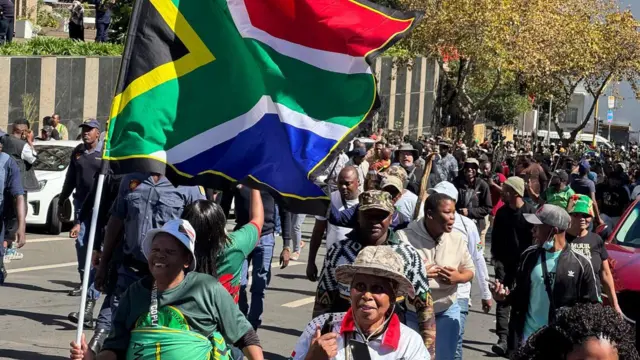
The crisis has coincided with renewed anti-immigrant tensions. Earlier this year, foreign-owned shops were among businesses looted, burned or forced to close during protests calling for undocumented migrants to leave South Africa.
At least four foreign nationals were killed during the weeks of xenophobic violence, according to South African police.
Separate incidents in July also highlighted the dangers facing foreign shop owners. At least two foreign nationals were among four people killed in a shooting at a spaza shop in Franschhoek, while a 31-year-old Somali shopkeeper was shot dead while serving customers in Cape Town’s Bonteheuwel area.
Police linked both incidents to extortion rather than the wider xenophobic unrest.
Nigerian officials have also raised concerns about the safety of Nigerians in South Africa. Minister of State for Foreign Affairs Ambassador Sola Enikanolaiye said 98 Nigerians had died in mob and hate-related incidents in the country since 2022, while 1,695 Nigerians had been voluntarily evacuated.