
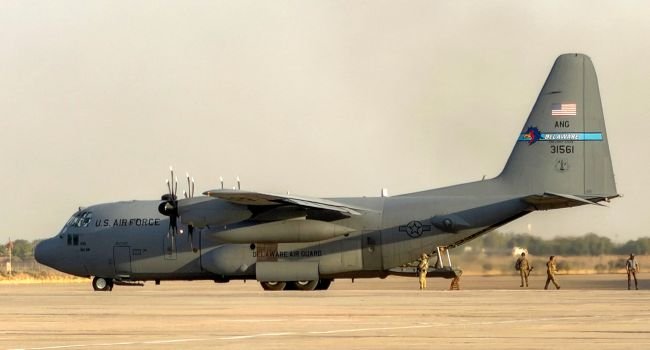
The US-led coalition is ending its military mission in Iraq after more than a decade of operations aimed at defeating the Islamic State group.
Coalition troops were deployed to Iraq and Syria in 2014 after Islamic State seized large areas of both countries and carried out massacres and other atrocities. The group was defeated in Iraq in 2017 and Syria in 2019, but coalition forces remained to target its remnants.
Baghdad and Washington agreed in 2024 to wind down the coalition’s mission in Iraq. Troops subsequently withdrew from bases across the country, with their presence eventually restricted to Iraq’s autonomous Kurdistan region.
The final withdrawal from Kurdistan is scheduled for Wednesday, marking the end of the coalition’s mission in Iraq.
Iraqi Prime Minister Ali al-Zaidi has called for October 1, the day after the withdrawal, to be observed as Sovereignty Day.
The country’s top executive, legislative and judicial officials described the occasion as a milestone in Iraq’s path towards sovereignty and stressed the need to strengthen state institutions.
They also called for weapons held outside state authority to be addressed according to government timelines.
Dispute over armed factions
The withdrawal comes as the Iraqi government seeks to strengthen its control over weapons held by powerful armed factions, many of which are backed by Iran.
Zaidi, who took office this year with US backing, has pledged to reinforce the state’s monopoly on arms and persuade armed groups to hand their weapons over to government control.
His administration initially set September 30 as a deadline for factions to disarm, but later withdrew the deadline as negotiations continued.
Several powerful groups have opposed disarmament. They have demanded not only the withdrawal of foreign troops but also an end to what they describe as US political and economic interference.
Kataeb Hezbollah, one of the powerful Iran-backed factions, welcomed the withdrawal as a step towards what it called full sovereignty. However, it also warned the Iraqi government that it could be challenged if it failed to serve the interests of the people.
Security concerns in Kurdistan
The US-led coalition and Iran-backed factions fought alongside each other against Islamic State during the group’s territorial expansion.
Their relationship deteriorated after Islamic State’s defeat, with armed factions demanding the withdrawal of US forces and launching drone and missile attacks against coalition personnel. The United States responded with strikes that killed several faction commanders over the years.
During the recent regional conflict in the Middle East, attacks on US-led forces intensified in Iraq’s Kurdistan region.
Residents in Erbil, the capital of Kurdistan, have expressed concern over who will protect the autonomous region from drone attacks after coalition air defences leave.
The coalition also withdrew from Syria earlier this year.