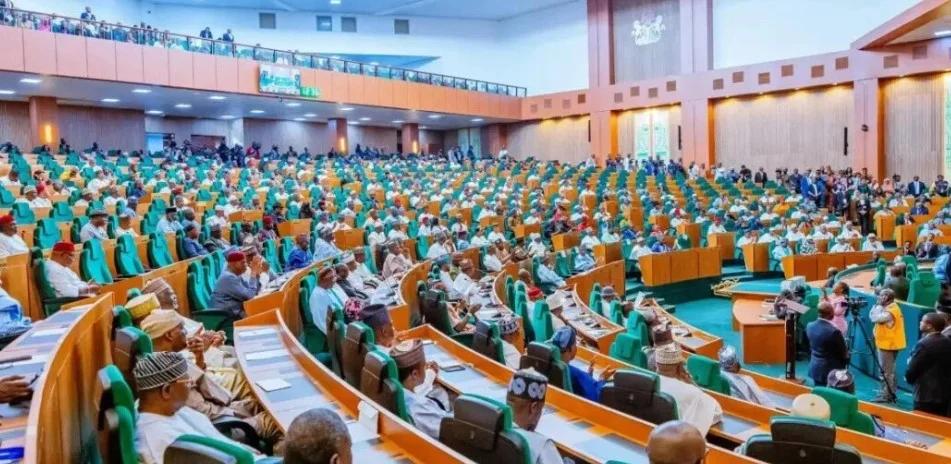
The House of Representatives Public Accounts Committee is set to question officials of the Nigerian National Petroleum Company Limited and the Independent National Electoral Commission over alleged financial breaches exceeding N802.19bn.
The allegations are contained in reports by the Auditor-General for the Federation covering the 2021, 2022 and 2023 financial years.
The reports raised queries over procurement procedures, revenue management, payments and compliance with financial regulations by government agencies.
The committee, chaired by Bamidele Salam, will question accounting officers and subject matter experts from the NNPC and INEC at the National Assembly Complex on Tuesday.
According to a committee member who spoke anonymously with The PUNCH, the Auditor-General’s 2021 report raised alleged financial infractions of about N514bn against the NNPC, while INEC is expected to respond to alleged financial breaches of about N288.19bn contained in the 2022 audit report.
The NNPC-related queries reportedly include N343.64bn in alleged irregular deductions from domestic crude oil sales, N83.66bn allegedly warehoused from miscellaneous revenue in a sinking fund account, and N82.95bn in alleged unauthorised deductions from Federation revenue.
Another N3.75bn was reportedly flagged as a shortfall arising from the sale of petroleum products.
The committee is expected to demand supporting documents and explanations from the NNPC regarding the transactions and the issues raised by the Auditor-General.
For INEC, the queries reportedly concern procurement processes, payments to contractors and the failure to remit statutory deductions during the tenure of former Chairman Prof Mahmood Yakubu, who has since been appointed an ambassador.
The lawmaker said the committee would also examine expenditure linked to the 2019 general election.
The Auditor-General’s 2022 report reportedly stated that more than N5.31bn was paid for the supply of smart card readers for the 2019 election without prior approval from the Bureau of Public Procurement.
The smart card readers were deployed during the 2019 election before INEC introduced the Bimodal Voter Accreditation System for the 2023 polls.
The Public Accounts Committee’s proceedings are part of its constitutional responsibility to examine the Auditor-General’s findings and require public institutions to account for public expenditure and address outstanding audit queries.
However, an audit query does not in itself establish wrongdoing. The affected agency is entitled to provide explanations, supporting documents and other evidence before the committee reaches any conclusion.
Other agencies scheduled to appear before the committee on Tuesday include the National Mathematical Centre, National Power Training Centre, National Research Institute for Chemical Technology and the National Biotechnology Research and Development Agency.
The committee’s planned questioning was reported by The PUNCH on October 5, 2026.