
Nigeria has recorded at least 10 military aircraft crashes between 2021 and October 2026, resulting in at least 68 confirmed and presumed deaths, according to an analysis of military aviation incidents by The PUNCH.
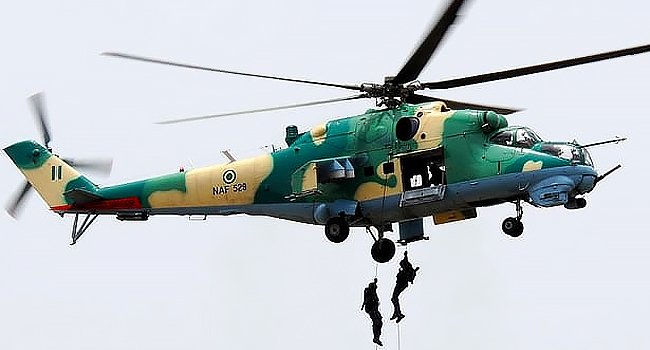
The crashes involved fighter jets, helicopters, training aircraft, transport aircraft and unmanned aerial vehicles. They occurred during combat operations, training exercises, routine missions, casualty evacuations and post-maintenance checks.
The latest incident occurred on Monday when a Nigerian Air Force ATR-42 aircraft, NAF 931, crashed in the Igbokoda area of Ilaje Local Government Area, Ondo State.
The aircraft was travelling from Benin City, Edo State, to Lagos on a routine mission when air traffic controllers lost contact with it at about 9:13am. The Nigerian Air Force later confirmed that all 25 people on board, comprising 20 passengers and five crew members, died.
The crash has renewed concerns over the safety of Nigeria’s military aviation fleet and prompted calls for a comprehensive review of maintenance, airworthiness standards, operational procedures, safety oversight and accident investigations.
Aviation analyst and member of the Aviation Round Table, Olumide Ohunayo, said the frequency of military aircraft accidents showed the need for the Air Force to urgently review its safety systems.
He called for stronger cooperation between the Nigerian Air Force, the Nigerian Civil Aviation Authority and the Nigerian Safety Investigation Bureau.
Ohunayo also urged the military to review its operational manuals and procedures, arguing that safety concerns should not be dismissed because military aviation operates differently from civilian aviation.
He further called for aviation regulators, accident investigators and other professionals to be involved in identifying weaknesses and preventing future crashes.
2021 recorded several losses
The deadliest period within the five-year period under review was 2021, when several military aircraft were lost.
On February 21, 2021, a NAF Beechcraft King Air 350i crashed shortly after taking off from Abuja for Minna, Niger State. All seven military personnel on board died.
On March 31, an Alpha Jet conducting operations in Borno State disappeared from radar. Its wreckage was later found in the Sambisa Forest, while its two pilots remained unaccounted for and were presumed dead.
On May 21, a NAF King Air 350 crashed near Kaduna International Airport, killing all 11 people on board, including the then Chief of Army Staff, Lt Gen Ibrahim Attahiru.
In July 2021, another NAF Alpha Jet was lost after being shot down in Zamfara State. Its pilot, Flight Lieutenant Abayomi Dairo, survived after ejecting from the aircraft.
The losses continued in subsequent years.
In 2022, a NAF Super Mushshak trainer aircraft crashed in Kaduna, killing its two pilots.
In 2023, an NAF FT-7NI trainer aircraft crashed in Makurdi, Benue State, although both pilots survived. A month later, an NAF Mi-171 helicopter conducting a casualty evacuation mission crashed at Chukuba village in Shiroro Local Government Area of Niger State, killing 11 people.
In December 2023, a NAF Mi-35P helicopter crashed shortly after take-off from the NAF Base in Port Harcourt, Rivers State. Its five crew members survived.
The Air Force also recorded non-fatal aircraft losses in subsequent years. In 2025, an Alpha Jet suffered an in-flight emergency during a post-inspection functional check flight near Kainji, Niger State, with both pilots ejecting safely.
In January 2026, a NAF CH-4B unmanned aircraft was lost during a surveillance operation in Niger State, although no human casualties were recorded.
The October 2026 ATR-42 crash has now added another fatal incident to the record.
Experts seek wider safety audit
Ohunayo said the proposed safety review should extend beyond the Air Force to other military and paramilitary aviation operations.
He advocated urgent audits of organisations whose aviation operations are not currently covered by the NCAA’s regulatory framework, including the involvement of international aviation safety auditors.
He also called for the NSIB to assist in reviewing previous accidents and investigating recent incidents where formally invited.
Another aviation expert, Group Capt. John Ojikutu, said the wider security responsibilities assigned to the military should also be examined as part of efforts to improve aviation safety.
Ojikutu questioned the extent to which the military was being deployed for internal security operations, noting that counter-insurgency, surveillance, casualty evacuation and logistics missions placed additional demands on personnel and aircraft.
The experts argued that closer cooperation among the military, aviation regulator, accident investigators and other aviation professionals could help identify systemic weaknesses and reduce aircraft losses and fatalities.
ATR-42 history under scrutiny
The latest crash has also drawn attention to the history of the aircraft involved.
According to The PUNCH, the Nigerian Air Force previously operated two ATR-42-500MP aircraft, NAF 930 and NAF 931. The aircraft, operated by the NAF’s 81 Air Maritime Group in Benin City, are primarily used for maritime patrol and intelligence, surveillance and reconnaissance operations, with capabilities for search-and-rescue and limited transport missions.
The two aircraft were acquired from Italian aerospace manufacturer Alenia Aeronautica under a $73m contract signed in March 2007. The agreement covered the supply of the aircraft, crew training and logistical support.
NAF 930 was delivered in December 2009, while NAF 931 arrived in March 2010, meaning both aircraft had been in service for more than 16 years.
NAF 930 underwent major maintenance at the Rheinland Air Service facility in Germany after recording 5,000 operational flight hours. It returned to Nigeria in July 2020.
NAF 931, which was involved in Monday’s crash, was also taken to the same facility for maintenance, with the work carried out in 2022. The aircraft returned to Nigeria in late 2024.
The available information does not establish a single cause for the military aircraft crashes. Individual investigations have identified different circumstances, and the cause of the latest ATR-42 accident cannot be attributed to maintenance or mechanical failure until the investigation is concluded.
Difficult recovery operation
Recovery efforts at the crash site have been complicated by the swampy terrain.
The aircraft crashed near the Naval Base in Igbokoda, with the wreckage sinking into the difficult terrain. The Ondo State Government deployed swamp buggies after conventional vehicles and boats struggled to reach the site.
Ondo State Commissioner for Health, Banji Ajaka, said two swamp buggies had been deployed to access the area where the aircraft had sunk.
Following the crash, President Bola Tinubu directed the Nigerian Air Force to investigate the cause of the accident and declared three days of national mourning for the personnel who died.
The Defence Headquarters also ordered a probe to establish the circumstances surrounding the crash.