

/ Oct 07, 2026
/ Oct 07, 2026

Peter Obi: I won 2023 election, but I have no evidence

Published on

By

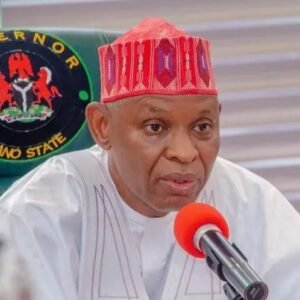
Peter Obi, presidential candidate of the Labour Party in the 2023 election, has reiterated his claim that he won the poll but admitted he has no evidence to substantiate it.


Obi made the statement during an interview with the BBC, when asked whether he still believed he won the presidential election after Nigerian courts dismissed his challenge to the result.

“I still say what I said,” Obi said when asked if he maintained his claim.

When pressed on whether he had evidence to prove that he won, the former Anambra State governor replied: “There is no evidence. Everything is not based on evidence. I won the election, and that is where I will end.”

Obi contested the 2023 presidential election on the Labour Party platform and was officially placed third with 6,101,533 votes.

According to results declared by the Independent National Electoral Commission (INEC), Bola Tinubu of the All Progressives Congress won the election with 8,794,726 votes, while Atiku Abubakar of the Peoples Democratic Party came second with 6,984,520 votes.

Obi challenged the outcome before the Presidential Election Petition Tribunal, alleging widespread irregularities and seeking to overturn the result.

The tribunal dismissed his petition in September 2023, after which Obi appealed to the Supreme Court.

The Supreme Court subsequently upheld Tinubu’s victory in October 2023 and dismissed the appeals filed by Obi and Atiku.

Obi had initially said, shortly after the 2023 election, that he had won and would prove his claim in court.

His latest comments represent a restatement of that position despite the judicial decisions that affirmed the declared election result.

You May Like

Leave a Reply

Your email address will not be published. Required fields are marked *

Most Popular

Must Read

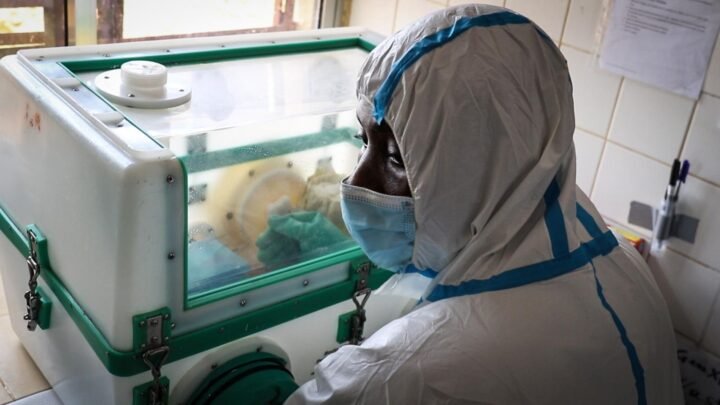
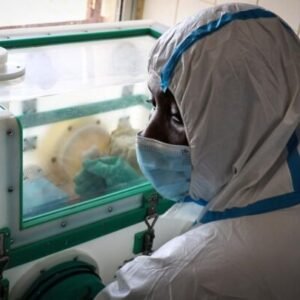
Kenya confirms its first case of Ebola Bundibugyo virus disease after a traveller from the Democratic Republic of the Congo arrived in Nairobi.

Kenya records first Ebola case after traveller arrives from DRC

Kenya has confirmed its first case of Ebola Bundibugyo virus disease (BVD), after a Kenyan citizen who had been living in the Democratic Republic of the Congo (DRC) travelled to the country.   The World Health Organization (WHO) said the patient fell ill in the DRC and received treatment at several health facilities before travelling by road to Kampala, Uganda, through Beni on October 2. The patient then flew to Nairobi on October 3. Upon arrival in Kenya, the patient was taken to a hospital in Nairobi and isolated. Samples tested positive for Bundibugyo virus at Kenya’s National Virology Reference Laboratory and the Kenya Medical Research Institute. The patient died on October 5 despite receiving supportive care and was buried the following day under Kenya’s Ebola safe and dignified burial protocol. Kenya notified the WHO of the case on October 6, in line with the International Health Regulations. Health authorities have identified 28 contacts, including family members and healthcare workers who cared for the patient. They are also tracing 23 passengers and four crew members who travelled on the same flight, with follow-up and quarantine arrangements being made for people considered at risk. Mohamed Janabi, WHO Regional Director for Africa, said Kenya had introduced measures to contain the outbreak, including case investigation, contact tracing, surveillance and screening at high-risk points of entry. “The priority now is to move swiftly to detect any further cases before the virus has an opportunity to spread,” Janabi said. Kenya is the fourth country to confirm Bundibugyo virus disease. The DRC is currently responding to an outbreak, while Uganda ended its latest outbreak in August 2026. France also reported a travel-related case of BVD in June. The WHO said Kenya had been on high alert since May because of outbreaks in the DRC and Uganda. As of October 6, Kenya had screened more than 652,000 travellers entering the country, tested 267 suspected samples and trained about 5,000 healthcare workers on Ebola prevention and management. The WHO has also supported Kenya’s Ministry of Health and National Public Health Institute with Ebola simulation exercises, rapid response team training and assessments of isolation facilities in 27 high-risk counties. Kenya’s Ebola preparedness score rose from 66 per cent in May to 82 per cent in July 2026, according to the WHO. The UN health agency advised against imposing travel or trade restrictions on Kenya, Uganda or the DRC based on the available information.
Read more

Editor's Pick

Trending News

Newsletter

Enter your email address and receive notifications of news by email.

You have been successfully Subscribed! Ops! Something went wrong, please try again.

© 2026 GongNews. All Rights Reserved.