/ Oct 22, 2026
/ Oct 22, 2026

Finnish court cuts Simon Ekpa’s jail term to four years

Published on

By

A Finnish Court of Appeal has reduced the prison sentence of Biafra separatist agitator Simon Ekpa from six years to four years while upholding his convictions for terrorism-related offences.


The court delivered its judgment on Thursday, October 15, 2026, affirming Ekpa’s convictions for participating in the activities of a terrorist group and publicly inciting people to commit crimes with terrorist intent.

According to a report by Channels Television, the court reduced the sentence after considering circumstances surrounding the offences that it said bore similarities to situations that could justify exemption from criminal liability, including civil war, self-defence and necessity.

Ekpa, 41, has been in custody since his arrest in Finland in November 2024. He appealed the September 2025 judgment of the Päijät-Häme District Court, which sentenced him to six years in prison. Prosecutors also appealed, seeking a harsher sentence.

Court Examines Alleged Armed Conflict in South-East

According to the appeal court’s statement, prosecutors alleged that Ekpa operated from Lahti, Finland, as the supreme commander of several armed groups in South-East Nigeria.

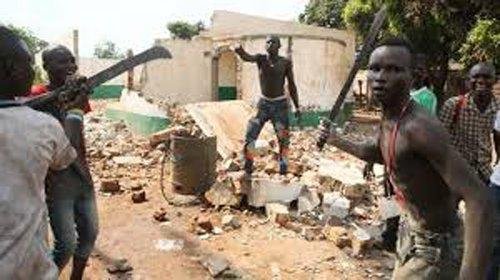
The groups were accused of seeking to establish an independent Biafran state, with members allegedly carrying out attacks on police stations, government buildings and military roadblocks.

The appeal court said it reviewed the prosecution’s evidence and reached the same conclusions as the district court regarding Ekpa’s activities.

During the appeal, Ekpa presented additional evidence to support his argument that a non-international armed conflict existed in South-East Nigeria.

He argued that international humanitarian law, rather than Finland’s domestic terrorism laws, should apply to his activities, which he maintained were connected to the conflict and lacked terrorist intent.

The court examined the nature of the conflict, the organisation of the armed groups and the intensity of the fighting. It also compared the evidence with assessments of the Balkan wars by the International Criminal Tribunal for the former Yugoslavia.

The court found that the deployment of heavy weapons, including armoured vehicles and combat helicopters, by Nigerian government forces supported the argument that an internal armed conflict existed.

It also said the organisation and equipment of the armed groups provided some support for that position.

However, the court ruled that the intensity of the fighting did not meet the threshold required under international case law for the situation to be classified as a civil war.

Why the Court Reduced Ekpa’s Sentence

The court noted that the clashes largely involved isolated attacks on police stations and road checkpoints.

It said there was insufficient evidence that the armed groups associated with Ekpa could sustain military operations involving strategic planning, prolonged fighting and continuity of operations.

The absence of reports of significant civilian displacement from the affected areas also weighed against classifying the situation as a civil war.

Although the court rejected Ekpa’s argument that the conflict removed terrorist intent from his actions, it considered the circumstances relevant to determining his punishment.

It consequently reduced his sentence under Chapter 6, Section 8(1), paragraph 4 of Finland’s Criminal Code, while maintaining his convictions for the two terrorism-related offences.

The court added that Ekpa had also been convicted of two other crimes by the district court, but those convictions were not part of the appeal.

The case was decided by Judges Aki Rasilainen and Antti Santaranta, alongside Assistant Judge Johanna Puukka.

You May Like

Leave a Reply

Your email address will not be published. Required fields are marked *

Most Popular

Must Read

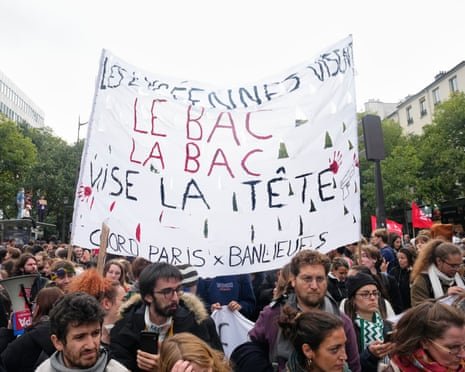
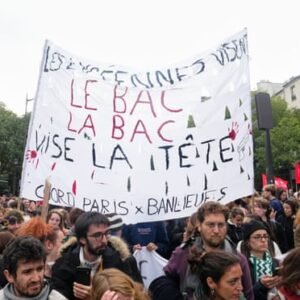
Protesters march during a demonstration in Paris, France, on October 6, 2026, amid nationwide protests over rising living costs and learning conditions.

Macron tightens security as France bans new protests

French authorities have imposed fresh restrictions on protests across the country following violent clashes, looting and vandalism that erupted during demonstrations over the rising cost of living.   President Emmanuel Macron announced the measures on Thursday, October 22, after meeting key ministers and intelligence officials. The restrictions include curfews and bans on demonstrations organised by what the government describes as groups without legitimacy. Macron said restoring calm was the government’s immediate priority, adding that he would chair another defence council meeting on Friday to determine how to respond to nationwide demonstrations planned for Saturday and beyond. He blamed organised far-left groups for the worst of last weekend’s violence, accusing them of attempting to undermine the French republic. France Tightens Protest Restrictions The latest measures follow clashes on October 17, when demonstrations involving more than half a million people against rising living costs were followed by widespread looting and damage to public buildings. The government has acknowledged that police lost control during the unrest, while political candidates seeking to succeed Macron in presidential elections expected in six months have questioned the authorities’ ability to restore order. In Paris, a student demonstration went ahead on Thursday after an emergency court overturned a police ban. Hundreds attended the rally, which followed four weeks of student protests before the October 17 demonstrations. Student leader Coppelia Moreau accused the authorities of attempting to distinguish between acceptable and unacceptable protesters, arguing that the restrictions threatened the right to demonstrate. Authorities in Lyon, France’s third-largest city, banned all protests scheduled for Saturday. The city experienced the looting of between 200 and 300 shops during last weekend’s unrest, while a tourist office was set on fire. Other cities, including Grenoble, Rouen, Le Havre and Toulon, also announced restrictions on demonstrations in their city centres. In Paris, police said a march planned for Saturday could proceed in the eastern part of the capital, beginning at Bastille, but would not be allowed to enter the city centre, where major public buildings and shops are located. The Yellow Vest movement, which has joined trade unions in organising the cost-of-living demonstrations, rejected the restrictions. Meanwhile, Art Basel Paris, the capital’s biggest art fair, announced that it would close two days earlier than scheduled because of the planned protests. France’s Interior Ministry said 20 per cent more police officers would be deployed on Saturday than during the previous weekend’s demonstrations. Arrests Rise as Government Seeks Dialogue The French government has promised a firm response to the violence, although Macron has ruled out declaring a state of emergency. Justice Minister Gerald Darmanin said on Thursday that 217 of the 2,700 people arrested during and since last weekend’s unrest had been detained, while another 1,000 were facing prosecution. Prosecutors also confirmed the arrest of a 66-year-old man over the arson attack on the 19th-century town hall in Limoges. Another man in his 30s had been arrested on Tuesday in connection with the same incident. The unrest has intensified political divisions ahead of the presidential elections scheduled for April and May. Marine Le Pen, the far-right leader who is topping opinion polls, accused Macron and his centrist government of being too weak in their response to the violence. Jean-Luc Mélenchon, a far-left presidential candidate who has faced criticism from the government over his response to the unrest, blamed what he described as the authorities’ continued use of excessive force. Prime Minister Sébastien Lecornu also began consultations with political leaders and other stakeholders in an effort to address the crisis. On Thursday, he met representatives of France’s major political parties, although Le Pen’s National Rally sent a lower-ranking official rather than a senior party leader. Lecornu was scheduled to meet mayors next, followed by discussions with student groups, trade unions and the employers’ federation on Monday. The government’s next steps are expected to be determined following Friday’s defence council meeting, as authorities prepare for further demonstrations across the country.
Read more

Editor's Pick

Trending News

Newsletter

Enter your email address and receive notifications of news by email.

You have been successfully Subscribed! Ops! Something went wrong, please try again.

© 2026 GongNews. All Rights Reserved.