

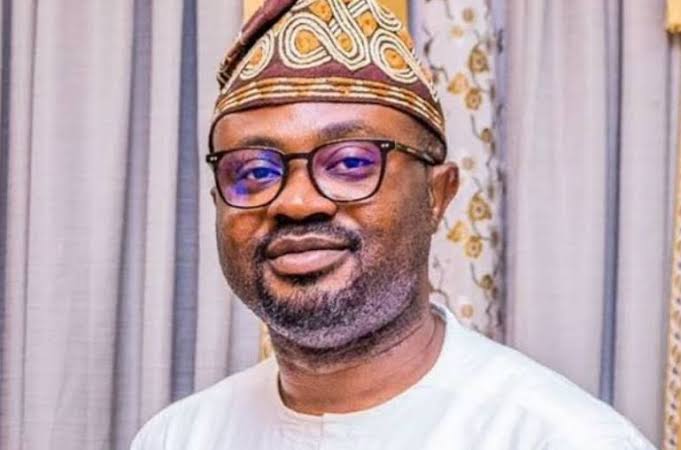
Nigeria’s Minister of Interior, Dr. Olubunmi Tunji Ojo, has said, concerning the issue of prison decongestion, that the ministry of Interior is going to pay the fines of over 4,000 inmates- which altogether come to the tune of over five hundred million naira- to ensure their release as they have been in correctional facilities due to their inability to pay fines.
He also said that he has set up an inter-agency committee to ensure that Nigeria’s borders are properly mapped out and adequately protected to ensure the security of the nation.
In an interview with reporters on Thursday, the minister discussed the problem of the congestion of correctional centres with reporters, where he revealed that he has already set up committees to figure out the reasons for the congestion in Nigeria’s correctional centres and how to reduce the numbers.
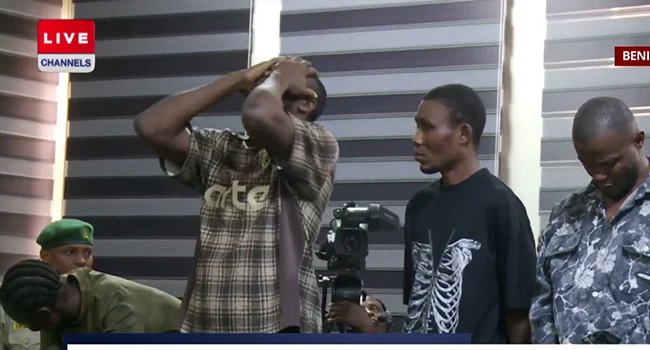
Tunji-Ojo said, “Immediately I assumed office, the first thing I did was to set up a small committee to be able to review the situation of our correctional centres, vis-à-vis the inmates as they are, and we discovered that over 4,000 of these inmates, as I’ve said before, are still in custody due to inability to pay fines. We looked at how much they owe, total fine is about total of five hundred and something million, and I can tell you we’ve gone very far dealing with the private sector in terms of CSR and etcetera, putting this money together.
“And I’m sure that in the next three weeks or one month, four weeks maximum, because I like to be held responsible for what I say, so let me say in the next four weeks, even though we are looking at doing it before then, but I’m giving myself a buffer. So, in the next four weeks, by the grace of God, we will have been able to pay those fines of over 4,000 people which will reduce us from the present almost 79,000 inmates to about 75,000 inmates.”
The minister went on to explain that the work of decongesting prisons wasn’t solely the work of the Ministry of Interior, but other agencies as well, saying, “We must also understand that when it comes to decongestion of prison, it’s not an entirely ministry of interior thing. Yes, ministry of interior must play the lead, but obviously we know the office of the Attorney General, Prince Lateef Fagbemi, we have spoken about it, and we are going to work very well together because you cannot just open your gate and say people should go. We must look at setting up that sort of inter-ministerial relationship, which we are already working on to be able to expedite cases based on Administration of Criminal Justice System, ACJS. So, we are already looking in that particular direction.”
Read Also:
Tunji-Ojo says promotion exam no more yardstick for progression in NSCDC, NIS
He went on to say, “Also, to further decongest, one thing that is within our purview as ministry of interior is to be able to activate what makes our correctional centres correctional centres, which is the non-custodial responsibility of the correctional service. And what is that? It’s obviously to decongest our correctional centres. For instance, I will give you an example, The situation of the correctional service is very worrisome, for instance, in the Lagos command, of all the correctional centres, in total, the correctional centres were built for like 4,800 if I get my statistics right, but today, we have over 9,000 inmates, so that’s over a 100% in Lagos alone. So, it means that we have to look at the short-term solution, activate that part of the law that gives the Nigerian correctional service the powers to engage in non-custodial services. So, those are parts of the things that we are already doing, and yes, a committee is already in place.”
The minister then said that once all these plans are executed, the ministry will be able to reduce the congestion in correctional centres by around 60%-70%.
Tunji-Ojo then mentioned that beyond decongesting the prisons, the ministry of Interior had a major task of securing Nigeria’s borders, saying to this effect, “If you can’t protect your borders, you can’t protect your country.”
Sharing his process on how he will secure the borders of the country, he said, “I have been able to set up a committee now, an inter-agency committee, because it’s not what an agency can do. For instance, I will give you an example, NIMC is very key, and that’s why I’m so grateful to this particular government for bringing NIMC back to interior because I cannot defend who I don’t know. NIMC is the custodian of our identity, NIMC tells me who you are, so, that’s the foundation of our security. It’s the foundation of our internal security.
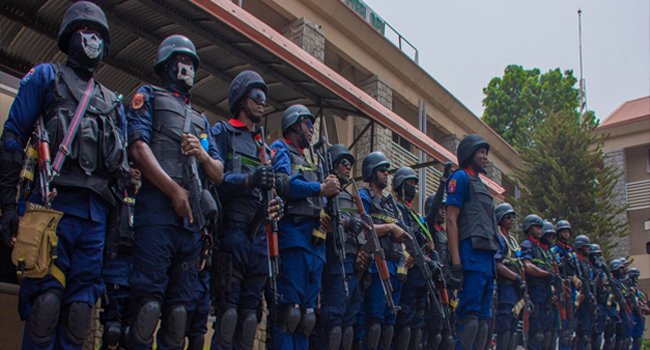
“So, NIMC’s role in terms of our peaceful coexistence cannot be overestimated. Having said that, what we have been able to do, I called a meeting last week, and I have inaugurated a committee headed by the Director, joint services, in the ministry of Interior, we have the Nigeria Immigration Service, we have the Nigerian Security and Civil Defence Corps, we have the boundary Commission because we need to define our boundaries, you cannot go an defend another man’s land, and your border is where your right stops. So, we brought boundary commission because there are so many issues.”
He further explained, saying, “By the time the committee comes up, we will look at how to use both human intelligence and of course, technology, to be able to, it has to be a cocktail of solutions. One solution cannot secure our border. It has to be a cocktail of approach, both the human intelligence, both the technological issues, and of course, the getting loyalty from these border communities, because if your border communities are not with you, the simple truth is that terrorists will come, hide in those communities, attack, and through their safe passage, they go.
“So we have to look at how to secure all our loopholes, it has to be a wholistic thing. We must now make sure that the solutions we are throwing to problems are not just fire brigade solutions. Let us have a solution that will stand the test of time so that it becomes Nigeria border control policy, it becomes our roadmap, it becomes our route, something we work with. Even if tomorrow, Dr. Tunji-Ojo is no longer minister of interior, we have a framework that will be able to sustain the security of our system.”







https://t.me/s/iGaming_live/4871