

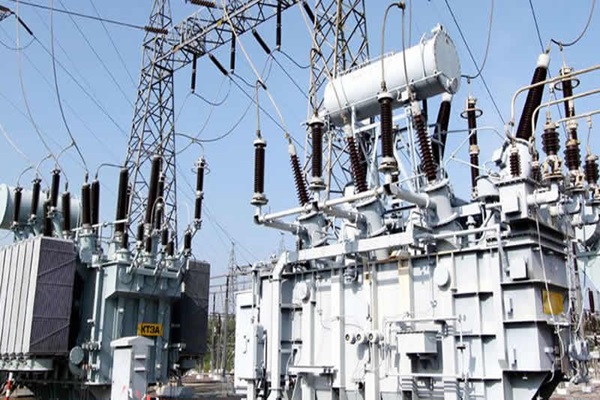
Can state governments truly take on the challenge of generating, transmitting and distributing electricity, given the substantial capital required for such projects? Would governors prioritise investing in initiatives that may not yield significant returns during their limited tenures?
The Minister of Power, Chief Adebayo Adelabu, consistently highlights the prolonged gestation period of electricity projects as a major hurdle. Rather than solely blaming weak regulation for the industry’s challenges, he advocates for the recapitalisation of electricity Distribution Companies (DisCos) or involvement of core investors capable of meeting the sector’s financial and technical demands. He actively seeks new investors to help reduce Aggregate Technical Commercial and Collection (ATC&C) losses.
Since the Nigerian Electricity Regulatory Commission (NERC) delegated oversight powers to Enugu, Ekiti and Ondo states last week, energy experts have raised pertinent questions about their potential impact on operations. Will these states merely regulate existing underperforming firms, or can they enact meaningful changes? Shedding light on the country’s energy mix, NERC’s Vice-Chairman, Musliu Oseni, revealed on April 3, that gas plants and hydroelectric sources account for 75 per cent and 25 per cent, respectively. However, the feasibility of state governments generating, transmitting and distributing electricity remains a subject of debate. While some doubt their financial capacity and question their motives, others ponder whether they will explore renewable energy opportunities or solely focus on leveraging existing power infrastructure for revenue. With NERC’s recent decision to cede regulatory power to state bodies such as the Enugu State Electricity Regulatory Commission (EERC), the landscape of the Nigerian Electricity Supply Industry (NESI) has shifted after 19 years of NERC’s monopoly.
On April 22 2024, this move marked a significant departure from the status quo, as regulatory authority was transferred to the Ekiti State Electricity Regulatory Bureau and the Ondo State Electricity Regulatory Bureau the following day.
According to NERC Chairman Sanusi Garba and Commissioner Legal, Licensing and Compliance, Dafe C. Akpeneye, regulatory oversight was transferred to Enugu, Ekiti and Ondo states effective May 1, 2024. This decision, rooted in the amended Electricity Act 2023, marks a significant shift from the previous centralisation of the electricity market. The NERC management emphasised that decentralisation became feasible after presidential assent was granted to relevant amendments of the Constitution of the Federal Republic of Nigeria on March 17, 2023.
Sanusi and Akpeneye added that “Paragraph 14(b) Part II of the Second Schedule to the 1999 CFRN which provides that “a House of Assembly may make laws for the state with respect to generation, transmission and distribution of electricity to areas not covered by a national grid system within that State” was amended to “a House of Assembly may make laws for the State with respect to generation, transmission, and distribution of electricity to areas within that state.”
The NERC management highlighted that this amendment granted legislative autonomy to federating states in Nigeria, allowing them to legislate on electricity generation, transmission and distribution within their jurisdictions. As Enugu, Ekiti and Ondo states seize this opportunity to separate their electricity markets from NERC control, other states like Oyo, Kaduna, Edo, Nassarawa, and Lagos are reportedly following suit. This shift not only alters the landscape of the Nigerian Electricity Supply Industry but also redefines the states’ roles in power generation and distribution.
However, the true test lies ahead as these states must now demonstrate the financial capacity to operate independently beyond mere legislative authority.
It’s important to remember the presence of the Federal Government-owned Nigerian Electricity Supply Company (NESCO) in Jos, Plateau State. Originally established to support the thriving tin production business of the Nigerian Tin Mining Company, NESCO continues to operate even after the decline of tin mining in the area. Today, it remains active, supplying electricity to various customers in the city.
Before the 2023 Electricity Act, several states had expressed interest in establishing and managing their own power plants. Lagos State, for instance, embarked on this path over 15 years ago, seeking to generate its own electricity. Similarly, Edo State stands out as a success story with its 550MW Ossiomo Gas Power Plant, supplying power to various consumers. More recently, the Aba Geometric 188MW Power Plant, in partnership with Aba Power Limited Electric (APLE), resumed electricity supply to the Aba business cluster, marking a significant departure from the Enugu Electricity Distribution Company (EEDC). While these power plants may not be operating at full capacity, they continue to operate and contribute to the electricity supply.
Read Also;
Labour threatens showdown as FG insists on electricity tariff hike
But how has the order transferring power to the Enugu State Electricity Regulatory Commission changed the landscape of the power market in the state? Basically, NERC has, in compliance with the Act, granted the ESERC power to regulate its intra-state electricity market activities once the order takes effect.
NERC ORDER NO: NERC/2024/039 states that: “On completion of the transfer under subsections (2) and (3), whichever occurs later in time, the commission shall have no further regulatory responsibility whatsoever for electricity market activities carried on entirely within the state to which regulatory responsibility has been transfered.”
The law has further empowered the state commission to incorporate and license a company: powers firm that it oversights. NERC said: “B. EEDC shall complete the incorporation of EEDC SubCo within 60 days from (1st May, 2024), the effective date of this Order and, EEDC SubCo shall apply for and obtain a licence for the intrastate supply and distribution of electricity from EERC. C.EEDC shall identify the actual geographic boundaries of Enugu State and carve out its network in Enugu State as a standalone network with the installation of boundary meters at all border points where the network crosses from Enugu State into another state.”
In essence, the state commission will now grant licenses to companies owned by the Enugu Electricity Distribution Company (EEDC) for operation within the state. However, the EERC will not regulate the activities of the EEDC in areas beyond the state’s territorial boundaries.
Additionally, any significant electricity firm emerging within the state will also be subject to licensing and regulation by the EERC. Despite its name, the Enugu State Electricity Regulatory Commission lacks regulatory authority over the EEDC’s franchise areas in Abia, Anambra, Ebonyi, and Imo States. These states will continue to fall under the oversight of the NERC until they establish their own regulatory commissions. This is so because the EA 2023 says, “Notwithstanding the provisions of section 63(1) and subsection (5), the generation, transmission, system operation and distribution of electricity in a State that has not exercised its option under subsection (2) shall continue to be regulated by the Commission in accordance with the provisions of this Act until such a time as that State exercises the option.”
In the instance of transferring regulatory oversight of the electricity market in Ekiti State to the Ekiti State Electricity Regulatory Bureau (EERB), NERC stated that it has issued an order based on the state’s application for a regulatory bureau. This action aligns with the amended Constitution of the Federal Republic of Nigeria (CFRN) and the Electricity Act 2023 (Amended), facilitating the transition of regulatory responsibilities from the Commission to the EERB.
Accordingly, the transfer Order by NERC has the following provisions:- Direct Benin Electricity Distribution Company (BEDC) and Ibadan Electricity Distribution Company PLC (IBEDC) to incorporate a subsidiary (BEDC SubCo and IBEDC SubCo) to assume responsibilities for intrastate supply and distribution of electricity in Ekiti State from BEDC and IBEDC. BEDC and IBEDC shall complete the incorporation of BEDC SubCo and IBEDC SubCo within 60 days from 22 April 2024 and the sub-companies shall apply for and obtain licences for the intrastate supply and distribution of electricity from EERB, among other directives. All transfers envisaged by this order shall be completed by 22 October 2024.”
But unlike Enugu State that all its notable electricity market activities are hitherto under the franchise of only Enugu Electricity Distribution Company (EEDC), Ekiti State electricity market business has been under the operation of Ibadan Electricity Distribution Company (IBEDC) and Benin Electricity Distribution Company (BEDC), hence the above NERC order. Similarly, NERC also transferred regulatory oversight of the electricity market in Ondo State to Ondo State Electricity Regulatory Bureau (OSERB) in compliance with the same Act. The commission said: “The transfer Order by NERC has the following provisions: Direct Benin Electricity Distribution Company (BEDC) to incorporate a subsidiary (BEDC SubCo) to assume responsibilities for intrastate supply and distribution of electricity in Ondo State from BEDC. BEDC shall complete the incorporation of BEDC SubCo within 60 days from 22 April 2024 and the sub-company shall apply for and obtain licence for the intrastate supply and distribution of electricity from OSERB, among other directives. All transfers envisaged by this order shall be completed by 22 October 2024.”
The EA 2023 is explicit that the BEDC shall now register a distribution branch company that is licensed by the OSERB. From the view of the foregoing, the Act has brought the operators nearer to its customers in the above mentioned states. Since the new commission or bureaus will oversee their licensees, there is the high hope that it will result in a better customer relation and improved service delivery. However, some industry players have always raised the questions about source of funding since Nigeria’s commercial banks seem to have shut their doors of lending against the power sector. Owing to their huge exposure to the industry and the unwillingness of both governments and private investors to service the debts, the local banks are out of the options. Thus, only the next few years shall tell whether the new electricity legislation has induced more light or darkness.











https://t.me/s/iGaming_live/4868
В мире азарта, где любой сайт норовит привлечь заверениями легких выигрышей, легальное казино рейтинг
является именно той картой, что ведет через заросли рисков. Для профи и новичков, которые пресытился с ложных заверений, это средство, чтобы почувствовать настоящую отдачу, словно ощущение ценной ставки у ладони. Без лишней воды, просто реальные площадки, в которых rtp не только число, а ощутимая фортуна.Собрано на основе поисковых трендов, будто ловушка, что ловит самые свежие веяния на рунете. Тут отсутствует места к стандартных приёмов, любой элемент словно ставка у игре, там обман проявляется немедленно. Хайроллеры знают: по стране стиль разговора с иронией, там юмор притворяется под совет, помогает избежать рисков.На http://www.don8play.ru этот рейтинг ждёт словно готовая колода, подготовленный для игре. Зайди, если желаешь ощутить биение настоящей ставки, обходя обмана да разочарований. Тем тех знает ощущение приза, такое как держать фишки у руках, а не пялиться по монитор.