

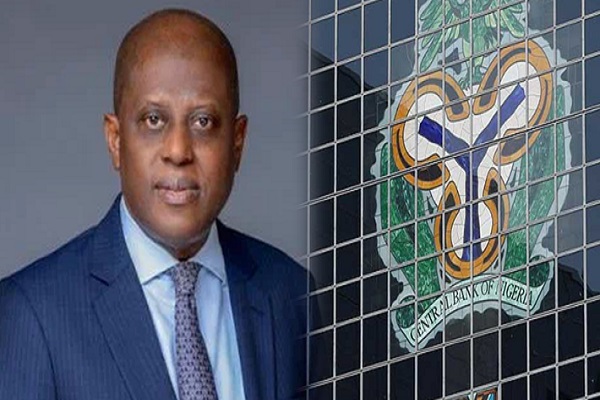
Some bank customers have expressed panic as the Central Bank of Nigeria (CBN) bans mobile money operators including fintech firms from onboarding new customers.
However, the Bank Customers Association of Nigeria backed the CBN directive.
The new directive will affect fintech companies such as OPay, Palmpay, Kuda Bank, and Moniepoint, from opening new accounts until further notice.
Reliable sources from three major fintechs who requested not to be mentioned as they were not permitted to speak, confirmed the development to reporters on Monday.
The CBN’s move was linked to an ongoing audit of the Know-Your-Customer process of the fintechs, which have been under scrutiny in recent months over concerns around money laundering and terrorism financing.
It was gathered that the CBN had summoned some of the heads of fintechs to Abuja to discuss issues around KYC last week.
The CBN has not yet publicly commented on the directive to the fintech firms. The reporter’s attempts to reach the apex bank for comment were unsuccessful.
Several calls made to the telephone line of the CBN spokesperson, Hakama Ali Sidi, were not responded to as of the time of filing this report.
Also, the directive coincided with the court order that the Economic and Financial Crimes Commission (EFCC) obtained to freeze at least 1,146 bank accounts owned by various individuals and companies allegedly involved in illegal foreign exchange transactions.
The 85-page court order (document), which listed the bank account details suspected to be involved in illicit activities, was obtained by reporters on Monday.
Justice Emeka Nwite, in a ruling on the ex-parte motion, moved by counsel for the anti-graft agency, Ekele Iheanacho, also granted the commission’s application to conclude the investigation within 90 days.
Part of the court document read, “That the applicant’s (EFCC) application is hereby granted as prayed.
“That an order of this honorable court is hereby made freezing the bank accounts stated in the schedule below, which accounts are owned by various individuals who are currently being investigated in a case involving the offenses of unauthorised dealing in foreign exchange, money laundering, and terrorism financing, to the extent that the investigation will be for a period of 90 (ninety) days.”
The EFCC, in the motion marked FHC/ABJ/CS/543/2024 dated and filed April 24 by Iheanacho, was heard by the judge the same day in the interest of national interest. “The motion was brought pursuant to Section 44(2) and (K) of the 1999 Constitution; Section 34 of the EFCC Establishment Act 2004; Section 7(8) of the Money Laundering Prevention and Prohibition Act, 2022; and under the inherent jurisdiction of the court.”
The President of the Bank Customers Association of Nigeria, Uju Ogubunka, backed the CBN’s move to suspend new account opening on the affected platforms.
He told newsmen that the strict regulations that govern deposit money banks must apply to fintechs, and microfinance banks in order to ensure the integrity of the financial institutions.
He said, “Anything that can disrupt the system should not be permitted. If the platforms are being used for things that are against the regulations, I think the CBN decision is OK. I don’t see anything wrong with that. It behoves on the companies now to get their KYC right.
“Let them do what they are supposed to do. KYC applies to banks and other financial institutions that deposit money. It should also apply to them so that the regulators can understand what is going on and hold them accountable.”
On the other hand, Emmanuel Odunsi on X (formerly Twitter) welcomed the move, citing the need for better KYC processes to prevent scams and fraudulent activities.
“Their KYC isn’t that great. Lots of scammers are using their apps to defraud people.
Read Also:
BREAKING: CBN puts and end to foreign currency collateral for naira loans
“Most of the accounts were created by mining phone numbers, with subscribers’ permission. Almost every phone number has been linked to an account,” Odunsi said.
In response, the CBN introduced new KYC rules for all financial institutions in November 2023, which appeared to target fintech startups.
A source from Moniepoint said the company had complied with the directive, effectively halting new account creation on their platform. However, the source denied having anything to do with KYC.
“It’s just a regulation from the CBN, and we’ve complied. The real question is, why are fintechs always targeted,” he source argued.
“It has nothing to do with KYC; I am aware that the CBN communicated, but this particular issue dwells on accounts related to cryptocurrency transactions,” the source revealed.
The CBN has an ambitious target to increase overall financial inclusion to 95 per cent of the adult population by 2024.
With the new order, the target may be affected, as the company processes about 100 new accounts every day.
The source argued that fintechs had played significant roles in deepening financial inclusion in the country.
The company had deployed robust and reliable digital payment infrastructure that has facilitated an average monthly transaction value of $12bn for about 1.6 million businesses, it said last year.
A senior employee of PalmPay confirmed to The PUNCH that there was a CBN directive for fintechs to reassess their KYC processes.
This is causing a temporary pause in onboarding new customers, the source stated.
She clarified that the KYC review was a collaborative effort with the CBN, and fintechs were awaiting further instructions without a specified timeline for resolution.
Another source at OPay, who also declined to be named, said they were following the CBN’s directive and could not comment further.
“We don’t really have anything to say. It’s just a directive that we are following. The CBN has issued their directive.“
Fintech companies have faced increased regulatory scrutiny over their account opening processes.
Customers worry
However, some customers have also used social media, both on X (formerly Twitter) and Facebook, to express their worries and opinions on the matter.
Some customers are anxious about the safety of their funds, with Warisenibo Jumbo suggesting it’s best to transfer their money out of Opay.
Oye Niran wondered if their Moniepoint account was safe, stating, “Hope my Moniepoint account is safe.”
Larry Leanz questioned the rationale for keeping money on these platforms.
“But is it still safe to keep money there?, Leanz questioned.

















Nicely put, Appreciate it.
casino en ligne fiable
You have made the point!
casino en ligne
You said it adequately.!
casino en ligne fiable
Amazing information. Appreciate it.
casino en ligne francais
Many thanks! Loads of content.
casino en ligne
Superb postings. Regards.
casino en ligne francais
Good knowledge Thank you.
casino en ligne France
Wow loads of great material!
casino en ligne francais
You actually expressed that wonderfully!
casino en ligne
With thanks. An abundance of write ups.
casino en ligne
https://t.me/site_official_1win/576
https://t.me/s/Top_BestCasino/173
https://t.me/s/dragon_money_mani/14