/ Jul 09, 2026
/ Jul 09, 2026

Metro

  • All
  • Africa
  • Agriculture
  • Aviation
  • Banking
  • Business
  • Crime
  • Economy
  • Education
  • Entertainment
  • fashion
  • Health
  • Home
  • International
  • Judiciary
  • lifestyle
  • Metro
  • News
  • Nigeria
  • Politics
  • Religion
  • Security
  • Sport
  • sports
  • Tech
  • Technology
  • World News
2baba: Missing or Just a Publicity Stunt? gong-news.com

April 10, 2025

2Baba, the ace Nigerian singer, has finally addressed claims by his family members that he was missing. The Idibia family had petitioned the Department of State’s Services (DSS), claiming that...

Davido reacts on social media during growing political tension in Osun ahead of the August governorship election.

April 9, 2025

Davido, the award-winning Nigerian singer, has expressed his commitment to monogamy. The ‘Awuke’ hitmaker spoke about his experiences with women in a recent interview on the Breakfast Club. Davido revealed...

Trending

Bello Bodejo, president of Miyetti Allah Kautal Hore, during his arraignment at the Federal High Court in Abuja over alleged $2.63 million money laundering charges.

EFCC arraigns Miyetti Allah president over $2.63m money laundering

The Economic and Financial Crimes Commission (EFCC) has arraigned Bello Bodejo, president of Miyetti Allah Kautal Hore, before a Federal High Court in Abuja over alleged money laundering involving $2.63 million.   According to TheCable, Justice Inyang Ekwo on Thursday ordered that Bodejo remain in EFCC custody pending the determination of his bail application. The court adjourned the matter until July 20 for a ruling on the bail request. Bodejo pleaded not guilty to the charges when they were read in court. Following the arraignment, EFCC counsel Wahab Shittu asked the court to fix a trial date and remand the defendant. However, Bodejo’s lawyer, Senior Advocate of Nigeria Ahmed Raji, urged the court to grant bail, arguing that the alleged offences are bailable under the Administration of Criminal Justice Act (ACJA). Raji told the court that the bail application, filed on June 30, was supported by several grounds. Opposing the request, Shittu relied on a 28-paragraph counter-affidavit, arguing that Bodejo had previously been questioned by the Department of State Services (DSS) over other matters and could commit further offences if released. The prosecution also challenged the defendant’s claim of ill health, stating that the injury cited was not recent and that he did not appear to be medically unfit. Shittu further argued that Bodejo could interfere with witnesses if granted bail, while urging the court to impose strict conditions should bail be approved. According to the charge, the EFCC alleged that Bodejo accepted $200,000 in cash from Sa’idu Abubakar, a former Accountant-General of Bauchi State, on January 21, 2022, in a transaction exceeding the legal threshold. The commission also alleged that he later received another $100,000 in cash from Abubakar on October 26, 2022, as well as an additional $980,000 through separate cash transactions. The EFCC said the alleged offences contravene Section 19(1)(d) of the Money Laundering (Prevention and Prohibition) Act, 2022, and are punishable under Section 19(2)(b) of the same Act.
Governor Dauda Lawal speaking after emerging APC consensus candidate for the 2027 Zamfara governorship election

I told kidnappers to kill my brothers, I refused to pay N300m ransom – Zamfara Gov

Zamfara State Governor Dauda Lawal has revealed that he rejected a N300 million ransom demand after his brothers were kidnapped in 2019, saying paying criminals only fuels more abductions.   Speaking on Thursday at the ARISE News and THISDAY Townhall Conference in Abuja, the governor said he stood by his decision despite the personal consequences. Lawal disclosed that the kidnappers demanded N300 million for his brothers’ release, but he refused to negotiate. “My own brothers were kidnapped in 2019, and these criminals were demanding at the time about N300 million. And I said, look, I’m not going to pay a dime. If you like, go and kill them,” he said. According to the governor, his brothers were eventually released after spending three months in captivity without any ransom being paid. Lawal maintained that paying kidnappers only emboldens criminal groups and encourages further kidnappings. “By the time we continue to pay ransom to these people, we are encouraging them to be kidnapping people more and more,” he said. He added that his position remains unchanged, insisting he would never negotiate with or pay ransom to criminals. The governor made the remarks while advocating for the creation of state police, arguing that governors should have operational control over security agencies if they are to be held accountable for protecting lives and property. Lawal said one of the frustrations of being governor is being regarded as the state’s chief security officer without having command over security agencies. He questioned how governors could be held responsible for insecurity when they lack authority to direct security operations. The governor argued that state policing would improve accountability, allowing residents to hold elected leaders responsible for security outcomes while enabling states to adequately fund, train and equip personnel. He also criticised the Nigeria Police Force over inadequate funding, poor welfare and insufficient training, saying these challenges affect officers’ effectiveness. Highlighting Zamfara’s security investments, Lawal said his administration now funds more than 30 per cent of security operations in the state. He disclosed that the state has procured more than 500 vehicles for security agencies over the past three years and recently supplied 35 Armoured Personnel Carriers and Mine-Resistant Ambush Protected vehicles. Lawal added that the state has also acquired surveillance and attack drones to support security forces in tackling banditry and kidnapping. He insisted that strengthening security agencies through better funding, training and technology, rather than negotiating with armed groups, remains the most effective approach to addressing insecurity. The governor’s comments come amid renewed national debate over the establishment of state police as part of broader security reforms.
France forward Kylian Mbappe celebrates with teammate Malo Gusto ahead of France's 2026 World Cup quarter-final against Morocco.

France calls for calm ahead of tense World Cup quarter-final against Morocco

France has appealed to football fans to celebrate responsibly ahead of Thursday night’s highly anticipated 2026 FIFA World Cup quarter-final against Morocco, with authorities stepping up security amid concerns over possible unrest.   According to Channels Television, the appeal comes as memories remain fresh of public disturbances that followed previous high-profile football matches in France, despite the largely peaceful celebrations after France defeated Morocco in the 2022 World Cup semi-final. Sports Minister Marina Ferrari urged supporters to ensure the occasion remains a celebration. > “I appeal to everyone’s sense of responsibility. It has to remain a celebration,” she said. Interior Minister Laurent Nunez also warned that authorities would not tolerate any misconduct during or after the match, which kicks off at 10:00 pm local time (20:00 GMT). Morocco, which gained independence from France in 1956, shares deep historical and cultural ties with the European nation. France is home to hundreds of thousands of Moroccans and French citizens of Moroccan descent, while several players in Morocco’s squad were born in France and currently play for French clubs. Morocco captain Achraf Hakimi, who was born in Spain, plays for French champions Paris Saint-Germain. French authorities remain on alert following incidents after Paris Saint-Germain’s UEFA Champions League triumph over Arsenal in May, when Paris police arrested 225 adults, with around half facing charges including confronting police officers and causing property damage. Security agencies are expected to maintain a strong presence across France throughout the World Cup quarter-final as both teams battle for a place in the semi-finals.

Edo LG Election: EDSIEC deploys 10,000 election personnels, confirms voting schedule

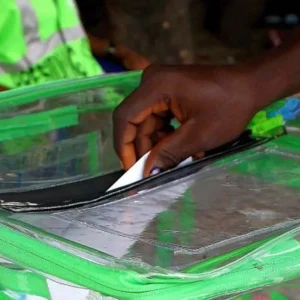
The Edo State Independent Electoral Commission (EDSIEC) says it has recruited and trained 10,000 ad hoc personnel ahead of Saturday’s local government elections across the state.   Speaking at a press briefing in Benin City, EDSIEC Chairman Jonathan Aifuobhokhan said the temporary election officials had undergone the necessary training and were fully prepared to carry out their responsibilities. He said the commission had completed preparations for a free, fair, credible, transparent, peaceful and inclusive election, adding that all stages of the process comply with the Constitution, the Edo State Electoral Law and accepted democratic standards. Aifuobhokhan disclosed that both sensitive and non-sensitive election materials had been produced, inspected, sorted and packaged for deployment to all 18 local government areas, wards and polling units. He added that special logistics had been arranged to transport materials to riverine and other hard-to-reach communities to ensure that eligible voters are not disenfranchised because of geographical challenges. According to the EDSIEC chairman, voting will begin at 8:30 a.m. and end at 2:30 p.m., while election results will be transmitted manually. “Our logistics are ready. Our transportation arrangements are complete. Election personnel have been adequately trained. Electoral materials have been deployed. Security coordination has been concluded. Communication systems are operational,” Aifuobhokhan said. He expressed confidence that all polling units across the state’s 18 local government areas were ready for the exercise and assured voters that the commission would conduct an election that reflects the will of the people. Meanwhile, the Edo State Police Command has announced a comprehensive security deployment ahead of the council elections. Commissioner of Police Monday Agbonika said personnel and operational assets had been deployed to all 18 local government areas, covering polling units, collation centres, critical infrastructure and other strategic locations. In a statement issued by the command’s spokesperson, ASP Eno Ikoedem, the police commissioner directed officers to provide professional, impartial and intelligence-driven policing throughout the electoral process. The command also said it would work closely with other security agencies to maintain law and order before, during and after the polls, while urging residents to vote peacefully and obey lawful directives from security personnel and election officials.

Must Read

Bello Bodejo, president of Miyetti Allah Kautal Hore, during his arraignment at the Federal High Court in Abuja over alleged $2.63 million money laundering charges.

EFCC arraigns Miyetti Allah president over $2.63m money laundering

The Economic and Financial Crimes Commission (EFCC) has arraigned Bello Bodejo, president of Miyetti Allah Kautal Hore, before a Federal High Court in Abuja over alleged money laundering involving $2.63 million.   According to TheCable, Justice Inyang Ekwo on Thursday ordered that Bodejo remain in EFCC custody pending the determination of his bail application. The court adjourned the matter until July 20 for a ruling on the bail request. Bodejo pleaded not guilty to the charges when they were read in court. Following the arraignment, EFCC counsel Wahab Shittu asked the court to fix a trial date and remand the defendant. However, Bodejo’s lawyer, Senior Advocate of Nigeria Ahmed Raji, urged the court to grant bail, arguing that the alleged offences are bailable under the Administration of Criminal Justice Act (ACJA). Raji told the court that the bail application, filed on June 30, was supported by several grounds. Opposing the request, Shittu relied on a 28-paragraph counter-affidavit, arguing that Bodejo had previously been questioned by the Department of State Services (DSS) over other matters and could commit further offences if released. The prosecution also challenged the defendant’s claim of ill health, stating that the injury cited was not recent and that he did not appear to be medically unfit. Shittu further argued that Bodejo could interfere with witnesses if granted bail, while urging the court to impose strict conditions should bail be approved. According to the charge, the EFCC alleged that Bodejo accepted $200,000 in cash from Sa’idu Abubakar, a former Accountant-General of Bauchi State, on January 21, 2022, in a transaction exceeding the legal threshold. The commission also alleged that he later received another $100,000 in cash from Abubakar on October 26, 2022, as well as an additional $980,000 through separate cash transactions. The EFCC said the alleged offences contravene Section 19(1)(d) of the Money Laundering (Prevention and Prohibition) Act, 2022, and are punishable under Section 19(2)(b) of the same Act.
Read more
Bello Bodejo, president of Miyetti Allah Kautal Hore, during his arraignment at the Federal High Court in Abuja over alleged $2.63 million money laundering charges.

EFCC arraigns Miyetti Allah president over $2.63m money laundering

The Economic and Financial Crimes Commission (EFCC) has arraigned Bello Bodejo, president of Miyetti Allah Kautal Hore, before a Federal High Court in Abuja over alleged money laundering involving $2.63 million.   According to TheCable, Justice Inyang Ekwo on Thursday ordered that Bodejo remain in EFCC custody pending the determination of his bail application. The court adjourned the matter until July 20 for a ruling on the bail request. Bodejo pleaded not guilty to the charges when they were read in court. Following the arraignment, EFCC counsel Wahab Shittu asked the court to fix a trial date and remand the defendant. However, Bodejo’s lawyer, Senior Advocate of Nigeria Ahmed Raji, urged the court to grant bail, arguing that the alleged offences are bailable under the Administration of Criminal Justice Act (ACJA). Raji told the court that the bail application, filed on June 30, was supported by several grounds. Opposing the request, Shittu relied on a 28-paragraph counter-affidavit, arguing that Bodejo had previously been questioned by the Department of State Services (DSS) over other matters and could commit further offences if released. The prosecution also challenged the defendant’s claim of ill health, stating that the injury cited was not recent and that he did not appear to be medically unfit. Shittu further argued that Bodejo could interfere with witnesses if granted bail, while urging the court to impose strict conditions should bail be approved. According to the charge, the EFCC alleged that Bodejo accepted $200,000 in cash from Sa’idu Abubakar, a former Accountant-General of Bauchi State, on January 21, 2022, in a transaction exceeding the legal threshold. The commission also alleged that he later received another $100,000 in cash from Abubakar on October 26, 2022, as well as an additional $980,000 through separate cash transactions. The EFCC said the alleged offences contravene Section 19(1)(d) of the Money Laundering (Prevention and Prohibition) Act, 2022, and are punishable under Section 19(2)(b) of the same Act.
Governor Dauda Lawal speaking after emerging APC consensus candidate for the 2027 Zamfara governorship election

I told kidnappers to kill my brothers, I refused to pay N300m ransom – Zamfara Gov

Zamfara State Governor Dauda Lawal has revealed that he rejected a N300 million ransom demand after his brothers were kidnapped in 2019, saying paying criminals only fuels more abductions.   Speaking on Thursday at the ARISE News and THISDAY Townhall Conference in Abuja, the governor said he stood by his decision despite the personal consequences. Lawal disclosed that the kidnappers demanded N300 million for his brothers’ release, but he refused to negotiate. “My own brothers were kidnapped in 2019, and these criminals were demanding at the time about N300 million. And I said, look, I’m not going to pay a dime. If you like, go and kill them,” he said. According to the governor, his brothers were eventually released after spending three months in captivity without any ransom being paid. Lawal maintained that paying kidnappers only emboldens criminal groups and encourages further kidnappings. “By the time we continue to pay ransom to these people, we are encouraging them to be kidnapping people more and more,” he said. He added that his position remains unchanged, insisting he would never negotiate with or pay ransom to criminals. The governor made the remarks while advocating for the creation of state police, arguing that governors should have operational control over security agencies if they are to be held accountable for protecting lives and property. Lawal said one of the frustrations of being governor is being regarded as the state’s chief security officer without having command over security agencies. He questioned how governors could be held responsible for insecurity when they lack authority to direct security operations. The governor argued that state policing would improve accountability, allowing residents to hold elected leaders responsible for security outcomes while enabling states to adequately fund, train and equip personnel. He also criticised the Nigeria Police Force over inadequate funding, poor welfare and insufficient training, saying these challenges affect officers’ effectiveness. Highlighting Zamfara’s security investments, Lawal said his administration now funds more than 30 per cent of security operations in the state. He disclosed that the state has procured more than 500 vehicles for security agencies over the past three years and recently supplied 35 Armoured Personnel Carriers and Mine-Resistant Ambush Protected vehicles. Lawal added that the state has also acquired surveillance and attack drones to support security forces in tackling banditry and kidnapping. He insisted that strengthening security agencies through better funding, training and technology, rather than negotiating with armed groups, remains the most effective approach to addressing insecurity. The governor’s comments come amid renewed national debate over the establishment of state police as part of broader security reforms.

Editor's Pick

Trending News

Newsletter

Enter your email address and receive notifications of news by email.

You have been successfully Subscribed! Ops! Something went wrong, please try again.

© 2026 GongNews. All Rights Reserved.