Nigeria’s political landscape is witnessing fresh realignments ahead of the 2027 general elections, with party defections, candidate withdrawals, leadership disputes and court battles creating uncertainty across several states.
The developments have heightened concerns about political stability, electoral security and the ability of parties to present legally recognised candidates as the campaign gathers momentum.
According to a report by Channels Television, recent developments in Sokoto, Kano, Cross River and Ogun states highlight the growing challenges confronting political parties, particularly the African Democratic Congress (ADC), ahead of the elections.
Concerns have also emerged over political violence, misinformation and the safety of voters and campaign participants.
Sokoto: APC Gains More Defectors
The All Progressives Congress (APC) in Sokoto State has received another group of defectors from the Peoples Democratic Party (PDP) and the ADC.
A Sokoto Government House statement issued on November 10 identified three PDP state executive officials, several local government party chairmen and other political organisers among those who joined the ruling party.
ADC ward officials and associated groups were also reportedly among the defectors.
Although some reports put the number of departing PDP local government party chairmen at seven, the published names clearly identify six.
The defectors are party officials, not elected local government council chairmen.
The development represents a shift in local party structures, although it remains unclear whether their supporters will follow them to the APC.
Kano: ADC Appoints Caretaker Committee
In Kano State, the ADC has announced a 14-member caretaker committee headed by Musa Ungogo.
The committee, appointed through a letter dated November 9, is expected to oversee the party’s affairs for six months.
The development comes amid disagreements over the party’s state leadership and a wider national leadership crisis.
The Federal High Court’s November 5 judgment invalidating decisions taken by the David Mark-led national executive has also raised questions about the legal authority behind the party’s candidate nominations.
The ADC has appealed the judgment and applied for a stay of execution. However, no appellate reversal or granted stay had been confirmed as of the report.
ADC Faces Wider Legal Battle Over Leadership
The ADC’s leadership crisis remains one of the most significant political developments ahead of the 2027 elections.
On November 5, the Federal High Court invalidated decisions taken by the David Mark-led national executive, including the process that produced former Vice President Atiku Abubakar as the party’s presidential candidate.
The party rejected the judgment and subsequently filed an appeal alongside an application for a stay of execution.
The controversy has extended beyond the party’s national leadership, with candidates associated with the ADC petitioning international diplomatic missions and organisations.
Those approached reportedly include the United Nations, United States Embassy, British High Commission, European Union and ECOWAS.
The candidates are seeking attention to the legal and electoral implications of the judgment, while raising concerns about delays in obtaining its certified copy.
They have indicated their intention to pursue lawful remedies.
However, the petition does not overturn the court’s judgment or automatically suspend its execution.
The dispute has created uncertainty for ADC candidates across several states, while the Independent National Electoral Commission (INEC) faces questions about how to respond to the judgment and any subsequent appellate orders.
Cross River: NDC Deputy Governorship Candidate Withdraws
The National Democratic Congress (NDC) has suffered a setback in Cross River State following the withdrawal of its deputy governorship candidate, Stella Charles Archibong.
Archibong reportedly withdrew from the party’s governorship ticket and declared support for Governor Bassey Otu’s re-election campaign through the Back to South Movement.
The development became public earlier in the week.
The party’s governorship candidate, John Odey, acknowledged her withdrawal and indicated that consultations were ongoing.
Her departure has raised questions about the party’s replacement arrangements and the procedures required for recognition by INEC.
As of the report, no replacement had been independently verified on the Commission’s published list.
Ogun: Court to Deliver Judgment on Adebutu’s Candidacy
In Ogun State, the PDP’s governorship nomination dispute is approaching a crucial stage, with the Federal High Court scheduled to deliver judgment on Friday, November 13.
The case concerns the exclusion of former governorship candidate Ladi Adebutu from INEC’s published governorship list.
INEC maintains that Adebutu’s name was missing from the PDP membership register originally submitted to the Commission.
In its court filings, the electoral body said searches of the register identified Adebutu’s running mate but did not establish Adebutu’s inclusion.
It also challenged membership documents subsequently presented in support of his nomination.
Adebutu and the PDP have rejected the basis of his exclusion.
The court’s forthcoming decision is expected to determine the next stage of the dispute, although further appeals may remain possible.
Until the judgment is delivered, the PDP’s position regarding its intended governorship candidate remains unresolved.
Peace Committee Reports 109 Electoral Accord Violations
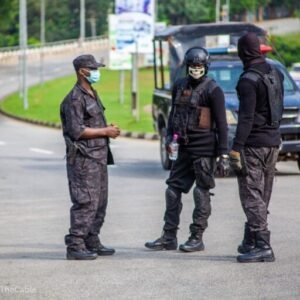
Beyond political defections and court disputes, concerns about electoral security have also intensified.
The National Peace Committee has reported 109 breaches of the electoral Peace Accord between August 19 and October 27.
The incidents were recorded across 26 states and the Federal Capital Territory.
According to the report, 33 incidents involved violence or political thuggery, while 29 involved misinformation.
Kaduna recorded nine reported breaches, while Edo, Enugu and the FCT recorded seven each.
The figures cover more than two months and do not represent incidents recorded specifically on November 11.
The findings follow concerns about political violence, including a fatal incident involving an NDC-linked procession in Asaba.
The committee’s findings have raised questions about whether political parties and their supporters can campaign freely and safely.
Misinformation has also emerged as a concern, particularly where false information could distort public understanding of electoral regulations, candidate eligibility and the voting process.
Youth Participation and Electoral Confidence
The developments have also renewed attention on the participation of young Nigerians in the 2027 elections.
Although young voters are widely considered an important electoral constituency, their influence will depend on actual participation rather than registration or online political engagement alone.
Questions remain about whether eligible young Nigerians will collect their Permanent Voter Cards, turn out on election day and feel sufficiently safe to participate.
However, the latest developments provide no fresh age-disaggregated evidence establishing a change in youth voting intentions.
What to Expect Ahead of the 2027 Elections
Several developments are expected to shape the political landscape in the coming days.
The immediate focus is Friday’s anticipated judgment in the Ogun PDP nomination dispute.
Attention will also remain on the ADC’s appeal and application for a stay of execution, alongside INEC’s response to the November 5 judgment.
In Cross River, the NDC’s replacement arrangements will require clarification, while the relationship between the newly appointed ADC caretaker committee in Kano and the party’s unresolved national leadership dispute remains significant.
The National Peace Committee’s findings will also require attention, particularly regarding investigations, security responses and measures to prevent further electoral violence.
Political Parties Face Three Major Challenges
Nigeria’s preparations for the 2027 general elections are increasingly being shaped by three major questions: control of political organisations, legal recognition of candidates and the safety of electoral participation.
While defections are changing party structures, court battles are creating uncertainty over candidate eligibility and nomination processes.
Meanwhile, reported violations of the Peace Accord have raised concerns about whether voters can exercise their rights without intimidation or fear.
According to Channels Television’s Political Signals analysis, these developments demonstrate continuing political realignments, unresolved nomination disputes and concerns about the electoral environment.
However, they do not independently establish changes in voter preferences or predict which political party will win the 2027 elections.
Ultimately, the outcome will depend on the choices Nigerians make at the ballot box under the applicable electoral rules.
The battle for political influence is intensifying, but ensuring that candidates are legally recognised and voters can participate freely remains central to the credibility of the 2027 elections.