Contact - GongNews
/ Oct 22, 2026
/ Oct 22, 2026

Contact Us

We value the input of our readers and the wider community. Whether you have a breaking news tip, a question about a report, or feedback on our platform, there are several ways to get in touch with the Gong News team.

News Tips and Press Releases

Do you have a story the public needs to know? If you have information, photos, or videos regarding an ongoing event, please reach out to our editorial desk.

Email: info@gongnews.org

General Enquiries

For general questions regarding the website or technical issues, or to reach our administrative team:

Email: info@gongnews.org

Letters to the Editor

We welcome well-argued opinion pieces and letters regarding our coverage. Please include your full name and contact details for verification purposes.

Email: admin@gongnews.org

Connect With Us

You can also follow us and send direct messages via our social media platforms:

While You're Here...

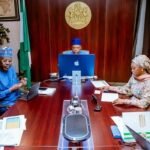
Vice President Kashim Shettima chairs the 161st National Economic Council meeting virtually on October 22, 2026.

NEC approves 90-day plan to tackle Nigeria’s cost of living

The National Economic Council (NEC) has endorsed a 90-day economic action plan aimed at easing the cost of living, improving food affordability and strengthening economic recovery across Nigeria.   The plan, proposed by the Federal Ministry of Finance, seeks to consolidate the gains of President Bola Tinubu’s economic reforms through targeted interventions, improved coordination between federal and state governments, and the removal of barriers to investment. According to Channels Television, the endorsement followed a presentation by the Minister of Finance and Coordinating Minister of the Economy, Taiwo Oyedele, at the council’s 161st meeting, held virtually on Thursday and chaired by Vice President Kashim Shettima. The plan identifies five priority areas: food affordability, tax harmonisation, completion of high-impact projects, resolution of investment bottlenecks and regulated household support. NEC also approved a national dashboard to monitor ongoing projects across the country, with an emphasis on transparency, accountability and accurate reporting on the use of proceeds from fuel subsidy removal. NEC Targets Lower Inflation, Interest Rates Presenting the economic outlook, Oyedele said reducing headline inflation and interest rates to single digits by 2027 remained key policy objectives. He stressed the need for coordinated implementation across federal and state institutions to ensure that macroeconomic improvements translate into tangible benefits for households and businesses. The presentation also highlighted targeted interventions, improved fiscal coordination and the removal of barriers to investment as necessary measures to support economic recovery. Shettima urged state governors and relevant institutions to ensure that the government’s economic reforms result in better living conditions for Nigerians. He identified affordable transportation, improved healthcare, employment opportunities and greater financial security as areas requiring urgent attention. “The first dividend of prosperity should be the confidence to plan a life. Our task is to make such confidence less dependent on fortune,” the Vice President said. Shettima Tasks States on Affordable Transportation The Vice President called on state governments to support affordable transportation systems, particularly through the National Compressed Natural Gas (CNG) Bus Initiative. He said the success of the programme should be measured by its affordability and accessibility to commuters rather than the number of vehicles deployed. “The cost of reaching a livelihood should never consume the livelihood itself,” Shettima said, adding that public transport policies must prioritise passengers’ experiences and reduce the financial burden of commuting. He also urged governors to contribute local knowledge to national policy decisions, stressing that effective implementation required clear responsibilities and practical agreements among the different tiers of government. NEC subsequently resolved to establish a joint financing framework between the Federal Government and state governments to accelerate the deployment of CNG and electric vehicles. The council directed relevant authorities to engage transport unions and operators to ensure that savings from alternative-energy vehicles are passed on to commuters through lower fares. A committee will be constituted to coordinate the financing arrangement, engage stakeholders and develop measures to make the programme affordable, accessible and sustainable. NEC Reviews Ebola Preparedness At the meeting, NEC also received an update from the Minister of Health and Social Welfare, Professor Muhammad Ali Pate, on the reported Ebola outbreak in the Federal Capital Territory. Pate sought to reassure council members that Nigeria had the institutional capacity to contain the situation and prevent a major public health crisis. He outlined response measures covering coordination and governance, screening at points of entry, laboratory testing, the provision of essential medical kits and personal protective equipment, and public communication. The minister disclosed that 21 state governments had updated their response plans, while urging the remaining 15 states to establish appropriate preparedness and response mechanisms without delay. NEC Strengthens Polio Eradication Efforts The council also considered the report of its Ad Hoc Committee on Polio Eradication, chaired by Gombe State Governor Muhammadu Inuwa Yahaya. It directed states to conduct post-campaign reviews, particularly in communities where children were missed during immunisation exercises and areas affected by insecurity. NEC emphasised the need for timely release of counterpart funds, stronger routine immunisation programmes and improved coordination with security agencies. It also called for closer cooperation among states, alongside sustained commitment from governors, traditional rulers and security agencies, to improve immunisation coverage and eradicate polio. NEC Seeks Growth in Livestock Sector On livestock development, the council received a report from its ad hoc committee chaired by Kebbi State Governor Nasir Idris. NEC acknowledged the sector’s potential to stimulate economic growth, create jobs and improve livelihoods across the country. The council noted that all states had expressed interest in supporting the Federal Government’s livestock development initiatives. It resolved to strengthen collaboration between federal and state governments to accelerate reforms and unlock the sector’s economic potential. The decisions form part of NEC’s broader efforts to improve living standards, strengthen public services and ensure that economic reforms deliver measurable benefits to Nigerians.
Read more

Google logo displayed outside a Google office building in Beijing, China, amid reports of a Google Cloud outage disrupting UK banks and online services.

Google cloud outage disrupts UK banks, online services

A power outage at a Google Cloud data centre near London disrupted banking and online services across the United Kingdom on Tuesday, October 20, affecting customers of Lloyds Bank, HSBC and Revolut.   The incident also affected other online services, including property website Rightmove and postal operator Royal Mail, according to reports from internet service tracker Downdetector. Google confirmed that its cloud services experienced disruptions following a power-related incident at its London data centre. In a service update, the technology company said the outage began at 0608 GMT, with multiple services experiencing increased errors and intermittent network failures in its europe-west2 region. Google initially projected that full recovery would be achieved at around 1300 GMT on Tuesday. Lloyds, HSBC Confirm Banking Disruptions Several UK lenders confirmed that customers were experiencing difficulties accessing their banking services. Lloyds Bank said it was aware that some customers were having problems using its mobile application and online banking platform. HSBC also confirmed service disruptions, saying customers were experiencing difficulties accessing its services. The bank added that it would continue monitoring the situation, which was affecting other organisations. Revolut, the digital banking platform, was also affected. The disruption reportedly affected services including ATM withdrawals, bank transfers and bank card top-ups. A source close to the matter attributed Revolut’s service interruptions to the Google Cloud outage. Revolut Assures Customers Their Money Is Safe Revolut said it had been working to resolve the problem since it was identified and apologised to customers affected by the disruption. The company also reassured users that their funds and personal information remained secure. “We can confirm that all our customers’ money and data are safe,” a Revolut spokesperson said in a statement. The incident highlighted the potential impact of disruptions to cloud computing infrastructure, which businesses rely on to operate digital services. Rightmove, Royal Mail Also Report Problems The disruption extended beyond banking, with Downdetector recording hundreds of reports of problems affecting several UK businesses. Among the services affected were Rightmove, a major property website, and Royal Mail, the country’s postal operator. Google’s service update identified the problem as a power-related incident affecting its London data centre, with network failures and elevated error rates reported across multiple cloud services. The company had expected services to recover by early afternoon GMT, although the report did not confirm whether all affected businesses had fully restored their services.
Read more
NAFDAC truck carrying expired donated medicines worth ₦59 million at Igwuruta dump site in Port Harcourt, Rivers State.

NAFDAC destroys ₦2.6bn fake products in Rivers 

The National Agency for Food and Drug Administration and Control (NAFDAC) has destroyed fake and substandard products worth ₦2.6 billion in Port Harcourt, Rivers State, as part of a nationwide crackdown on unsafe goods valued at more than ₦5.3 billion.   The destroyed items included pharmaceutical products, chemicals, tomato paste, biscuits and other products deemed unfit for consumption. The Nigeria Customs Service intercepted and seized the goods at Onne Port between 2025 and 2026. The destruction exercise took place on Friday, October 16, 2026, at a dumpsite in Eneka, Obio/Akpor Local Government Area of Rivers State. Officials from NAFDAC and the Nigeria Customs Service said the operation highlighted the importance of inter-agency cooperation in preventing counterfeit and potentially dangerous products from reaching Nigerian consumers. More Seized Products Await Destruction The Chairman of the Federal Task Force on Counterfeit, Fake Drugs and Unwholesome Processed Foods in Nigeria, Martins Iluyomade, represented NAFDAC Director-General Mojisola Adeyeye at the exercise. Iluyomade, who also serves as NAFDAC’s Director of Investigation and Enforcement, described the destruction as the first phase of the operation, adding that more seized goods were expected to be brought out of the port for disposal. He urged the Nigeria Customs Service to facilitate the release of the remaining containers for destruction. Iluyomade also called for sustained cooperation among government agencies involved in combating counterfeit products and other illicit activities, warning against rivalry between institutions. NAFDAC Intensifies Crackdown on Unsafe Products The South-South Zonal Director of NAFDAC, Chukwuma Oligbu, was represented by his deputy, Rita Chukwuma, who said the exercise formed part of the agency’s regulatory responsibilities to remove fake and substandard products from circulation. Representing the Enforcement Unit of the Nigeria Customs Service, Area II Command, Superintendent of Customs Elizabeth Abosede commended NAFDAC for the collaboration. The Port Harcourt operation followed enforcement activities in Lagos and Aba, Abia State, where NAFDAC seized suspected counterfeit alcoholic beverages, packaging materials and other products valued at billions of naira. The agency has urged Nigerians to remain vigilant and report suspected illegal manufacturing, repackaging and sales of counterfeit products. The development forms part of ongoing efforts by NAFDAC and other relevant agencies to curb the circulation of unsafe goods and protect public health.
Read more
Aliko Dangote speaking during the announcement of the planned 700,000 barrels-per-day refinery to be built in Lamu, Kenya.

Dangote refinery shares rises to N700 ahead of IPO deadline

Renaissance Capital Africa has raised its valuation of Dangote Petroleum Refinery and Petrochemicals FZE to N700.41 per share, representing a 33.4 per cent increase above the refinery’s initial public offering price of N525.   The revised valuation follows stronger-than-expected financial results for the first nine months of 2026, driven by improved refining margins and better operational performance. According to a report by TheCable, Renaissance Capital Africa (RCA) increased its valuation from N619.40 per share after the refinery’s earnings exceeded the investment firm’s estimates. In an October 16 update titled Stronger Refining Margins Drive Earnings Outperformance, RCA said the refinery recorded higher-than-expected revenue, earnings before interest, taxes, depreciation and amortisation (EBITDA), and net profit. Revenue Hits $22.5bn Dangote Refinery reported revenue of $22.5 billion for the nine months ended September 30, 2026, representing a 144 per cent increase from the $9.2 billion recorded during the corresponding period in 2025. Its EBITDA climbed to $5.5 billion from $627.6 million a year earlier, while net profit reached $4.7 billion, reversing a loss of $117.2 million recorded in the same period last year. The refinery’s operating cash flow also increased significantly, rising to $3.68 billion from $364.7 million. Its financial position improved from net debt of $1.73 billion in September 2025 to net cash of $650.8 million in September 2026. David Bird, chief executive officer of Dangote Refinery, said the third-quarter performance demonstrated the company’s transition from commissioning and ramp-up activities to sustainable commercial operations. Dangote Refinery IPO Closes October 27 The revised valuation comes as the refinery’s initial public offering remains open until October 27, following a two-week extension announced earlier this month. The offer opened on September 14, with 4.1 billion ordinary shares priced at N525 each. The minimum subscription is 10 shares, costing N5,250. Aliko Dangote, president of Dangote Industries Limited, described the offer as the “People’s IPO”, saying it would provide members of the public with an opportunity to own shares in the refinery. If fully subscribed, the offer is expected to raise N2.15 trillion. The higher valuation places the refinery’s estimated share value above its IPO price as investors consider the company’s latest earnings performance and prospects.
Read more
President Bola Tinubu meets World Bank President Ajay Banga at the Presidential Villa in Abuja amid concerns over Nigeria's debt interest payments.

Nigeria raises disputes over World Bank’s ₦7.7tn debt interest claim

The Federal Government has disputed the World Bank’s assessment of Nigeria’s debt burden, insisting that reports showing interest payments consuming 124 per cent of revenue in the first half of 2026 are misleading.   The Ministry of Finance said the figures cited in the World Bank’s October 2026 Nigeria Development Update did not fully reflect the country’s revenue position and included debt obligations serviced on behalf of state governments. The ministry’s position was contained in a statement issued on Sunday and shared on X by the Minister of Finance and Coordinating Minister of the Economy, Taiwo Oyedele. The World Bank had raised concerns over Nigeria’s debt servicing-to-revenue ratio after reporting that interest payments reached ₦7.7 trillion in the first half of 2026, exceeding the Federal Government’s reported revenue for the period. However, the ministry argued that comparing the interest payments with federal revenue alone overstated the ratio because the debt figure included obligations associated with other tiers of government, including external loans to states. It also said the revenue figures excluded income earned by government agencies and enterprises that had not yet been remitted to the Treasury. According to the ministry, the timing of statutory tax payments also affects revenue collection, with some taxes predominantly collected in the second half of the year. FG Cites Revenue Growth The ministry defended the government’s fiscal reforms, citing an increase in federal revenue between the first half of 2025 and the corresponding period in 2026. It said revenue rose by 72 per cent, from ₦3.6 trillion to ₦6.2 trillion, while interest payments increased by 38 per cent, from ₦5.6 trillion to ₦7.7 trillion. The ministry said the difference in growth rates demonstrated that revenue was increasing faster than interest costs. It added that the interest-to-revenue ratio declined from 156 per cent in the first half of 2025 to 124 per cent in the first half of 2026, while the gap between interest payments and revenue narrowed from ₦2 trillion to ₦1.5 trillion. The ministry also cited the 2025 figures, noting that the interest-to-revenue ratio stood at 156 per cent in the first half of that year, while the full-year debt-service-to-revenue ratio was below 60 per cent, compared with 97 per cent before the reforms. It described the figures as evidence of progress under the current administration’s economic reforms. World Bank’s Full-Year Projection The ministry maintained that Nigeria’s debt sustainability should be assessed using full-year figures rather than data covering only six months. It pointed to the World Bank’s projection that Nigeria’s total debt service, including both interest and principal repayments, would account for 46 per cent of revenue in 2026. The government described the full-year projection as a more appropriate benchmark for assessing the country’s debt obligations. It also said federal borrowing remained within the limits approved by the National Assembly under the 2026 Appropriation Act and the approved borrowing plan. According to the ministry, borrowing activities comply with the Fiscal Responsibility Act 2007 and the Debt Management Office (Establishment) Act 2003, with borrowing information published regularly by the Debt Management Office. The ministry said it welcomed scrutiny of public finances but urged analysts and commentators to compare figures covering the same levels of government and periods when assessing Nigeria’s fiscal position. The disagreement comes amid continued scrutiny of Nigeria’s debt obligations, government revenue and the impact of economic reforms on public finances.
Read more
Elon Musk's Tesla Roadster concept equipped with thrusters, unveiled during a livestreamed demonstration at a SpaceX facility in Texas.

Elon Musk unveils Tesla flying car, targets 2028 production

Tesla chief executive Elon Musk has unveiled a new Roadster sports car equipped with thrusters, describing the demonstration as a step towards making flying cars a reality.   The vehicle was showcased during a livestreamed event at a SpaceX test facility in Texas on Thursday, with the demonstration broadcast on Tesla’s X account. During the presentation, the car launched from a steep ramp before landing on its wheels, prompting Musk to declare, “Flying cars are real.” However, the billionaire acknowledged uncertainty surrounding the technology, saying the vehicle’s “success is not guaranteed” but that “it will probably work”. Musk said the car was fitted with ultra-high-pressure air tanks designed to propel it into the air, although the demonstration described in the presentation did not establish that it could sustain flight. He attributed the development to collaboration between Tesla, the electric vehicle manufacturer, and SpaceX, his rocket company. “What happens when you have a collaboration with the world’s best car company and the world’s best rocket company,” Musk said, describing the project. According to Musk, the vehicle is expected to enter production in 2028. However, technical and regulatory hurdles remain significant challenges for the wider flying-car industry. Flying Cars Face Technical Challenges The concept of flying cars has existed for more than a century. American aviation pioneer Glenn Curtiss unveiled an early flying-car prototype in 1917. Despite decades of experimentation, practical flying cars have yet to achieve widespread commercial adoption. Recent advances in electric motors and high-performance batteries have renewed interest in the sector, with developers exploring vehicles that combine road transport with aviation capabilities. However, such vehicles face challenges involving safety, engineering, airspace regulation and commercial viability. Musk’s announcement places Tesla’s latest Roadster concept within this evolving industry, although its planned 2028 production timeline will depend on the project’s technical progress and the requirements for bringing the vehicle to market.
Read more

Newsletter

Enter your email address and receive notifications of news by email.

You have been successfully Subscribed! Ops! Something went wrong, please try again.

© 2026 GongNews. All Rights Reserved.