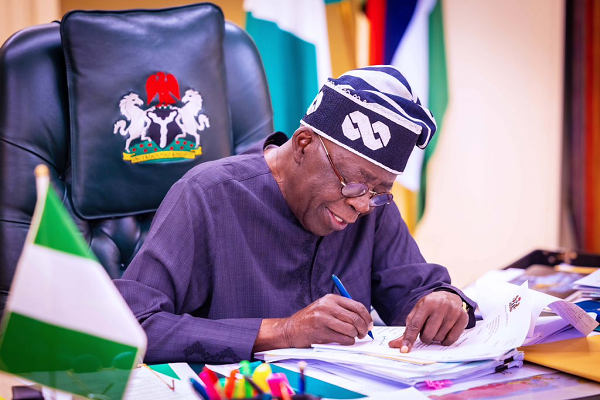

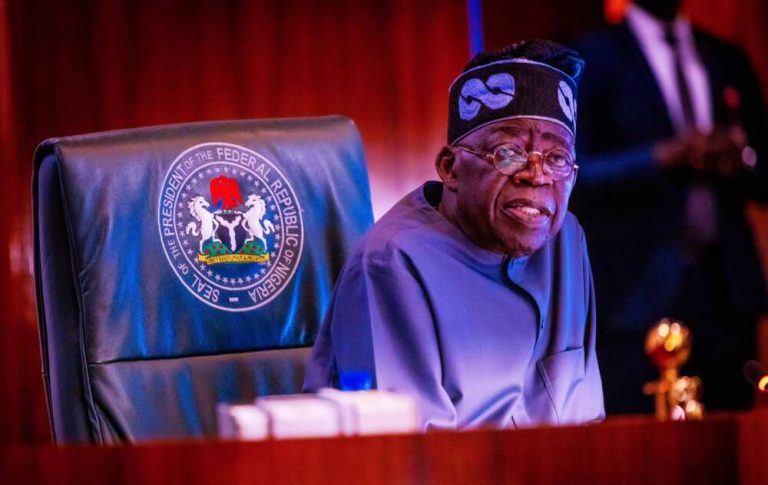
President Bola Tinubu has called for stronger economic integration across Africa, urging the continent to prioritise industrialisation, local processing of raw materials, and fair participation in global trade.
Speaking at the Africa Forward Summit in Nairobi, Kenya, Tinubu said Africa must move away from exporting raw materials while importing finished products at higher costs. The summit was co-hosted by Emmanuel Macron and William Ruto.
According to a statement by presidential spokesperson Bayo Onanuga, Tinubu said Africa’s current trade structure was driven by a global financial system that limits industrial growth across the continent.
“Africa’s share of global manufacturing value added remains below 2 per cent,” Tinubu said, adding that the continent continued to suffer from high borrowing costs and limited access to affordable long-term finance.
The Nigerian leader said his administration had introduced major economic reforms, including fuel subsidy removal, exchange rate unification, banking recapitalisation, and Nigeria’s exit from the Financial Action Task Force grey list.
Tinubu stated that Nigeria’s debt-to-GDP ratio was projected at 32.3 per cent in 2026, while external reserves had risen to $45.5 billion.
However, he argued that African countries still faced unfair treatment from creditors and global rating agencies.
“Nigeria is not asking for charity. We are demanding a financial system that intentionally enables Africa to industrialise,” Tinubu said.
The President also highlighted Nigeria’s blue economy potential, saying maritime security and stronger regional cooperation were critical to unlocking investment and economic growth in the Gulf of Guinea.
Tinubu pledged to expand Nigeria’s Deep Blue Project maritime intelligence infrastructure and make it available as a shared data hub for willing regional partners.
He said improved maritime governance, secure sea lanes, and harmonised regional laws would help attract private capital and modernise Africa’s maritime sector.
On migration, Tinubu said African governments must address the root causes pushing young people to leave the continent, including unemployment and lack of economic opportunities.
He called on international partners to increase investments in climate adaptation, energy access, digital skills, and job creation across Africa.
The President also urged stronger African cooperation in shaping global migration policies, describing current international migration frameworks as insufficient because they remain non-binding.
The summit brought together leaders and officials from more than 30 countries, including António Guterres and Mahamoud Ali Youssouf.
Tinubu also held talks with CAF President Patrice Motsepe, where he reaffirmed Nigeria’s readiness to host the 2026 CAF Awards.
The President was accompanied by senior government officials and leading Nigerian business figures, including Aliko Dangote, Tony Elumelu, Abdulsamad Rabiu, and Aigboje Aig-Imoukhuede.