
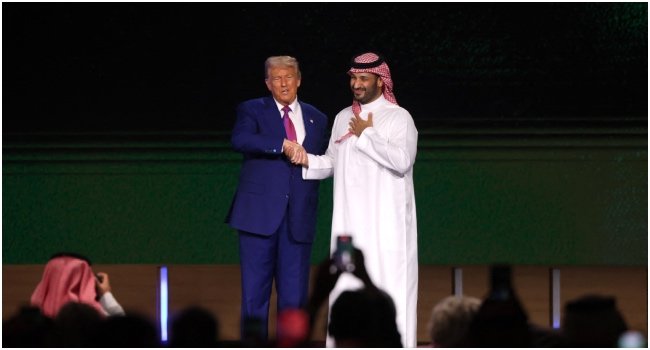
The United States and Saudi Arabia have announced a landmark agreement to establish a civilian nuclear programme in the kingdom, a move expected to strengthen strategic ties while sparking concerns over nuclear proliferation in the Middle East.
The agreement, announced on Wednesday, comes as Washington remains engaged in conflict with Iran over its nuclear ambitions and stalled diplomatic efforts. The deal is also expected to generate billions of dollars in business for American companies while enhancing Saudi Arabia’s access to advanced nuclear technology.
The agreement is regarded as a significant diplomatic victory for Riyadh, which secured the deal without being required to normalise relations with Israel, a condition Washington had previously linked to broader defence and nuclear cooperation.
According to a report by The Wall Street Journal, one provision could allow US companies to construct a uranium enrichment facility in Saudi Arabia. However, the US Department of Energy neither confirmed nor commented on the reported provision.
Analysts say the agreement sends a strong signal to Iran as negotiations over its nuclear programme remain deadlocked. Allison Minor, Director of the Project for Middle East Integration at the Atlantic Council, said keeping the option of uranium enrichment in Saudi Arabia sends a powerful message to Tehran while reinforcing support for a key US ally.
The agreement will be submitted to the US Congress for review, although the Republican-controlled legislature is not expected to block its implementation.
The announcement has drawn criticism from lawmakers and non-proliferation advocates. US Senator Bernie Sanders questioned the decision, arguing that Washington was permitting Saudi Arabia to pursue nuclear enrichment while opposing similar activities in Iran.
US Secretary of State Marco Rubio defended the agreement, insisting it would include strict safeguards to ensure the programme could not be converted into a nuclear weapons project.
Saudi Arabia has consistently maintained that it has the right to develop civilian nuclear energy. Last year, the kingdom signed a mutual defence pact with nuclear-armed Pakistan.
The United States previously signed a civilian nuclear cooperation agreement with the United Arab Emirates in 2009, although the UAE does not enrich uranium domestically.
Experts remain divided over the Saudi agreement. Matthew Kroenig of the Atlantic Council warned that allowing uranium enrichment in Saudi Arabia could weaken global non-proliferation standards, while Paul Dickman, Chair of the American Nuclear Society’s External Affairs Committee, stressed the need for transparency in implementing the deal.
Jennifer T. Gordon, Director of the Atlantic Council’s Nuclear Energy Policy Initiative, described the agreement as a strategic victory for Washington over Russia and China, noting that Saudi Arabia had made clear it intended to develop nuclear energy regardless of its international partner.
The United States currently maintains civilian nuclear cooperation agreements with more than 50 countries.