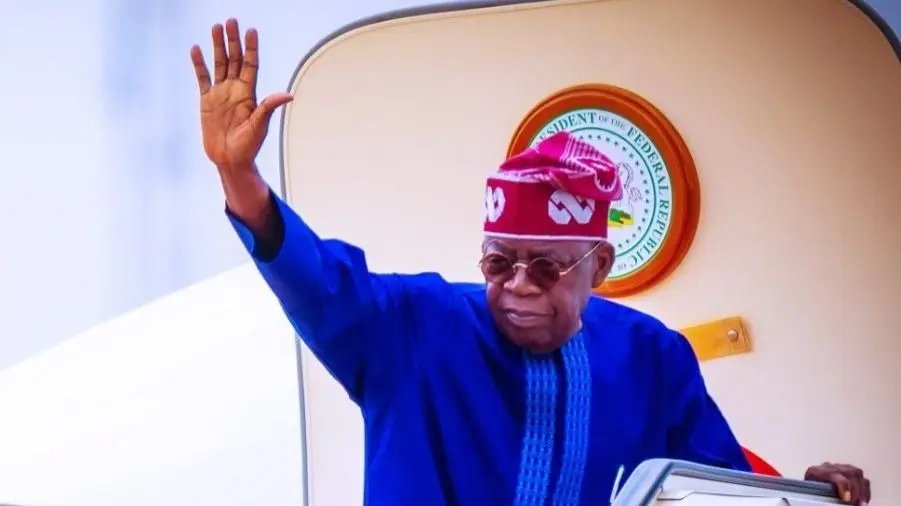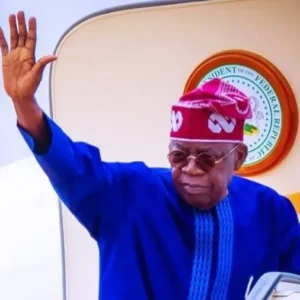


President Bola Tinubu’s decision to order the Economic and Financial Crimes Commission (EFCC) to reverse the freezing of an Osun State Government account has intensified political and legal tensions ahead of the August 15 governorship election.
According to Punch, the President directed the EFCC to approach the court to vacate the order and discontinue proceedings, saying the timing of the action could create the impression that the Federal Government was attempting to influence the election.
Although Tinubu said he had not been fully briefed on the circumstances surrounding the case, he stressed that no federal institution should take actions capable of undermining public confidence in the electoral process. He described the timing of the restriction as inappropriate, while maintaining that anti-corruption agencies must remain independent.
The EFCC had restricted withdrawals from one of Osun State’s statutory allocation accounts as part of an investigation into the alleged diversion of about N11 billion in Ecology Funds, Intervention Funds and Federal Account Allocation Committee allocations.
The commission said the restriction followed intelligence indicating suspicious transactions and insisted it acted within its powers under the EFCC Act and the Money Laundering (Prevention and Prohibition) Act. It also stated that only one account was affected and denied any political motive.
The Osun State Government has challenged the action in court, filing a suit at the Federal High Court in Abuja seeking to nullify the account restriction and demanding N2 billion in exemplary damages. The state argued that the EFCC acted without a valid court order and unlawfully interfered with its constitutional financial autonomy.
Governor Ademola Adeleke’s administration also rejected the corruption allegations, describing them as an afterthought intended to justify an unlawful decision. The government accused the commission of conducting a prolonged investigation without finding evidence of wrongdoing and alleged the restriction was politically motivated.
The controversy has drawn strong reactions from opposition figures. The African Democratic Congress questioned Tinubu’s repeated references to a court order, arguing that the EFCC had never publicly stated it obtained one before freezing the account. The party also argued that the President’s directive undermined claims that anti-corruption agencies operate independently.
Former Vice President Atiku Abubakar similarly said the President’s intervention demonstrated that the EFCC was not operationally independent. He argued that freezing a state’s operational account days before an election could disrupt governance and create the perception of political intimidation.
The incident also sparked widespread criticism of EFCC Chairman Ola Olukoyede on social media, with many users calling for his resignation or removal, while others accused the commission of selectively targeting opposition-controlled states.
Legal experts and civil society organisations offered mixed reactions. Some praised Tinubu’s intervention as a move to protect electoral credibility but maintained that the EFCC should formally return to court to lift the restriction. Others said the dispute highlighted the need to clarify the legal relationship between anti-corruption laws and constitutional protections for state governments.
Meanwhile, the Osun State chapter of the All Progressives Congress urged Governor Adeleke to apologise to President Tinubu and former governor Adegboyega Oyetola, arguing that the President’s statement addressed only the timing of the EFCC’s action and not the substance of the corruption investigation.
The controversy has further heightened political tensions as Osun prepares for its governorship election on August 15.