
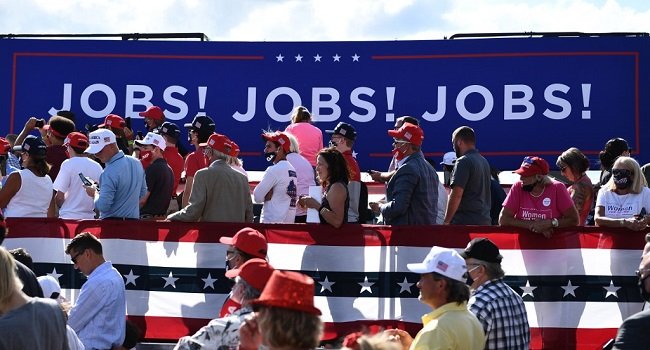
The US jobs report showed the world’s largest economy unexpectedly lost 23,000 jobs in July, dealing a setback to President Donald Trump’s claims of an economic revival ahead of November’s crucial midterm elections.
According to data released on Friday by the US Bureau of Labor Statistics and reported by AFP via Channels Television, the unexpected decline follows months of steady employment growth and has raised fresh concerns about the strength of the American labour market.
Despite the job losses, the unemployment rate edged down to 4.1 per cent, largely due to a shrinking labour force driven by an ageing population and lower net migration.
The report also revised employment figures for the previous two months downward by 103,000 jobs, indicating the labour market has been weaker than earlier estimates suggested. Job growth peaked in March before slowing in subsequent months and turning negative in July.
The largest decline came from the local government education sector, where thousands of teachers typically leave payrolls during the summer. Retail trade also shed 19,000 jobs, while employment in the financial sector continued to weaken, having lost 121,000 jobs since its May 2025 peak.
In contrast, the healthcare sector remained a bright spot, adding 22,000 jobs, although this was below its average monthly gains over the past year.
The weaker-than-expected figures come as the US Federal Reserve weighs its next interest rate decision. While the central bank has signalled it may still consider raising rates later this year, economists believe the disappointing employment data could reduce expectations of an imminent hike.
White House economic adviser Kevin Hassett downplayed the report, describing the employment survey as “very, very noisy.”
Economists offered differing views on the implications. Chris Zaccarelli of Northlight Asset Management said the report shifts attention from inflation to growing risks in the labour market. Kathy Bostjancic, chief economist at Nationwide, said inflation data would remain the Federal Reserve’s primary concern despite the weak jobs report.
Average hourly earnings rose 3.2 per cent from a year earlier, continuing to trail inflation and leaving many workers with reduced purchasing power in real terms.
The latest figures are likely to intensify scrutiny of the US economy as Republicans prepare for November’s midterm elections, where economic performance is expected to be a defining campaign issue.