
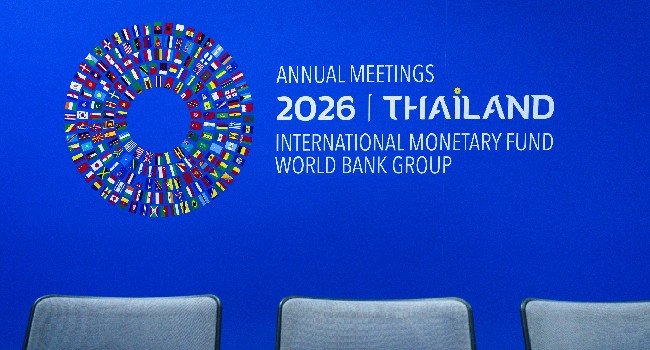
Nigeria has joined representatives from 190 other countries in Bangkok, Thailand, for the 2026 annual meetings of the International Monetary Fund (IMF) and the World Bank, with rising debt, climate finance, inequality and job creation topping the agenda.
The meetings, scheduled for October 12 to 18, are expected to attract more than 15,000 delegates, including finance ministers, central bank governors and development leaders, to discuss solutions to mounting global economic challenges.
According to Channels Television, the gathering comes amid growing concerns over rising debt burdens, climate-related shocks and declining funding for developing countries, as international cooperation faces increasing pressure.
Nigeria is expected to be represented by the Minister of Finance and Coordinating Minister of the Economy, Taiwo Oyedele, and the Governor of the Central Bank of Nigeria, Olayemi Cardoso, alongside other government officials.
Nigeria Pushes for Global Financial Reforms
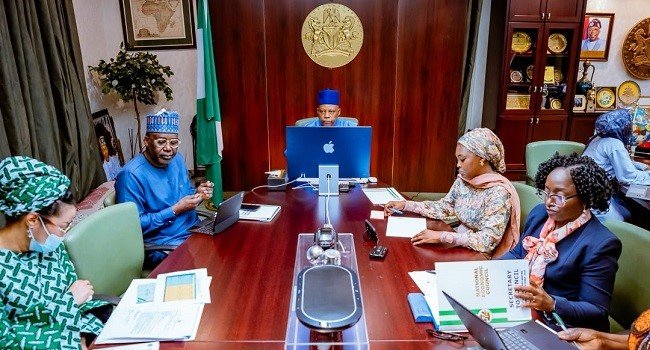
Nigeria’s participation comes weeks after President Bola Tinubu called for an overhaul of global governance structures and international financial institutions at the 2026 BRICS Summit in India.
Represented by Vice President Kashim Shettima, Tinubu advocated a more representative, equitable and responsive global governance system and international financial architecture.
The President also reiterated Nigeria’s support for reforms that reflect contemporary economic and demographic realities, arguing that the transformation championed by BRICS should extend to the wider international system.
The position aligns with broader calls from developing countries for reforms to international financial institutions to ensure their interests are better represented in global economic decision-making.
IMF Warns of Slower Global Growth
The summit comes as the IMF projects slower global economic growth amid geopolitical tensions and persistent economic uncertainty.
In July, the fund lowered its 2026 global growth forecast to 3.0 per cent, down from the 3.1 per cent projected in April.
The IMF said the artificial intelligence boom had not fully offset the economic impact of the conflict in the Middle East.
The revised projection also pointed to a slowdown compared with the global growth rate recorded in 2025.
Meanwhile, global inflation was expected to rise to 4.7 per cent in 2026, higher than previously anticipated.
These projections underscore the economic pressures facing governments as they seek to manage inflation, support growth and address development needs.
Debt and Climate Finance in Focus
With debt levels rising and climate-related challenges placing additional pressure on public finances, the meetings are expected to examine ways to improve access to financing, create jobs and reduce inequalities.
For developing economies such as Nigeria, access to affordable financing remains important for funding infrastructure, strengthening public services and supporting economic growth.
The discussions will also test the ability of advanced and developing economies to reach common ground on responses to global economic challenges.
The outcome of the meetings could shape ongoing discussions about international financial reforms, development funding and the support available to vulnerable economies.