/ Oct 22, 2026
/ Oct 22, 2026

INEC explains Pantami, Adebutu exclusions ahead of 2027 polls, sets deadline for disputes 

Published on

By

The Independent National Electoral Commission (INEC) has set October 24, 2026, as the deadline for political parties to challenge the omission of candidates from its published lists ahead of the 2027 general elections.


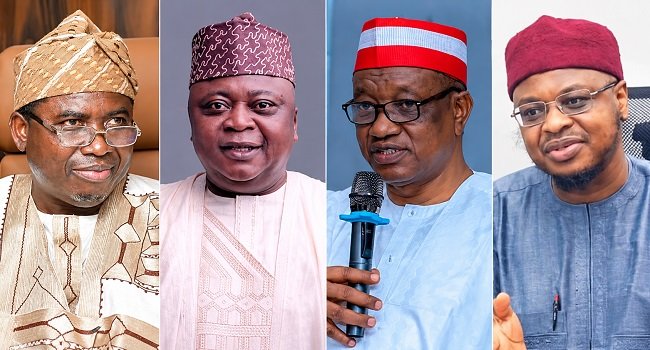
The commission explained that the exclusion of prominent Peoples Democratic Party (PDP) governorship aspirants, including Isa Pantami in Gombe State and Ladi Adebutu in Ogun State, was linked to failure to comply with statutory requirements for submitting party membership registers.

According to a report by Channels Television on October 14, INEC cited Sections 77(5)-(7) of the Electoral Act 2026 and a September 24 Supreme Court judgment upholding the requirement for political parties to submit their membership registers within the prescribed period.

The relevant submission window ran from April 21 to May 10, 2026.

INEC said parties that believe their candidates were wrongly omitted must formally notify the commission under Section 32(2) of the Electoral Act before the October 24 deadline.

The explanation provides a formal route for challenging the omissions, although the affected candidates and their parties can still dispute the commission’s interpretation of the law.

PDP Challenges Candidate Exclusions in Gombe, Ogun

In Gombe State, Pantami’s lawyers have reportedly challenged INEC’s authority to exclude him and demanded his reinstatement.

The dispute concerns whether the PDP’s governorship candidate can be recognised for the election, rather than evidence of his level of voter support.

In Ogun State, Adebutu’s omission has also raised concerns for the PDP’s preparations. The party maintains that he complied with the membership requirements.

Unless the disputes are resolved, the candidates listed by INEC will not reflect the PDP’s intended governorship line-up in the two states.

The commission also noted that it published its final presidential and National Assembly candidate lists on September 12, before the Supreme Court delivered its September 24 judgment. It has not announced a wholesale revision of those earlier lists.

Meanwhile, questions have also been raised over the inclusion of APC candidate Kingsley Chinda in Rivers State, particularly concerning his registration and defection dates. His inclusion remains in place unless changed through the appropriate legal process.

APC Inaugurates Cross-Party Presidential Campaign Council

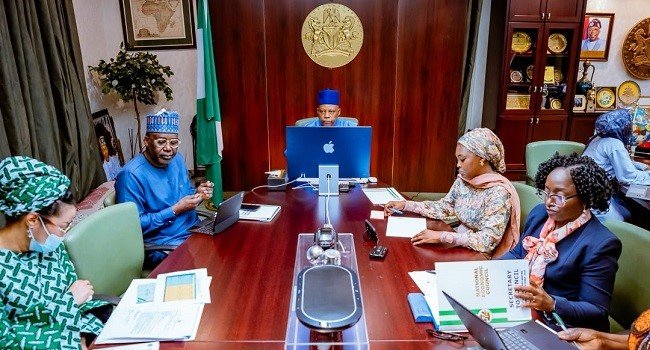
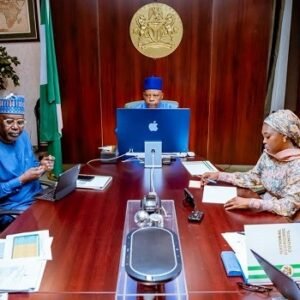
Separately, President Bola Tinubu has attended the inauguration of the All Progressives Congress (APC) Presidential Campaign Council in Abuja, in a development highlighting cooperation among politicians from different parties ahead of the 2027 elections.

Those present included Federal Capital Territory Minister Nyesom Wike, Osun State Governor Ademola Adeleke and Anambra State Governor Chukwuma Soludo.

Wike was assigned to coordinate campaign activities in Rivers State and the FCT, while Adeleke was assigned to Osun and Soludo to Anambra.

APC National Chairman Nentawe Yilwatda highlighted the party’s organisational reach and acknowledged cooperation from governors associated with the Accord Party and the All Progressives Grand Alliance (APGA).

The arrangements formalise the participation of political figures with different party affiliations in Tinubu’s presidential campaign structure.

However, the cooperation does not amount to a merger of the parties or guarantee that their supporters will vote for the APC in the presidential election.

APGA and Accord retain their separate identities and can continue to contest other elections independently.

What the Developments Mean for 2027

The two developments highlight separate challenges facing political parties ahead of the 2027 elections: compliance with nomination requirements and the formation of campaign alliances across party lines.

For the PDP, the immediate priority is resolving the disputes over its intended governorship candidates in Gombe and Ogun before the deadline for challenging their omissions.

For the APC, the cross-party campaign arrangement provides an organisational framework for coordinating political activities across several states.

However, the inauguration alone does not establish how voters will respond to the alliances. No new verified voter-preference data was presented in the report to demonstrate their likely effect on the election.

The disputes over candidate eligibility and the APC’s campaign arrangements therefore remain distinct issues.

INEC’s next administrative decisions, alongside any subsequent court rulings, could influence the final field of candidates in the affected governorship contests.

Political parties seeking to challenge candidate omissions must act before October 24, 2026, the deadline announced by the commission.

You May Like

Leave a Reply

Your email address will not be published. Required fields are marked *

Most Popular

Must Read

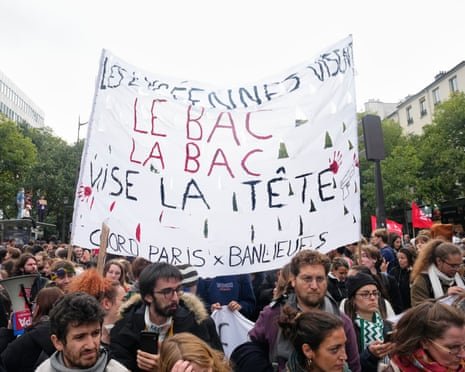
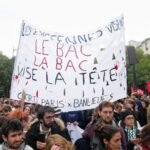
Protesters march during a demonstration in Paris, France, on October 6, 2026, amid nationwide protests over rising living costs and learning conditions.

Macron tightens security as France bans new protests

French authorities have imposed fresh restrictions on protests across the country following violent clashes, looting and vandalism that erupted during demonstrations over the rising cost of living.   President Emmanuel Macron announced the measures on Thursday, October 22, after meeting key ministers and intelligence officials. The restrictions include curfews and bans on demonstrations organised by what the government describes as groups without legitimacy. Macron said restoring calm was the government’s immediate priority, adding that he would chair another defence council meeting on Friday to determine how to respond to nationwide demonstrations planned for Saturday and beyond. He blamed organised far-left groups for the worst of last weekend’s violence, accusing them of attempting to undermine the French republic. France Tightens Protest Restrictions The latest measures follow clashes on October 17, when demonstrations involving more than half a million people against rising living costs were followed by widespread looting and damage to public buildings. The government has acknowledged that police lost control during the unrest, while political candidates seeking to succeed Macron in presidential elections expected in six months have questioned the authorities’ ability to restore order. In Paris, a student demonstration went ahead on Thursday after an emergency court overturned a police ban. Hundreds attended the rally, which followed four weeks of student protests before the October 17 demonstrations. Student leader Coppelia Moreau accused the authorities of attempting to distinguish between acceptable and unacceptable protesters, arguing that the restrictions threatened the right to demonstrate. Authorities in Lyon, France’s third-largest city, banned all protests scheduled for Saturday. The city experienced the looting of between 200 and 300 shops during last weekend’s unrest, while a tourist office was set on fire. Other cities, including Grenoble, Rouen, Le Havre and Toulon, also announced restrictions on demonstrations in their city centres. In Paris, police said a march planned for Saturday could proceed in the eastern part of the capital, beginning at Bastille, but would not be allowed to enter the city centre, where major public buildings and shops are located. The Yellow Vest movement, which has joined trade unions in organising the cost-of-living demonstrations, rejected the restrictions. Meanwhile, Art Basel Paris, the capital’s biggest art fair, announced that it would close two days earlier than scheduled because of the planned protests. France’s Interior Ministry said 20 per cent more police officers would be deployed on Saturday than during the previous weekend’s demonstrations. Arrests Rise as Government Seeks Dialogue The French government has promised a firm response to the violence, although Macron has ruled out declaring a state of emergency. Justice Minister Gerald Darmanin said on Thursday that 217 of the 2,700 people arrested during and since last weekend’s unrest had been detained, while another 1,000 were facing prosecution. Prosecutors also confirmed the arrest of a 66-year-old man over the arson attack on the 19th-century town hall in Limoges. Another man in his 30s had been arrested on Tuesday in connection with the same incident. The unrest has intensified political divisions ahead of the presidential elections scheduled for April and May. Marine Le Pen, the far-right leader who is topping opinion polls, accused Macron and his centrist government of being too weak in their response to the violence. Jean-Luc Mélenchon, a far-left presidential candidate who has faced criticism from the government over his response to the unrest, blamed what he described as the authorities’ continued use of excessive force. Prime Minister Sébastien Lecornu also began consultations with political leaders and other stakeholders in an effort to address the crisis. On Thursday, he met representatives of France’s major political parties, although Le Pen’s National Rally sent a lower-ranking official rather than a senior party leader. Lecornu was scheduled to meet mayors next, followed by discussions with student groups, trade unions and the employers’ federation on Monday. The government’s next steps are expected to be determined following Friday’s defence council meeting, as authorities prepare for further demonstrations across the country.
Read more

Editor's Pick

Trending News

Newsletter

Enter your email address and receive notifications of news by email.

You have been successfully Subscribed! Ops! Something went wrong, please try again.

© 2026 GongNews. All Rights Reserved.