The Independent National Electoral Commission (INEC) has set October 24, 2026, as the deadline for political parties to challenge the omission of candidates from its published lists ahead of the 2027 general elections.
The commission explained that the exclusion of prominent Peoples Democratic Party (PDP) governorship aspirants, including Isa Pantami in Gombe State and Ladi Adebutu in Ogun State, was linked to failure to comply with statutory requirements for submitting party membership registers.
According to a report by Channels Television on October 14, INEC cited Sections 77(5)-(7) of the Electoral Act 2026 and a September 24 Supreme Court judgment upholding the requirement for political parties to submit their membership registers within the prescribed period.
The relevant submission window ran from April 21 to May 10, 2026.
INEC said parties that believe their candidates were wrongly omitted must formally notify the commission under Section 32(2) of the Electoral Act before the October 24 deadline.
The explanation provides a formal route for challenging the omissions, although the affected candidates and their parties can still dispute the commission’s interpretation of the law.
PDP Challenges Candidate Exclusions in Gombe, Ogun
In Gombe State, Pantami’s lawyers have reportedly challenged INEC’s authority to exclude him and demanded his reinstatement.
The dispute concerns whether the PDP’s governorship candidate can be recognised for the election, rather than evidence of his level of voter support.
In Ogun State, Adebutu’s omission has also raised concerns for the PDP’s preparations. The party maintains that he complied with the membership requirements.
Unless the disputes are resolved, the candidates listed by INEC will not reflect the PDP’s intended governorship line-up in the two states.
The commission also noted that it published its final presidential and National Assembly candidate lists on September 12, before the Supreme Court delivered its September 24 judgment. It has not announced a wholesale revision of those earlier lists.
Meanwhile, questions have also been raised over the inclusion of APC candidate Kingsley Chinda in Rivers State, particularly concerning his registration and defection dates. His inclusion remains in place unless changed through the appropriate legal process.
APC Inaugurates Cross-Party Presidential Campaign Council
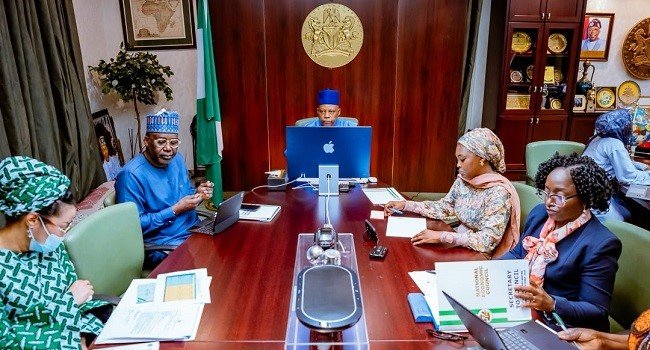
Separately, President Bola Tinubu has attended the inauguration of the All Progressives Congress (APC) Presidential Campaign Council in Abuja, in a development highlighting cooperation among politicians from different parties ahead of the 2027 elections.
Those present included Federal Capital Territory Minister Nyesom Wike, Osun State Governor Ademola Adeleke and Anambra State Governor Chukwuma Soludo.
Wike was assigned to coordinate campaign activities in Rivers State and the FCT, while Adeleke was assigned to Osun and Soludo to Anambra.
APC National Chairman Nentawe Yilwatda highlighted the party’s organisational reach and acknowledged cooperation from governors associated with the Accord Party and the All Progressives Grand Alliance (APGA).
The arrangements formalise the participation of political figures with different party affiliations in Tinubu’s presidential campaign structure.
However, the cooperation does not amount to a merger of the parties or guarantee that their supporters will vote for the APC in the presidential election.
APGA and Accord retain their separate identities and can continue to contest other elections independently.
What the Developments Mean for 2027
The two developments highlight separate challenges facing political parties ahead of the 2027 elections: compliance with nomination requirements and the formation of campaign alliances across party lines.
For the PDP, the immediate priority is resolving the disputes over its intended governorship candidates in Gombe and Ogun before the deadline for challenging their omissions.
For the APC, the cross-party campaign arrangement provides an organisational framework for coordinating political activities across several states.
However, the inauguration alone does not establish how voters will respond to the alliances. No new verified voter-preference data was presented in the report to demonstrate their likely effect on the election.
The disputes over candidate eligibility and the APC’s campaign arrangements therefore remain distinct issues.
INEC’s next administrative decisions, alongside any subsequent court rulings, could influence the final field of candidates in the affected governorship contests.
Political parties seeking to challenge candidate omissions must act before October 24, 2026, the deadline announced by the commission.