
President Bola Tinubu has announced plans to reduce transportation fares by approximately 40 per cent on participating routes as Chinese bus manufacturer Yutong moves to establish a bus assembly plant in Nigeria.
The investment is expected to boost affordable mass transportation, expand local vehicle manufacturing and create employment opportunities, according to a statement by the President’s Special Adviser on Information and Strategy, Bayo Onanuga.
The development forms part of the National Affordable CNG Transit Programme (NACTP), which is being implemented in collaboration with state governments to reduce transportation costs for Nigerians under the administration’s Renewed Hope Agenda 2.0 for 2027–2031.
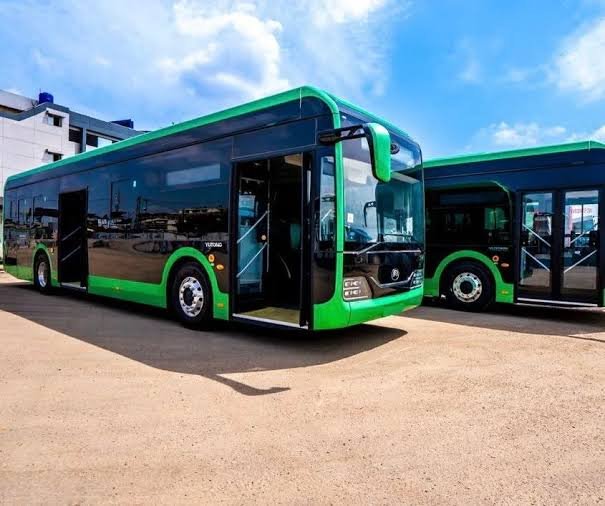
Under an agreement with the Presidential Initiative on Compressed Natural Gas and Electric Vehicles (Pi-CNG & EV), Yutong will supply an initial 300 compressed natural gas (CNG)-powered buses, with the first 100 expected to arrive in Lagos by the end of December 2026.
The remaining buses will be assembled locally through YP Automobiles Bus Assembly at the former Leyland Automotive plant in Ibadan, Oyo State.
The local assembly arrangement is expected to revive Nigeria’s automotive manufacturing capacity, reduce reliance on imported vehicles and create jobs for engineers, technicians and other skilled workers.
Yutong, which sold 49,518 buses globally in 2025, is one of the world’s leading bus manufacturers, with experience in electric and CNG-powered vehicles and public transportation projects across international markets.
The investment comes amid efforts to expand CNG adoption nationwide through the development of refuelling infrastructure supported by Pi-CNG & EV, the Midstream and Downstream Gas Infrastructure Fund (MDGIF) and private sector investors.
The expansion includes the deployment of Mobile Refuelling Units (MRUs) and a presidential directive for the installation of 2,000 additional CNG refuelling infrastructure units nationwide.
Tinubu said the objective of the investments was to lower transportation costs for Nigerians, noting that millions of workers, traders, families and students depend on commercial transport daily.
He stressed that the lower operating costs of CNG-powered buses should translate into cheaper fares for passengers, helping households save more money for food, education and other essential needs.
The President reiterated the 40 per cent fare reduction target under the National Affordable CNG Transit Programme, saying his administration would work with state governments and transport operators to extend affordable bus services to more routes.
He also welcomed Yutong’s decision to establish local assembly operations, noting that the investment would promote technology transfer, skilled employment and growth in Nigeria’s automotive industry.
Tinubu said the success of the CNG programme would ultimately be measured by the savings Nigerians make on transportation.
The agreement is scheduled to be signed in Lagos on Thursday, November 19, 2026.