Commuters across several Nigerian states are still waiting for lower transport fares despite more than $2.5bn in private-sector investment attracted by the Federal Government’s Compressed Natural Gas initiative.
The Presidential Initiative on Compressed Natural Gas and Electric Vehicles says it is working with state governors, transport unions and commercial fleet operators to ensure that savings from cheaper fuel are passed on to passengers.
However, investigations by The PUNCH have revealed uneven implementation, with commuters in several states continuing to pay high fares amid limited deployment of CNG-powered buses and inadequate refuelling infrastructure.
The initiative’s Head of Brand and Communications, Onyekachi Eke, said the programme had begun engaging state governments to identify transport routes and establish mechanisms for enforcing fare reductions.
She disclosed that buses deployed under the programme would carry stickers displaying their designated routes and approved fares, allowing passengers to know the expected cost of their journeys before boarding.
Eke said Abuja was recording fare reductions of up to 40 per cent on designated routes operated by CNG-converted commercial vehicles under a partnership with the National Union of Road Transport Workers.
Similar reductions were reportedly being recorded through CNG and electric mobility interventions in Borno, Enugu, Niger and Abia states.
However, she acknowledged that the benefits had yet to reach every route or commuter.
The initiative has not disclosed specific penalties for operators who fail to comply with approved fares or provided a comprehensive list of routes covered by the reductions.
FG attracts $2.5bn in CNG investment
Eke said the Presidential CNG and Electric Vehicles initiative had mobilised more than $2.5bn in private-sector investment across the CNG value chain.
The investment covers refuelling infrastructure, vehicle conversion centres, vehicle assembly and other supporting activities.
She distinguished the amount from direct Federal Government expenditure, explaining that a separate consolidated figure for public investment would be provided.
The Federal Government has supported the programme through vehicle and conversion-kit procurement, conversion incentives, infrastructure development and technical training.
The initiative is also expanding access to affordable transport for students through Project Sprout, which plans to provide buses to 20 universities in its first phase.
In addition, the programme is exploring a partnership with ride-hailing platform inDrive to encourage vehicle conversions and make CNG-powered cars easier for passengers to identify.
Eke said some drivers continued to charge conventional petrol-based fares despite benefiting from lower fuel costs.
She stressed that the programme’s objective was not simply to increase the number of CNG vehicles on Nigerian roads, but to ensure that passengers benefited from lower operating costs.
Tinubu targets nationwide fare reductions
President Bola Tinubu announced on August 27, 2026, that the Federal Government and state governors had agreed to pursue lower transport fares from October 1 through the adoption of cheaper energy sources, particularly CNG.
The President said the policy was intended to ensure that reduced fuel costs translated into cheaper transportation for Nigerians.
He disclosed that more than 120,000 vehicles had been converted under the Presidential CNG Initiative, with over 100,000 additional conversion kits in the pipeline.
Tinubu also said the Federal Government was financing more than 100 gas projects through the Midstream and Downstream Gas Infrastructure Fund, including 15 CNG mother stations and 86 daughter stations.
He announced plans for 1,000 CNG refuelling stations nationwide, comprising 500 previously ordered stations and another 500 proposed for rollout.
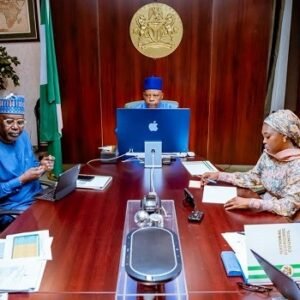
On September 19, the President said an implementation committee had been established under the Nigeria Governors’ Forum, chaired by Kwara State Governor AbdulRahman AbdulRazaq.
The committee is expected to work with state governments and other stakeholders to identify priority transport corridors and develop measures to reduce commuting costs.
In a statement on October 11, Tinubu cited examples of commuters benefiting from lower fares.
According to the President, a journey from Masaka to Berger in the Federal Capital Territory had dropped from N1,500 to N500, while fares on the Enugu-Nsukka route had fallen from N4,000 to N1,600.
However, findings by The PUNCH indicate that the reductions remain uneven across the country.
Commuters in several states still pay high fares
In Bayelsa State, the government allocated N25bn in its 2026 approved budget for CNG buses and refuelling stations. However, checks in Yenagoa found no confirmed CNG-powered buses operating on major intra-city routes at the time of the report.
In Imo State, commuters continued to face high fares at motor parks across Owerri, including Ama JK, Warehouse Junction, Fire Service, Control Post, Arugo Park and Old Okigwe Park.
Drivers attributed the high costs to the absence of CNG buses and rising fuel prices.
One driver said passengers paid N4,500 from Owerri to Akokwa and N9,000 from Owerri to Awka, while another cited fares of N7,000 from Owerri to Enugu.
The Imo State chapter of the All Progressives Congress, however, said the programme was progressing and that the state had begun receiving CNG vehicles.
In Kaduna State, the government is expecting another 120 CNG-powered buses to increase its fleet from 100 to 220.
The state is also developing bus terminals to support its Bus Rapid Transit system.
Jigawa State presents another challenge. Although about 100 vehicles have reportedly been converted to CNG, commuters said they had yet to benefit from lower fares.
Passengers continued to pay N3,500 from Dutse to Kano, N5,000 from Dutse to Hadejia and N4,500 from Dutse to Gumel.
The Jigawa State Chairman of the National Association of Transport Owners, Bello Usman Dunaro, attributed the limited impact to the small number of converted vehicles and inadequate refuelling facilities.
He said the state had only one CNG filling station, located in Dutse.
Zamfara State also lacks a CNG station, while Benue State is still preparing to procure vehicles and expand its technical capacity.
In Bauchi, the state-owned Yankari Express Corporation said it had not started converting its buses to CNG.
States adopt different transport strategies
Some state governments have invested in conventional buses while gradually exploring alternative energy.
Sokoto State budgeted at least N3.45bn for various transport vehicles in its 2025 budget implementation plans. In September 2026, the state transport authority disclosed that it had acquired seven 18-seater buses for N511m and ordered three more for N219m.
The authority has also begun converting vehicles to CNG, with 20 vehicles undergoing conversion at N750,000 each.
Kebbi State’s 2026 Citizens’ Budget provides N5.25bn for 100 18-seater Toyota Hiace buses under its mass transit programme.
Meanwhile, Kano State said it was pursuing the CNG initiative in collaboration with the Federal Government and had procured 500 electric tricycles to reduce transport costs and emissions.
The state has also received 40 CNG buses from the Federal Government, although the number already operating remains unclear.
Niger State has spent N7bn on 200 CNG buses, according to information obtained by The PUNCH. The 50-seater buses were purchased primarily to ease the impact of petrol subsidy removal.
In Kogi State, the government budgeted N1bn for CNG buses and electric vehicles in 2026, but the funds had yet to be made available.
Taraba State is working with the Federal Government to procure CNG and electric buses, with plans to install mobile CNG stations and electric charging points by November.
Nasarawa State is preparing to establish CNG conversion centres across its three senatorial zones after training at least 50 auto-technicians.
Borno, Abia expand alternative-energy transport
Borno State said it had invested billions of naira in electric buses, gas-powered buses and taxis to cushion the effects of petrol subsidy removal.
The governor’s Senior Technical Assistant on Print and Digital Communication, Abdulrahman Bundi, said approximately 80 per cent of the state’s procured buses were powered by CNG or electricity.
Abia State, meanwhile, has prioritised electric buses after encountering infrastructure challenges associated with CNG adoption.
The state’s Commissioner for Transport, Chimezie Ukaegbu, said effective CNG operations required reliable gas supplies, mother and daughter stations, and conversion centres.
He added that the state had previously subsidised bus fares by 50 per cent and remained open to adopting CNG when the necessary infrastructure became available.
Despite these interventions, drivers interviewed in Umuahia said fares had not fallen, citing high fuel prices and doubts about whether the available alternative-energy vehicles could serve the large number of commuters.
FG launches mass transit for civil servants
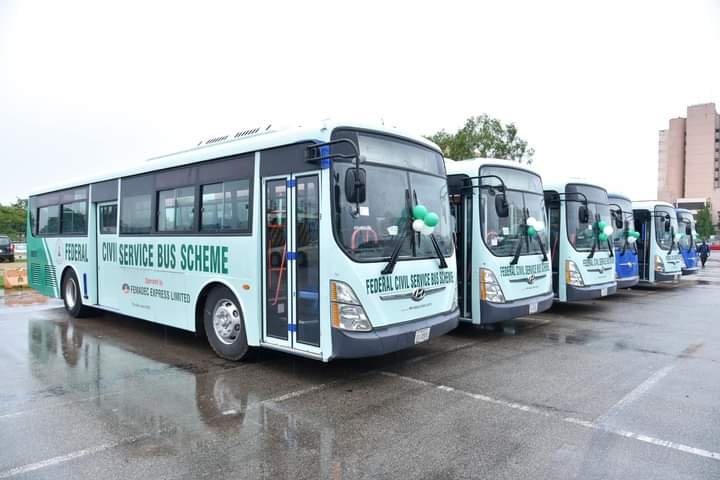
Separately, the Federal Government has provided 10 mass transit buses for an initial programme aimed at easing commuting costs for federal civil servants.
The Office of the Head of the Civil Service of the Federation said the buses would provide affordable, accessible and reliable transportation.
A circular dated September 30, 2026, signed by the Permanent Secretary of the Service Welfare Office, Dr Abdul S. U. Garba, announced the commencement of enrolment for the Renewed Hope Mass Transit Buses programme.
The initial deployment of 10 buses was intended to test operational arrangements before additional vehicles were introduced.
Registration closed on October 7, 2026. The government said the information collected would help identify high-demand residential areas, establish suitable routes and determine pick-up and drop-off points.
It also clarified that registration did not guarantee a specific route or service schedule.
Infrastructure remains a major obstacle
The uneven rollout of CNG-powered transportation highlights the challenges facing the Federal Government’s plan to reduce fares nationwide.
While some states have expanded their alternative-energy fleets, others are still working on vehicle procurement, conversion facilities, refuelling stations and technical training.
The limited number of operational CNG vehicles on some routes has also restricted the number of passengers able to benefit from cheaper fuel.
Although the initiative has attracted more than $2.5bn in private-sector investment, the extent to which that investment will translate into sustained fare reductions remains a key concern for commuters.
The programme’s impact will depend on the deployment of operational vehicles, the availability of reliable refuelling infrastructure and effective enforcement of fare-reduction measures.
For passengers facing rising transport costs, the central question remains whether the savings from cheaper energy will lead to lower fares on the routes they use every day.