

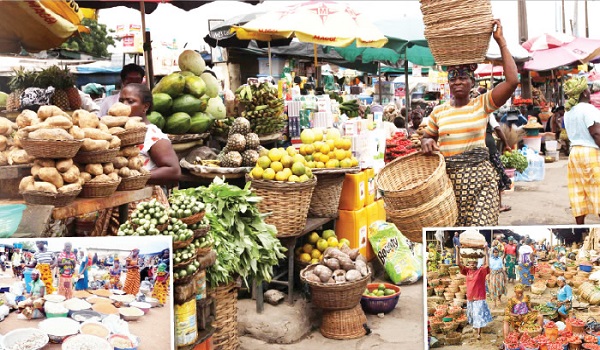
Rising costs of foodstuffs, energy logistics and other living items have further eroded Nigerians’ disposable incomes, thus pushing headline inflation rate to its highest level in 18 years.
Economic intelligence reports by many finance and economic firms surveyed by reporters yesterday indicated that inflation may rise by more than 100 basis points to above 25 per cent, the eighth consecutive monthly increase and the highest since August 2005.
Ahead of the release of the official inflation report by the National Bureau of Statistics (NBS), independent consumer surveys and econometric models indicated that inflation remained on an upward trend.
Analysts were unanimous that inflation rate remains elevated, although the projections differ slightly. On average, inflation is expected to increase from 24.08 per cent in July to about 25.5 per cent in August.
Financial Derivatives Company (FDC), a leading independent economic and finance research firm, stated that its independent market surveys showed that headline inflation may rise to 25.47 per cent.
Cordros Capital said it expected inflation to rise by about 150 basis points to 25.7 per cent in August 2023, as “existing factors stoking upward price pressures” are expected to “remain intact over the short term”.
Experts at Cordros Capital said the lean season in food-producing states would also likely widen the food demand-supply gap further.
United Capital said consumer prices will remain under substantial pressure in the second half of 2023, with inflation projected to average 25.1 per cent for the entire year, marking the highest annual rate since the 1990s.
“The contributory factors to inflation in Nigeria remain basically the same. Prominent among these factors are naira depreciation, higher logistics costs, money supply growth, and cost-push variables,” FDC stated.
According to the Bismarck Rewane-led FDC, the pass-through effect of a weak currency on domestic prices remains potent, with notable commodities such as wheat, sugar, rice, and dairy products with high import content.
Read Also:
FCT Minister mulls N5bn transport, food palliatives for residents
FDC, however, noted that rising inflation was not peculiar to Nigeria. It pointed out that some of the sub-Saharan African (SSA) countries also recorded higher inflation rates, owing primarily to currency weakness and increasing energy costs.
In August, the Zambian Kwacha depreciated by 6.69 per cent to K20.26 per dollar, pushing inflation to a 17-month high of 10.8 per cent. Angola’s inflation also increased for the third consecutive month to 12.12 per cent in July, largely due to the reduction in fuel subsidies.
United Capital explained that the elevated inflation could be attributed to heightened price levels across all components of the inflation basket, driven by various structural anomalies and policy shocks.
According to analysts, these shocks include the closure of borders, which limited the supply of certain goods, insecurity in the food-producing regions of the country, devaluation of the naira, imported inflation, high fuel pump prices and the increase in electricity tariffs.
These factors, said the analysts, have collectively contributed to the continuous increase in consumer prices and overall inflationary pressures in the country.
United Capital said: “In the second half 2023, several price triggers, including the increase in premium motor spirit (PMS) prices, currency pressure from the unification of exchange rates, and the potential electricity tariff increase, are expected to drive inflation higher.
“Additionally, policy measures such as the implementation of importation duties on selected goods and new taxes from the Finance Act are likely to contribute significantly to the rise in headline inflation during this period. “These factors combined pose challenges to inflation control and warrant close monitoring by policymakers to ensure economic stability,”
Cordros Capital outlined that the primary factors driving inflation were “the trifecta impact of elevated PMS prices induced by the PMS subsidy removal, lingering currency depreciation that accompanied the Central Bank of Nigeria (CBN)’s forex reform, and dry spell season in the northern region as the rainfall was insufficient in the period”.
“We expect the impact of the existing factors stoking upward price pressures to remain intact over the short term. In addition, the ongoing lean season in food-producing states will likely widen the food demand-supply gap further,” Cordros Capital stated.
Meanwhile, the Federal Government has said it was in the process of removing all other major macroeconomic impediments to the stability of the foreign exchange (forex) rate, inflation, interest rates, liquidity and access to adequate finance.
In a new acceleration of President Bola Tinubu’s monetary and fiscal reforms, the government stated that it was finalising key initiatives aimed at freeing up the macroeconomic environment from legacy constraints with a view to enhancing Nigeria’s attractiveness as a global destination for investments.





















https://t.me/s/site_official_1win/45
https://t.me/s/dragon_money_mani/32