
/ Sep 30, 2026
/ Sep 30, 2026

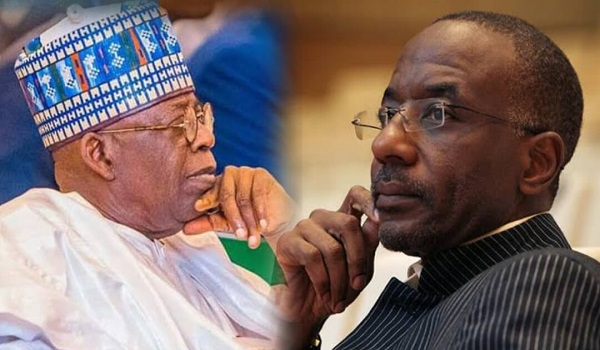
Tinubu is not to be blamed for Nigeria’s economic hardship – Sanusi

Published on

By

Former Emir of Kano, Muhammadu Sanusi has stated that it would be unfair for him to criticise President Bola Tinubu over the country’s economic hardship.

Sanusi, however, blamed the immediate past administration of Muhammadu Buhari for its badly managed economic policies.

He averred that Buhari’s administration ignored his advice on how to take Nigeria out of its economic woes.

Sanusi, a former governor of the Central Bank of Nigeria (CBN), spoke during a virtual religious event on Sunday, February 11.

He said Nigerians expecting him to speak about the country’s economic hardship deliberately wanted him to oppose the president.

Sanusi said: “I have been, over the years, talking about the pending crisis ahead of the current economic hardship. Any economist who has studied monetary policy in the last eight years knows that Nigerians will fall into this difficult situation.

“The difficult situation Nigerians are facing is just the beginning (if the right decision is not put in place) because Nigeria is not exceptional; such situations happened in Germany, Zimbabwe, Uganda, and Venezuela.

Read Also:

Tinubu, APC politicising protests against economic hardship, PDP alleges

“The previous administration turned adamant about our appeal for corrective measures (on the economic policy). I have said in the presence of the now sitting president in Kaduna state, any politician who tells you that things will be easy, don’t vote for him because he is lying. People merely dismissed my advisory as a political statement.

“If I am to be fair and just to President Bola Tinubu, he is not to blame for the current hardship; for eight years, we were living a fake lifestyle with huge debt from foreign and domestic debts. The Central Bank of Nigeria owes over N30 trillion, which resulted in debt service surpassing 100 percent.

“I can’t join other Nigerians criticising Tinubu on the current economic hardship, and I am not saying he is a saint free from wrongdoing, but in this current economic situation, President Tinubu is not to be blamed. I will also speak if I see any wrong economic policy of the Tinubu administration in the future.

“It’s injustice for anyone to blame the Tinubu administration for the current economic hardship because there is no other alternative than the removal of the fuel subsidy. After all, Nigeria cannot even afford to pay the subsidy. In the last eight years, the Central Bank continued to print more money, and the Naira continued to depreciate. There is too much naira in circulation because the CBN is printing the currency without restraint.

“The economy was poorly managed, and they are not willing to take advice; in the last eight years, apart from sycophancy, nothing has been done; those sycophants are those buying the dollar at the rate of N400 and selling it at the rate of N600 to N700.

“A boy who has no record of service has a private jet and owns houses in Dubai and England just because he is buying dollars at so a rate and selling them.

“I can only plead with the people to endure the hardship, and those who have the means to help the downtrodden should do so.

“I am also pleading with commoners to live according to their earnings; we must not peg our lives above our earnings in this difficult situation where people are looking for what to eat.”
You May Like

One thought on “Tinubu is not to be blamed for Nigeria’s economic hardship – Sanusi”

Leave a Reply

Your email address will not be published. Required fields are marked *

Most Popular

Must Read

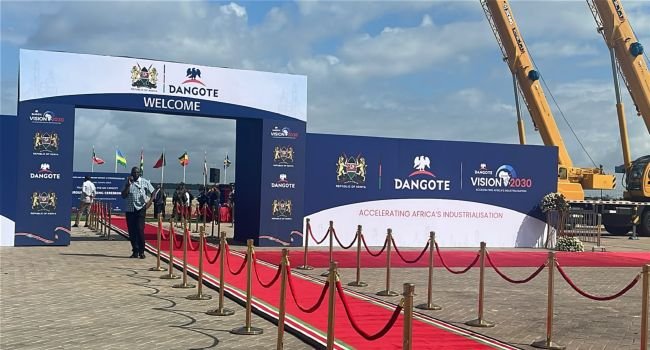
Dangote East Africa Petroleum Refinery groundbreaking ceremony in Lamu, Kenya, with tractors and guests at the project site.

Dangote $16bn East Africa refinery breaks ground in Kenya

The groundbreaking ceremony for the $16bn Dangote East Africa Petroleum Refinery and Petrochemicals Special Economic Zone is taking place in Mokowe, Lamu County, Kenya, as the Nigerian industrialist expands his business interests across the continent.   According to Channels Television, the proposed refinery is expected to have a processing capacity of 700,000 barrels per day and is targeted for completion by 2030. The facility is planned to process crude from Kenya’s Turkana oilfields, alongside supplies from other parts of Africa. It is also expected to reduce East Africa’s reliance on imported petroleum products. Speaking to reporters in Nairobi on Tuesday, Dangote said the project was part of efforts to encourage African countries to process their natural resources locally rather than export raw materials. He said he expected most African countries to achieve fuel self-sufficiency by 2030, stressing that refining should take place within the continent. The Lamu project has, however, faced opposition, including a land rights court case and environmental concerns raised by Greenpeace and others. Dangote said the project would proceed despite the concerns, arguing that large-scale industrial development was necessary for Africa’s economic transformation. The businessman also disclosed plans to invest an additional $50bn across Africa, after committing more than $25bn to existing businesses. “We want to create and generate wealth for Africans, to make sure that we defend our markets,” Dangote said during an investor engagement at the Nairobi Securities Exchange. Africa-focused expansion Kenya’s President William Ruto’s chief economic adviser, David Ndii, said the Lamu refinery emerged from discussions on how Africa could use its natural resources to drive industrialisation. He said a meeting in April identified an East African market for finished petroleum products estimated at 20 million metric tonnes annually, with potential to rise to 30 million tonnes. Ndii said the project was designed to help reverse a pattern in which Africa exports raw materials and imports finished products at higher costs. Dangote also linked the refinery project to his wider plans to increase African ownership of major businesses operated by his group. He said the ongoing public offer of Dangote Petroleum Refinery was intended to allow more Africans to participate in the wealth generated by industrial development. The businessman said the group planned to progressively open more of its businesses to public ownership, including its planned shipping operations and expanding fertiliser business. He added that if the Lamu refinery eventually becomes publicly listed, he expects it to be listed on the Nairobi Securities Exchange rather than automatically being taken to Nigeria’s capital market.
Read more

Editor's Pick

Trending News

Newsletter

Enter your email address and receive notifications of news by email.

You have been successfully Subscribed! Ops! Something went wrong, please try again.

© 2026 GongNews. All Rights Reserved.