
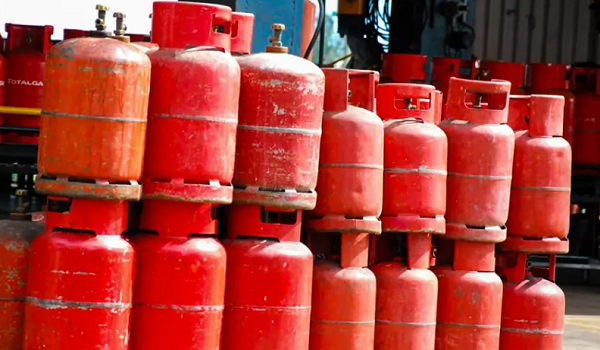
A ban may be slammed on exportation of Liquefied Petroleum Gas (LPG), otherwise known as cooking gas, the Federal Government hinted yesterday.
This is part of measures to reduce cooking gas price and support domestic users.
Minister of State (Gas Resources), Ekperikpe Ekpo, yesterday said the government has initiated a bouquet of measures to improve domestic gas supply and remove the disequilibrium that has fueled rising cooking gas price in recent period.
The National Bureau of Statistics (NBS) reported that headline inflation rate rose by 98 basis points from 28.92 per cent in December 2023 to 29.90 per cent in January. A breakdown indicated that inflationary pressures remained mainly around food, with food inflation rising to 35.4 per cent in January as against 33.9 per cent in December 2023.
Nigeria has a proven gas reserves of 208 trillion cubic feet. Recent data showed that natural gas demand in Nigeria rose to 12.12 billion standard cubic meters in 2022, as against about 10.11 billion standard cubic meters in 2021.
From about N7,000 for a 12.5 kilogram (kg) in November 2023, cooking gas price has risen by about 57 per cent in nearly four months to about N18,000 now.
Ekpo, who spoke at the “Internal Stakeholders’ Workshop,” in Abuja, said halting export of cooking gas was necessary to boost domestic supply and reduce price. The theme of the workshop was “Harnessing Nigeria’s Proven Gas Reserves for Economic Growth and Development.”
He said the government was discussing with major stakeholders in the gas sector including the major producers, marketers and regulators with a view to ensuring domestic gas usage takes priority now.
Major gas producers in the country include the Nigerian National Petroleum Company Limited; Total Energies; ExxonMobil; Oando Plc and Chevron among others.
“With the issue of gas, you have seen the demonstration of the Federal Government by withdrawing all taxes and levies from the importation of gas-related equipment. It is a big incentive.
Read Also:
NNPCL to inaugurate $2.8bn AKK gas pipeline December
“On the issue of LPG (cooking gas), we are interacting with the critical sectors to ensure that there is no exportation of LPG. All LPG produced within the country will have to be domesticated. And when this is done, the volume will increase and, of course, the price will automatically crash,” Ekpo said.
According to him, the ministry is discussing constantly with critical stakeholders like the Nigerian Midstream and Downstream Petroleum Regulatory Authority and operators such as Mobil, Chevron and Shell to address the issue of domestic gas supply and pricing.
He pointed out that once there is stoppage of export of locally produced domestic gas there will be more volume for the domestic market which will automatically reduce the price of the product.
“I am in contact with the regulation, NMDPRA, we hold meetings almost on daily basis, and the producers such as Mobil, Chevron, and Shell. So, there is that hope that things will turn around. We don’t need to make noise about it,” Ekpo said.
He said with over 208Tcf in proven gas reserves, Nigeria has no business with energy poverty, and it is imperative for all stakeholders to rise up as a people to tackle these challenges head-on.
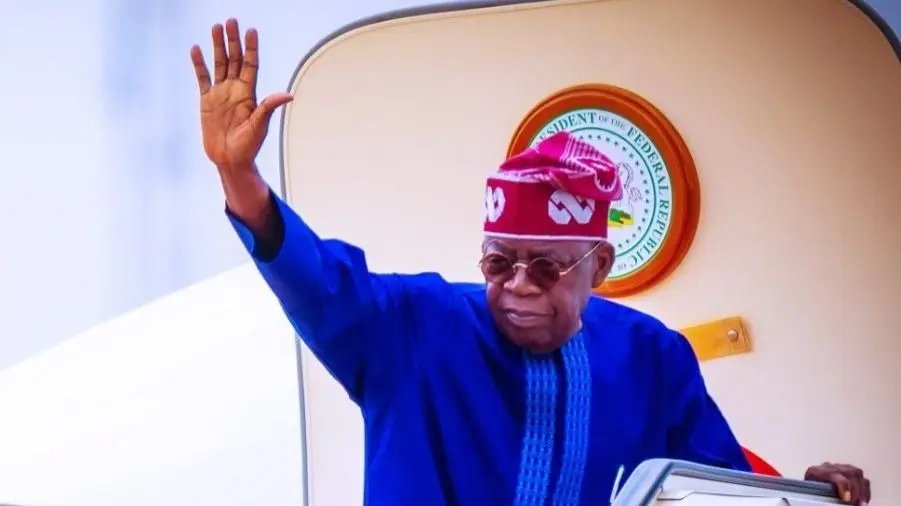
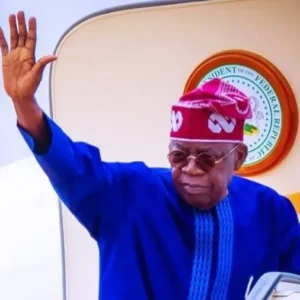
He explained that the ministry was engaging stakeholders in series of workshops with the aim of repositioning the Nigerian Gas Sector for optimal performance, in line with President Bola Tinubu’s Renewed Hope Agenda to unlock the country’s abundant gas resources for economic development and poverty eradication.
He recalled that the meeting was the second in a series of engagements with stakeholders in the gas sector.
The first, he said, was the consultative meeting he held with external stakeholders in the gas sector on February 6, which provided a platform to hear from the various associations and groups operating across the gas value chain with a view to understanding the pain points of the industry operators.
According to him, the expectation was that having heard from the operators in our industry, as policymakers, regulators and policy implementers, will internalize the feedback from stakeholders and customers to proffer workable solutions to tackle the issues facing the nation’s gas sector.
Ekpo noted that as part of efforts to ensure a high level of performance and accountability within the Federal Government, Tinubu, through the office of the Special Adviser on Policy and Coordination, has released the Presidential Priorities and Ministerial Deliverables for 2023 – 2027 to create a performance tracking mechanism for the Minister of Petroleum Resources and relevant agencies reporting to him.