

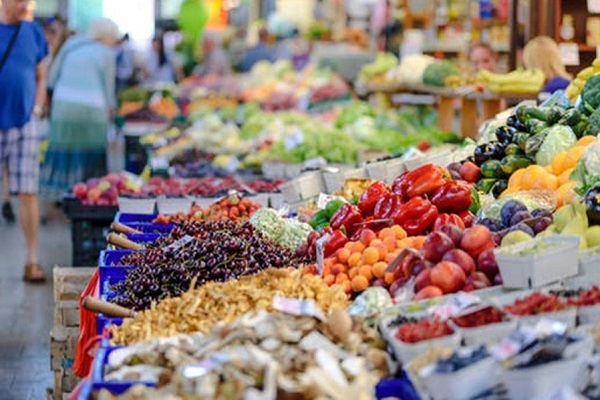
Low and limited-income households are facing tough time amid soaring food prices.
The prices of major commodities are still high even as consumers await borders opening to impact on the situation.
For thousands of Nigerians, every trip to the market is a pain in the pocketbook. Prices have shot up at the fastest rate in decades, putting staples like eggs and bread out of reach for some.
Egg prices have nearly doubled, leading some consumers to extreme workarounds like trying to look for better bargains. Meat, fish and chicken have substantially been pricey as well as cereal and bread.
The price of a big loaf is N1,800. A small one now sells for N200,while a medium-sized bread sells for N1,000.
Last month, the Abuja chapter of the Association of Master Bakers and Caterers of Nigeria expressed concern over the escalating prices of baking materials.
The association’s Secretary, Richard Adeyemi, said the survival of the industry could no longer be guaranteed due to the rising cost of baking materials.
Adeyemi stressed that the price increase experienced towards the last quarter of last year forced many of the members out of business and others that managed to survive it are yet to stabilise.
He said: “Indeed, we are not ignorant of the N1,400 to a dollar of the foreign exchange and the flour we bought at the rate of N37,000 and sugar at N62,000 last week respectively.
“The same bag of flour today is N42,000 while a bag of sugar is N72,000 with major distributions.”
The price of other food items are still on the rise. A five-litre King’s Oil sells for N12, 000. A measure of sugar is N3,000; a bag of Irish potatoes was N48,000; a measure of rice was N1,800; a fairly large tuber of yam sold for N4,000; Packet of maggi N1,200; a crate of eggs is N3,900 among other food items. A bag of rice is selling at N87, 000.
Mike chukwu, a food stuff seller, said a quarter bag of long grain rice goes for N27,000.
Pepper and tomatoes have become expensive, with some sellers in Shomolu selling between six and seven balls of scotch bonnet pepper for N200.
The prices of other staples have continually been on the increase for weeks, putting pressure on the pockets of families. A bag of drum beans is sold for N145,000. A carton of spaghetti sells for N16,000; while the price of a carton of small noodle packs sells for N6,500.
A foodstuffs vendor, Onyeka Abia, had expressed deep concern over the high costs of goods amid the weak state of the economy.
According to him, the surge in food prices has made it difficult for many people to afford necessities, with some struggling to purchase even a fraction of what they could afford previously.
He told The Nation the borders had not been opened as believed.
Provisions seller, Useni Sule told said they were yet to feel the impact of border opening as the prices of things were still very expensive.
Read Also:
Food scarcity: Pressure on states to rev up interventions
In all, he expressed doubt that the government’s order has been implemented.
Another trader believes prices may start going down after one week as shops try to get rid of their old stock.
Recently, the International Monetary Fund (IMF) urged the Federal Government to focus on reducing the high prices of food, drugs and transportation through the implementation of social protection measures.
The IMF’s Director of Communications, Julie Kozak, said this in the transcript of a press briefing posted on its website.
He emphasised the urgent need to alleviate the hardships faced by Nigerians occasioned by the fuel subsidy removal policy by the current administration.
According to Kozak, the full implementation of the social safety net programme is considered essential for the government’s future efforts to reform the costly subsidies on fuel and electricity.
She added that addressing food insecurity was an immediate priority.
Kozak said, “We do recognise the difficult situation that many Nigerians face. Our advice is first and foremost to help ease this suffering related to higher food, drug, and transportation prices by strengthening social protection.
“With food price inflation reaching 35 per cent year over year in January, addressing food insecurity is the immediate priority. The recently approved targeted social safety net programme will provide cash transfers to vulnerable households and this is also a very important step to easing the suffering. “It will need to be fully implemented before the government can address costly implicit fuel and electricity subsidies in a manner that will ensure that low-income households are protected,” she stated.
The IMF also noted that the recent actions of the Monetary Policy Committee, which further tightened monetary policy, was a positive step towards curbing inflation and relieving pressure on the naira.
The IMF communications director said: “And the decision last week by the Monetary Policy Committee to further tighten monetary policy should also help contain inflation and contain pressures on the naira.”
Nigeria’s inflation rate climbed to 29.90 per cent in January 2024, from 28.92 per cent recorded in the previous month, highlighting heightened inflationary pressures.




















https://t.me/s/be_1win/629