
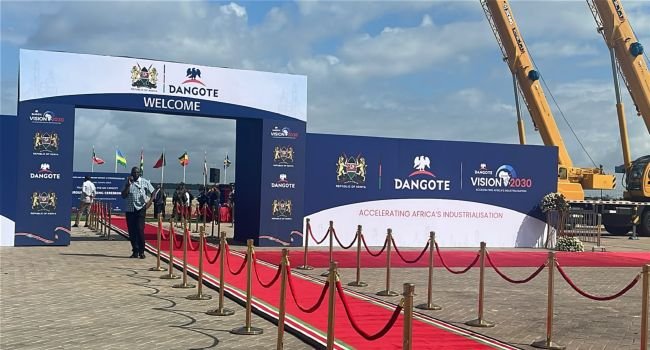
The groundbreaking ceremony for the $16bn Dangote East Africa Petroleum Refinery and Petrochemicals Special Economic Zone is taking place in Mokowe, Lamu County, Kenya, as the Nigerian industrialist expands his business interests across the continent.
According to Channels Television, the proposed refinery is expected to have a processing capacity of 700,000 barrels per day and is targeted for completion by 2030.
The facility is planned to process crude from Kenya’s Turkana oilfields, alongside supplies from other parts of Africa. It is also expected to reduce East Africa’s reliance on imported petroleum products.
Speaking to reporters in Nairobi on Tuesday, Dangote said the project was part of efforts to encourage African countries to process their natural resources locally rather than export raw materials.
He said he expected most African countries to achieve fuel self-sufficiency by 2030, stressing that refining should take place within the continent.
The Lamu project has, however, faced opposition, including a land rights court case and environmental concerns raised by Greenpeace and others.
Dangote said the project would proceed despite the concerns, arguing that large-scale industrial development was necessary for Africa’s economic transformation.
The businessman also disclosed plans to invest an additional $50bn across Africa, after committing more than $25bn to existing businesses.
“We want to create and generate wealth for Africans, to make sure that we defend our markets,” Dangote said during an investor engagement at the Nairobi Securities Exchange.
Africa-focused expansion
Kenya’s President William Ruto’s chief economic adviser, David Ndii, said the Lamu refinery emerged from discussions on how Africa could use its natural resources to drive industrialisation.
He said a meeting in April identified an East African market for finished petroleum products estimated at 20 million metric tonnes annually, with potential to rise to 30 million tonnes.
Ndii said the project was designed to help reverse a pattern in which Africa exports raw materials and imports finished products at higher costs.
Dangote also linked the refinery project to his wider plans to increase African ownership of major businesses operated by his group.
He said the ongoing public offer of Dangote Petroleum Refinery was intended to allow more Africans to participate in the wealth generated by industrial development.
The businessman said the group planned to progressively open more of its businesses to public ownership, including its planned shipping operations and expanding fertiliser business.
He added that if the Lamu refinery eventually becomes publicly listed, he expects it to be listed on the Nairobi Securities Exchange rather than automatically being taken to Nigeria’s capital market.