
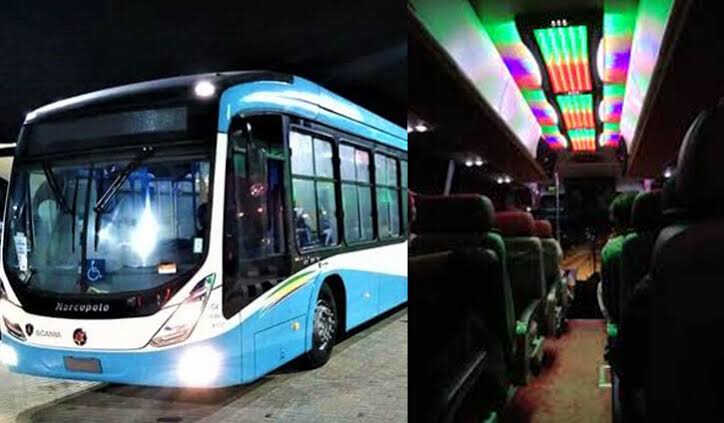
Despite the high level of insecurity across the country, more Nigerians now embark on what is popularly known in street parlance as “night travels” or trips. The reason for this is not far to seek: the spike in transport fares and other related factors.
With petrol price rising to N1,000 per litre in most filling stations, and unavailable too, most travellers are looking for the cheapest fares to their various destinations which can only be available with luxury buses that operate at night.
For instance, a journey from Lagos to any part of the South-Eastern states costs between N35,000 and N40,000 with a mini-bus. It’s about N23,000 on the same route with a luxury bus.
READ ALSO:
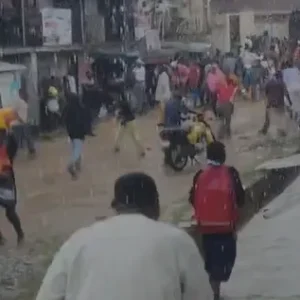
Bauchi Protest: Two feared killed, houses burnt as irate youths take to the street
A visit to some of the garages and parks at night revealed that most travellers prefer to travel by night, not minding the dangers. Some of the transport companies are The Young Shall Grow, Chisco Transport, Okeyson Transport, ABC Transport, and GUO Transport.
A necessity
A young man, who simply identified himself as Chinedu at the Mazamaza bus station, told Vanguard: “These days, people don’t mind the risk of travelling at night any longer because of the high fares charged by transport companies for trips on mini-buses.”
He noted that with N40,000, one can travel from Lagos to the South-East and back, which is what you would use for a one-way trip if you have to travel with small buses for the same distance.
According to him: ”Nobody likes to travel by night given the high security risk, but given the present situation in the country, we have no choice but to take the risk if we must catch up with our appointments.”
He further noted that some of the luxury bus operators can charge as low as N10,000 for some seats, which they call ‘Obere Oche’ (meaning small attachment seats), which he described as not being quite comfortable for a long distance trip.
‘No traffic, no checkpoints’
At the Alafia bus station, where other notable luxury bus companies operate from, the passengers also disclosed that, beyond high fares resulting from the high price of petrol and its scarcity, their preference is derived from the fact that it is more convenient to travel at night because the checkpoints are few and there is hardly gridlock on the roads at night.
According to one of the travellers, Mr Uchenna Njoku: “Travelling at night is faster than doing so in the day; it’s like goodbye to Lagos and welcome to Owerri in the morning.
“This is because you won’t have to worry about traffic gridlock, police harassment or extortion by other law enforcement agencies and local government officials while on the trip.
“I always have a full night rest and wake up and go to my home in the morning.”
This is also the thinking of most the passengers at Jibowu and even Iddo bus stations.
“Usually the stations boom as from 8 p.m., when the bus operators are loading and getting ready for the trips at night till around 10:30 p.m. when they leave from their various parks to their destinations across the country.
The bus stations are usually very busy with hawkers who sell snacks and other types of food, soft drinks, medicine and various items to the travellers.
Why we reduced fares – Bus owners
Mr Nonso Ubaka, President of the Association of Luxury Bus Owners of Nigeria, told Vanguard Motoring that the charging of low fares by members of his association was their little way of supporting government to make life easier for travellers.
According to him, the fare used to be higher, but their decision to reduce fare was to encourage people travel to their destinations even when they cannot afford high fare charges by the smaller buses.
He recalled that government also offered them support when the fuel subsidy was remove last year, adding that they (operators) are looking forward to reducing the fares further, if possible.








https://t.me/iGaming_live/4872