

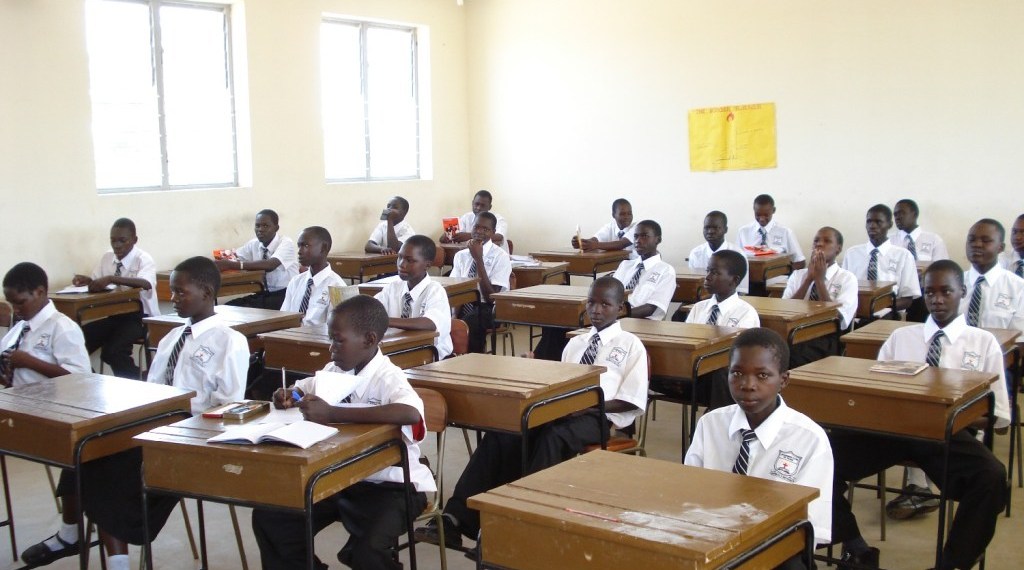
Private school owners in Edo State on Friday staged a peaceful protest in Benin City over what they described as an alarming increase in income taxes imposed by the state government.
Under the umbrella of the Coalition of Associations of Private Schools (CAPS), the school owners—waving placards and banners—gathered at the premises of the Ministry of Education to express their grievances.
The coalition comprises the Association of Private School Owners of Nigeria (APSON), the Association for Formidable Education Development (AFED), the National Association of Proprietors of Private Schools (NAPPS), and the Association of Model Islamic Schools.
The protesters called on the Edo State Government to reverse what they said was a 200 to 4,000 percent increase in tax rates on school proprietors.
Chairman of the coalition, Dr. Ohis-Olakhe Emmanuel, who led the protest, described the tax hike as punitive and detrimental to the growth of the education sector.
According to him, all efforts at dialogue had failed, leaving the group with no choice but to protest.
“Private schools are not only complementing government efforts in the education sector, but we are also significant employers of labour,” he said.
“With this increase, over 300,000 teachers risk losing their jobs—not to mention the countless vendors and service providers who depend on schools for their livelihood.”
Dr. Emmanuel criticised the state’s new policy of calculating tax based on a flat estimate of N30,000 to N35,000 per student, noting that many schools charge well below that amount.
He argued that taxes should be assessed on profit, not gross income, especially without accounting for the operational costs of running a school.
Also speaking, Secretary of the coalition, Dr. Austin Igbasan, warned that the new tax regime would trigger a ripple effect across the education landscape.
He said the fallout could include school closures, job losses, and a spike in the number of out-of-school children, particularly from low-income families unable to meet increased tuition.
Mr. Oladele Ogundele, Secretary of AFED, called for a unified tax system for schools and decried what he described as multiple layers of taxation by various government agencies.
These, he said, include personal income tax, PAYE for staff, renewal fees, environmental and health certificates, signage fees, tenement rates, and other levies.
“Education is a social service that should be supported—not taxed into extinction,” Ogundele said.
“The Nigerian Constitution and the Universal Basic Education Act both emphasise free and compulsory education. This heavy taxation directly contradicts that mandate.”
In response, Edo State Commissioner for Education, Mr. Paddy Iyamu, who addressed the protesters after a brief meeting with coalition leaders, said the government would review their concerns.
Iyamu assured the group that the government was committed to creating a conducive environment for businesses, including private schools.
He promised that a meeting would be convened with the state’s internal revenue service to address the contentious areas.
“Taxation is essential for the government to meet its obligations,” he said, “but we will ensure that school owners are not overburdened at the end of this process.”
The commissioner also urged schools not meeting regulatory standards to take immediate corrective steps, warning that the government would soon begin enforcing stricter compliance measures.







https://t.me/s/iGaming_live/4864
https://t.me/dragon_money_mani/12