

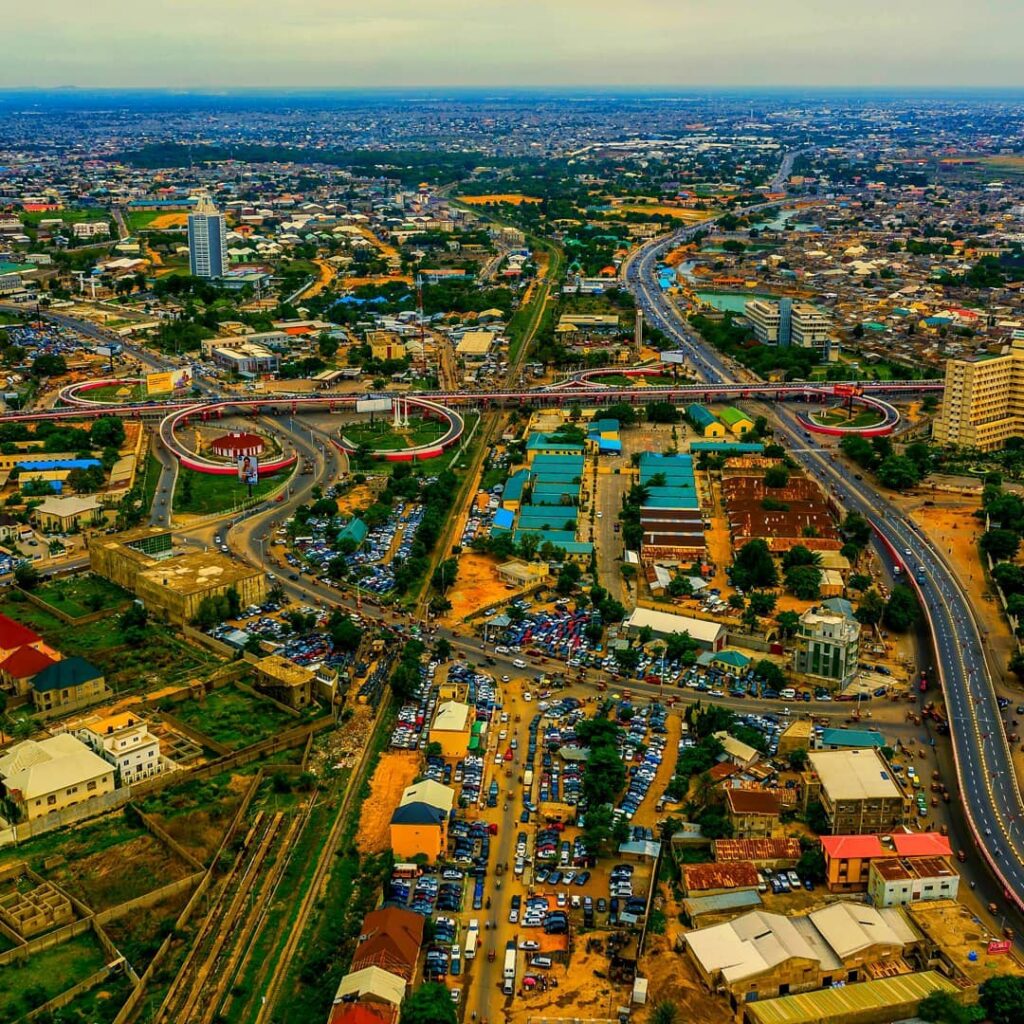
The Kano State Government has warned residents of poisonous air polluting many areas of the state capital, following the release of the state’s weekly environmental report by the Ministry of Environment and Climate Change.
The air quality assessment was conducted between May 26 and May 30 and revealed that there was pollution in specific places such as Gaida, Ja’en, Sabon Titi, and Sharada Market in parts of Kano Municipal and Kumbotso LGA. The report specified that the air in these neighborhoods is currently unsafe and that there may be a health risk to those residents.
The report further stated, “the further loss of air quality may contribute spreading respiratory illnesses and other diseases associated with pollution.”
In concluding, the Ministry said it planned to implement environmental response measures in Gaida, Ja’en, Sabon Titi, and Sharada Market.
Dr. Dahir M. Hashim, Commissioner for Environment and Climate Change in the state, released the report on his Facebook page.
He said, “It is the duty of us all to take care of the environment. Environmental stewardship is the responsibility of both the government and the public.”
“The government is also concerned about the rapid rate of environmental degradation taking place in the state, and the government is looking at the next steps.”
Further investigation by reporters confirmed the findings of the Kano State Government regarding poor air quality in several neighborhoods.
Residents of Ja’en and Gaida, two of the affected areas, have reported a noticeable increase in health issues, particularly persistent coughing and respiratory infections among both adults and children.
In Ja’en, Ibrahim Sulaiman shared his concern over the growing number of people falling ill.
“I’m not surprised,” he said.
“We live close to an industrial zone, and many of these companies release different chemical substances and emit strong odors, especially at night.
There was even a time our community leaders had to file a formal complaint against a company that processes engine oil,” he added.
“My neighbor has been coughing for nearly two weeks now. I hear him every night coughing from my house. Now even his family has caught it. We’re really worried.”
In Gaida, another area called out in the air quality report, Shamsu Tijjani, a resident of the area who recently recovered from tuberculosis laments the situation.
“Of course, we don’t have the scientific tools to measure air quality ourselves, but we agree with the details the government is putting out,” he explained.
“There are neighborhoods that are so dense; there is absolutely no urban planning.
“You can’t turn in any direction without seeing construction, open spaces meant for schools or playgrounds have been taken over and built upon, motorcycles have difficulty navigating these tight passages.”
Reflecting on his own experience of being sick, he said, “I think my own illness was related to the air quality and difficult living conditions.”
People living in all of the affected neighborhoods are expressing concern over the environmental and public health implications of unrestrained urbanisation and industrial emissions.
They are calling for immediate action by government agencies and environmental regulators to create a safer and cleaner environment for living.
As of June 3, 2025, the air quality in Kano is categorized as “Moderate” with an Air Quality Index (AQI) of 79. The primary pollutant contributing to this rating is fine particulate matter, known as PM2.5, which is currently measured at 24.2 micrograms per cubic meter (µg/m³) according to IQAir.
PM2.5 and Its Health Implications
PM2.5 is defined as particles in the air that are 2.5 micrometers in diameter or smaller (about 30 times smaller than human hair). Because they are so small, they can travel deep in the respiratory tract and reach the lungs or enter the bloodstream. Studies have associated exposure to high levels of PM2.5 with numerous adverse health effects, including respiratory and cardiovascular disease.
In an interview with newsmen, Professor Isa Abubakar, a consultant physician at the Aminu Kano Teaching Hospital, shed light on the serious health risks posed by prolonged exposure to polluted air.
“Air pollution can lead to asthma attacks and other forms of respiratory disease; over time you can even have lung cancer or neurological diseases like Parkinson’s disease and Alzheimer’s or other mental health issues.”
Giving advice to residents of polluted communities, Professor Abubakar suggested, “If possible, individuals should consider relocating or changing their place of work. If that’s not feasible, they should reduce the time spent outdoors or wear face masks to minimize exposure. This can provide some level of protection.”
He further emphasized that tackling the issue goes beyond personal precautions. “The government must step in to enforce environmental regulations that will prevent further pollution and safeguard public health,” he added.



















xa3av8
https://t.me/site_official_1win/417
https://t.me/iGaming_live/4872