
/ Aug 17, 2026
/ Aug 17, 2026

Adeleke denies deal with Tinubu, backs 2027 re-election

Published on

By

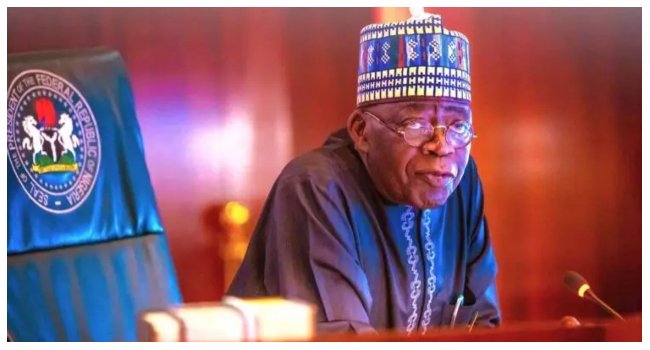
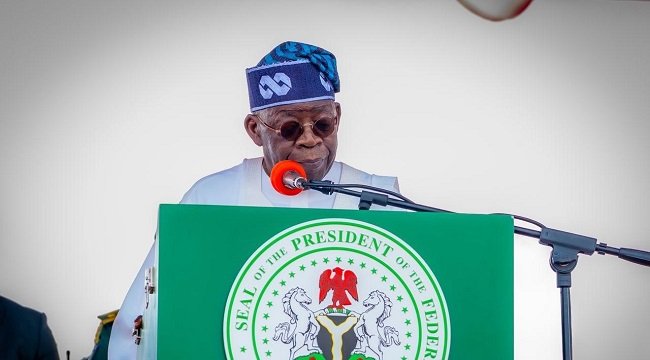
Re-elected Osun State Governor Ademola Adeleke has denied reaching any political agreement with President Bola Tinubu in exchange for his support for the President’s 2027 re-election bid.


Speaking on Channels Television’s Sunday Politics, Adeleke said his backing was based on Tinubu being a Yoruba man from the South-West and his desire to see the President continue development projects in the region.

“No, I never reached agreement with Mr President,” Adeleke said.

He explained that he wanted Tinubu to continue work on federal roads and other development projects connecting the South-West with other parts of the country.

Adeleke said: “Since a Yoruba man has won the first term, maybe we should give him another chance to develop his reforms.”

When asked whether he would support Tinubu “all out” in the 2027 presidential election, Adeleke replied: “Big time, I will.”

The governor also said he was prepared to work with members of the All Progressives Congress (APC), including his defeated Osun governorship opponent Bola Oyebamiji and former governor Gboyega Oyetola, if required to support Tinubu.

His comments followed Aviation and Aerospace Development Minister Festus Keyamo’s public acknowledgement of Adeleke’s endorsement. Keyamo had described the governor as “a man of integrity and honour” and added, “Agreement is agreement.”

Despite their political differences and membership of rival parties, Tinubu and Adeleke have maintained a cordial relationship, with both leaders making high-profile engagements in recent times.

Adeleke won the August 2026 Osun governorship election with 511,067 votes, defeating Oyebamiji of the APC, who polled 444,815 votes. ADC candidate Najeem Salaam finished third with 17,180 votes.

The governor won 19 of Osun’s 30 local government areas, while Oyebamiji secured 11.

You May Like

Leave a Reply

Your email address will not be published. Required fields are marked *

Most Popular

Must Read

Ebola response volunteers in protective equipment prepare to recover a suspected Ebola victim in Bunia, DR Congo.

Ebola outbreak in DR Congo becomes deadliest in history

The Ebola outbreak in the Democratic Republic of Congo (DRC) has become the deadliest in the country’s history, with 2,325 people confirmed dead as of August 16, 2026.   Government figures show that 4,945 confirmed cases have now been recorded, surpassing the previous national record of 2,299 deaths during the 2018-2020 outbreak. The latest figures come as the United Nations warns that the outbreak is spreading at an unprecedented pace. UN humanitarian chief Tom Fletcher described it as the “fastest-growing on record” and said the virus is now killing about one person every 30 minutes. Outbreak spreads across six provinces The outbreak was first declared on May 15 after emerging in Ituri Province in northeastern DRC. It has since spread to six provinces, raising concerns about further transmission across the region. The current outbreak is the DRC’s 17th Ebola outbreak and is being driven by the Bundibugyo strain. Unlike the Zaire strain responsible for several previous major outbreaks, there are currently no approved vaccines or treatments specifically available for the Bundibugyo strain. Experimental vaccines and treatments are being evaluated. Health authorities are facing major challenges, including delayed diagnosis, weak healthcare infrastructure, insecurity and difficulties tracking people who have come into contact with infected patients. The case fatality ratio has risen sharply, reaching about 46 per cent, according to the latest government figures. Health experts say the increase reflects delays in detecting and treating patients rather than evidence that the virus itself has become more lethal. Second-deadliest Ebola outbreak globally Although the DRC outbreak is now the deadliest in the country’s history, it remains below the scale of the 2014-2016 West African Ebola epidemic. That outbreak killed more than 11,300 people across Guinea, Liberia and Sierra Leone and remains the deadliest Ebola outbreak ever recorded. The current DRC epidemic, however, has reached the 2,000-death mark far more rapidly. It took nearly five months for the West African outbreak to reach 1,000 deaths, while the DRC outbreak crossed 2,000 deaths in less than three months. The World Health Organization has said it hopes to reverse the spread of Ebola in the DRC within three months, but the rapid expansion of the outbreak continues to put pressure on health workers and response teams.
Read more

Editor's Pick

Trending News

Newsletter

Enter your email address and receive notifications of news by email.

You have been successfully Subscribed! Ops! Something went wrong, please try again.

© 2026 GongNews. All Rights Reserved.