
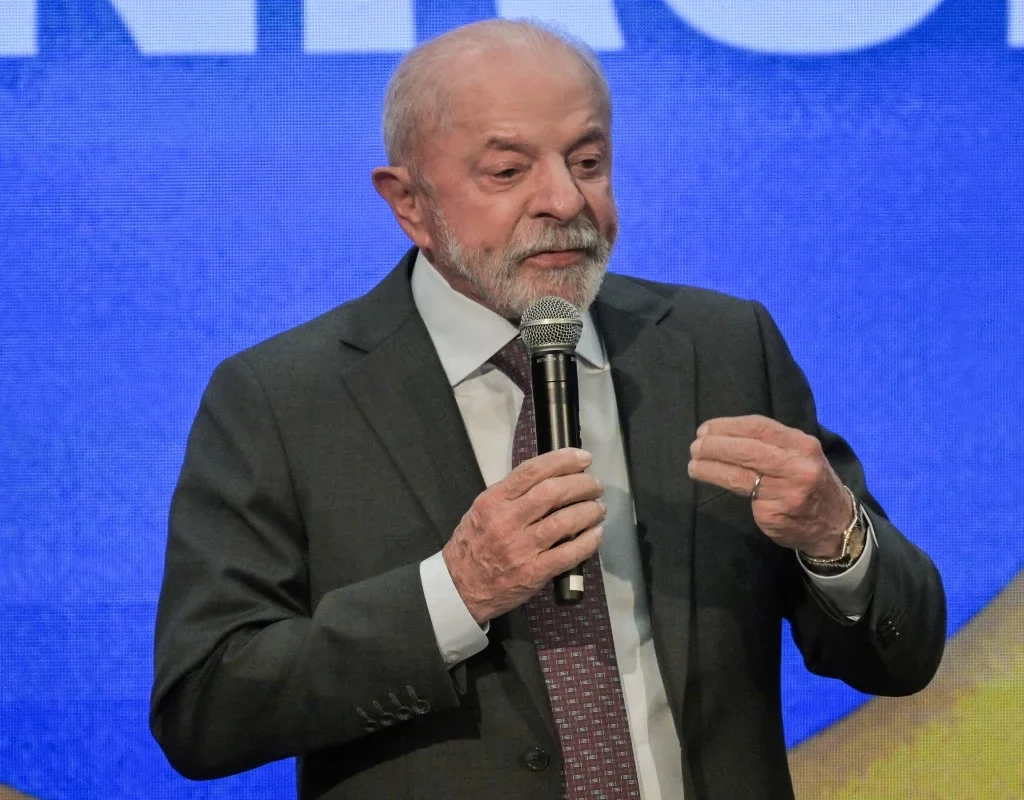
Brazilian President Luiz Inácio Lula da Silva has signed a provisional measure banning online sports betting platforms, just days before the country’s first-round presidential election on October 4.
The measure, signed on Friday, September 25, prevents people from depositing money into betting platforms. Finance Minister Dario Durigan announced the decision at an event attended by Lula.
The ban comes as sports betting has rapidly expanded in Brazil since the industry was regulated in 2023. Betting companies have become major sponsors of Brazilian football, with 13 of the country’s 20 top-flight clubs reportedly having betting firms as their main shirt sponsors.
Football stars, including Neymar and Vinicius Junior, have also featured prominently in advertising for betting companies.
According to the Brazilian government, 85 betting licences have been issued, each costing 30 million reais, equivalent to about $5.7 million. The fees will not be refunded.
Durigan said new advertising contracts for betting companies had been immediately prohibited, while existing contracts would become void after October 6.
From that date, he said there would be no legal betting website, application or sponsorship in the country.
Lula defended the decision, describing gambling as a public health issue. He said more than 60 billion reais, about $11 billion, had flowed from families to legal betting companies.
“I decided to take a necessary, tough, and drastic measure,” Lula said, according to AFP.
The measure still requires approval by Brazil’s Congress before it can become permanent law.
Football clubs raise concerns
The ban has drawn opposition from several football clubs, which argue that betting sponsorships are important to their finances.
Flamengo described the decision as a “heavy blow to Brazilian sports”, warning that its effects could extend beyond professional football to youth academies, women’s football, Olympic sports and other competitions.
The club also argued that businesses and sporting institutions had made commitments based on Brazil’s existing regulatory framework.
Meanwhile, the National Association of Games and Lotteries, which represents licensed betting operators, warned that a total ban could push gamblers towards illegal platforms.
The group also pointed to potential losses in tax revenue and jobs. It said the sector paid 9.95 billion reais, about $1.73 billion, in federal taxes in 2025.
The association argued that stronger oversight and regulation, rather than prohibition, would provide greater control of the industry.
Election backdrop
The decision comes as Lula seeks a fourth presidential term, with voting scheduled to begin with the first round on October 4.
Right-wing Senator Flavio Bolsonaro has criticised the move, describing it as an election-driven measure.
Lula’s government, however, has presented the betting ban as a response to the social and financial consequences of gambling.