/ Oct 22, 2026
/ Oct 22, 2026

Breaking Bad star RJ Mitte dies at 34 as co-stars mourn

Published on

By

American actor RJ Mitte, best known for playing Walter White Jr. in the acclaimed television series Breaking Bad, has died at the age of 34.


His representatives confirmed his death to AFP on Monday, October 12, 2026. The cause of death has not been disclosed.

In a statement issued by his representative, Sean Reilly, Mitte was described as a beloved actor, philanthropist and passionate disability rights advocate.

“It is with profound sadness that we share the tragic passing of beloved actor, philanthropist, and passionate disability rights advocate RJ Mitte,” the statement said.

Mitte rose to international prominence in 2008 when he joined Breaking Bad as Walter White Jr., the son of Walter White, a chemistry teacher who becomes a drug kingpin. The character was central to the personal and family storyline of the series, which starred Bryan Cranston in the lead role.

RJ Mitte Championed Disability Awareness

Mitte lived with cerebral palsy, and his personal experience helped shape his advocacy for disability awareness, inclusion and representation in the entertainment industry.

According to Reilly, Mitte used his platform to challenge stereotypes and promote greater visibility for people living with disabilities.

He served as an ambassador for United Cerebral Palsy and Shriners Children’s, a non-profit hospital network. He also served as president of The Mitte Foundation, supporting philanthropic activities and community initiatives.

His work extended beyond acting, making disability rights and inclusion important parts of his public life.

‘Breaking Bad’ Co-Stars Pay Tribute

Following news of his death, Mitte’s former co-stars paid emotional tributes to the actor.

Bryan Cranston recalled that Mitte was just 14 when the series began filming. He praised the young actor for facing the show’s demanding production schedule with determination.

Cranston also reflected on Mitte’s development as an actor, recalling how he gradually grew into a talented performer during the production of the series.

Aaron Paul, who played Jesse Pinkman, Walter White’s former student and partner in the drug business, expressed his grief in a tribute.

“RJ, I love you, my friend. You will be missed,” Paul said, according to The Hollywood Reporter.

He also used the moment to remind people that they are loved and not alone.

Dean Norris, who portrayed Hank Schrader, Mitte’s on-screen uncle and a Drug Enforcement Administration agent, said he was heartbroken by the news.

Norris recalled looking out for Mitte when he was a young actor on set, describing him as a sweetheart who would be greatly missed.

Actress and disability rights campaigner Marlee Matlin also paid tribute to Mitte. The pair appeared together in Cinemability: The Art of Inclusion, a documentary exploring the portrayal of disability in American film and television.

Matlin described herself as heartbroken, adding that Mitte would always have a place in her heart.

A Lasting Legacy in ‘Breaking Bad’

Breaking Bad ran for five seasons from 2008 to 2013 and became one of television’s most celebrated dramas.

The series followed Walter White, a chemistry teacher who turns to manufacturing and selling illegal drugs after receiving a cancer diagnosis. Its exploration of crime, family and moral decline earned widespread critical acclaim.

Cranston’s portrayal of Walter White brought him international recognition, while Mitte’s performance as Walter White Jr. helped establish the character’s place in the series’ family storyline.

Beyond his work on screen, Mitte’s advocacy for disability awareness and inclusion formed a significant part of his legacy.

His death at 34 has prompted tributes from colleagues who remembered him not only for his acting but also for his personal warmth and commitment to disability rights.

You May Like

Leave a Reply

Your email address will not be published. Required fields are marked *

Most Popular

Must Read

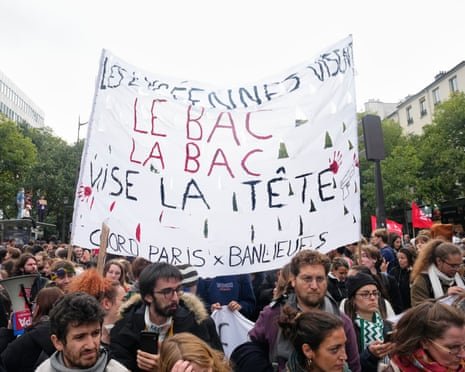
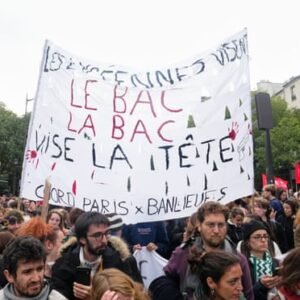
Protesters march during a demonstration in Paris, France, on October 6, 2026, amid nationwide protests over rising living costs and learning conditions.

Macron tightens security as France bans new protests

French authorities have imposed fresh restrictions on protests across the country following violent clashes, looting and vandalism that erupted during demonstrations over the rising cost of living.   President Emmanuel Macron announced the measures on Thursday, October 22, after meeting key ministers and intelligence officials. The restrictions include curfews and bans on demonstrations organised by what the government describes as groups without legitimacy. Macron said restoring calm was the government’s immediate priority, adding that he would chair another defence council meeting on Friday to determine how to respond to nationwide demonstrations planned for Saturday and beyond. He blamed organised far-left groups for the worst of last weekend’s violence, accusing them of attempting to undermine the French republic. France Tightens Protest Restrictions The latest measures follow clashes on October 17, when demonstrations involving more than half a million people against rising living costs were followed by widespread looting and damage to public buildings. The government has acknowledged that police lost control during the unrest, while political candidates seeking to succeed Macron in presidential elections expected in six months have questioned the authorities’ ability to restore order. In Paris, a student demonstration went ahead on Thursday after an emergency court overturned a police ban. Hundreds attended the rally, which followed four weeks of student protests before the October 17 demonstrations. Student leader Coppelia Moreau accused the authorities of attempting to distinguish between acceptable and unacceptable protesters, arguing that the restrictions threatened the right to demonstrate. Authorities in Lyon, France’s third-largest city, banned all protests scheduled for Saturday. The city experienced the looting of between 200 and 300 shops during last weekend’s unrest, while a tourist office was set on fire. Other cities, including Grenoble, Rouen, Le Havre and Toulon, also announced restrictions on demonstrations in their city centres. In Paris, police said a march planned for Saturday could proceed in the eastern part of the capital, beginning at Bastille, but would not be allowed to enter the city centre, where major public buildings and shops are located. The Yellow Vest movement, which has joined trade unions in organising the cost-of-living demonstrations, rejected the restrictions. Meanwhile, Art Basel Paris, the capital’s biggest art fair, announced that it would close two days earlier than scheduled because of the planned protests. France’s Interior Ministry said 20 per cent more police officers would be deployed on Saturday than during the previous weekend’s demonstrations. Arrests Rise as Government Seeks Dialogue The French government has promised a firm response to the violence, although Macron has ruled out declaring a state of emergency. Justice Minister Gerald Darmanin said on Thursday that 217 of the 2,700 people arrested during and since last weekend’s unrest had been detained, while another 1,000 were facing prosecution. Prosecutors also confirmed the arrest of a 66-year-old man over the arson attack on the 19th-century town hall in Limoges. Another man in his 30s had been arrested on Tuesday in connection with the same incident. The unrest has intensified political divisions ahead of the presidential elections scheduled for April and May. Marine Le Pen, the far-right leader who is topping opinion polls, accused Macron and his centrist government of being too weak in their response to the violence. Jean-Luc Mélenchon, a far-left presidential candidate who has faced criticism from the government over his response to the unrest, blamed what he described as the authorities’ continued use of excessive force. Prime Minister Sébastien Lecornu also began consultations with political leaders and other stakeholders in an effort to address the crisis. On Thursday, he met representatives of France’s major political parties, although Le Pen’s National Rally sent a lower-ranking official rather than a senior party leader. Lecornu was scheduled to meet mayors next, followed by discussions with student groups, trade unions and the employers’ federation on Monday. The government’s next steps are expected to be determined following Friday’s defence council meeting, as authorities prepare for further demonstrations across the country.
Read more

Editor's Pick

Trending News

Newsletter

Enter your email address and receive notifications of news by email.

You have been successfully Subscribed! Ops! Something went wrong, please try again.

© 2026 GongNews. All Rights Reserved.