/ Sep 30, 2026
/ Sep 30, 2026

Politics

  • All
  • Africa
  • Agriculture
  • Aviation
  • Banking
  • Business
  • Crime
  • Economy
  • Education
  • Entertainment
  • fashion
  • Health
  • Home
  • International
  • Judiciary
  • lifestyle
  • Metro
  • News
  • Nigeria
  • Opinions
  • Politics
  • Religion
  • Security
  • Sport
  • sports
  • Tech
  • Technology
  • World News
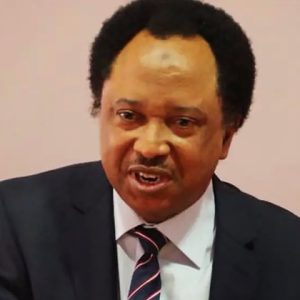
Senator Mpigi Barinada is dead

February 19, 2026

Lawmaker representing the South East Senatorial district of Rivers State, Senator Mpigi Barinada is dead. The Chairman of the House of Representatives Committee on Works, Akin Alabi, confirmed the sad...

Trending

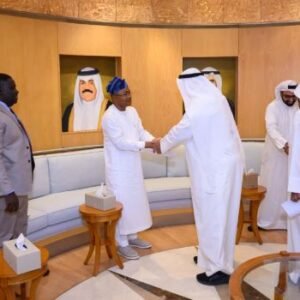
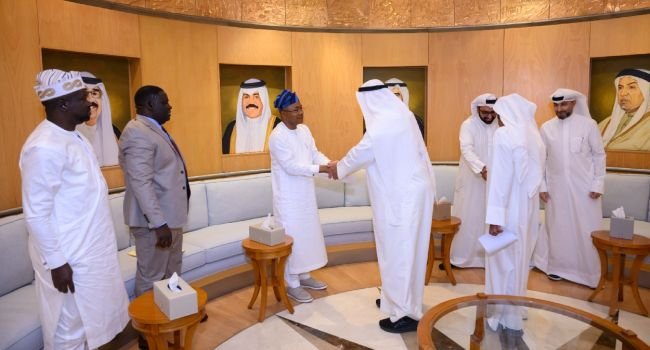
Kogi State Governor Ahmed Ododo during a meeting with Kuwait Fund officials in Kuwait

Ododo leads Kogi delegation to Kuwait for development partnership

Kogi State Governor, Ahmed Ododo, has led a high-level delegation to Kuwait to seek development financing, technical expertise and strategic partnerships for projects under the state’s Development Plan 2024–2056.   According to Channels Television, the visit has opened discussions with key Kuwaiti institutions, with technical teams expected to begin preparing priority projects for implementation. During the mission, Ododo met officials of the Kuwait Fund for Arab Economic Development (KFAED), where he presented Kogi’s development priorities and sought a long-term partnership focused on transforming the state’s natural and human resources into economic opportunities. The proposed areas of cooperation include water infrastructure, irrigation, agriculture, renewable energy, solid minerals, agro-industrial development, transport, communications and ICT, education and healthcare. KFAED expressed readiness, in principle, to work with Kogi on priority projects, subject to technical, financial and institutional appraisal processes. The governor also held discussions with Kuwait University on research, innovation, engineering, agriculture, water-resource management and technology. The talks explored knowledge exchange and capacity development between the university and tertiary institutions in Kogi. Ododo’s delegation further met Kuwait’s Minister of Electricity, Water and Renewable Energy, Dr Subaih Abdulaziz Al-Mukhaizeem, to discuss water infrastructure, irrigation, renewable energy and power development. The governor said improved water infrastructure could support communities and agriculture, while irrigation would help expand all-season farming. He also linked reliable energy to agro-processing and industrialisation, and mineral beneficiation to greater value retention within Kogi. Discussions were also held with the Governor of Al Ahmadi Governorate, Sheikh Humoud Jaber Al-Ahmad Al-Sabah, on possible cooperation in infrastructure, investment and industrial development. A key outcome of the mission was the establishment of a technical process to advance the agreements and understandings reached during the meetings. The process will include project documentation, feasibility studies, technical assessments and other preparatory work. Ododo thanked President Bola Ahmed Tinubu for the Federal Government’s diplomatic support and praised the Nigerian Embassy in Kuwait for facilitating the engagements. The governor said the mission marked a shift from high-level discussions to detailed technical work aimed at developing partnerships in water, agriculture, irrigation, energy, education, research, solid minerals, commerce and industrial development.
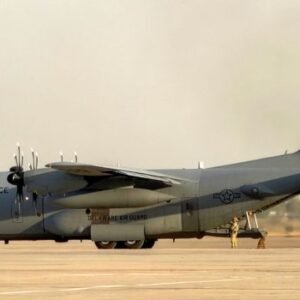
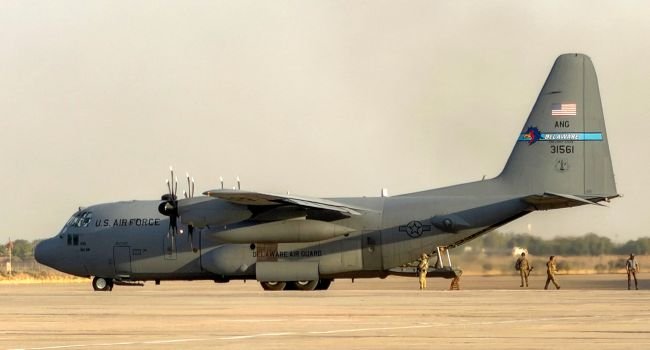
US Air Force C-130 Hercules military transport aircraft prepares to take off from Camp Victory near Baghdad International Airport.

US-led troops exit Iraq after more than a decade

The US-led coalition is ending its military mission in Iraq after more than a decade of operations aimed at defeating the Islamic State group.   Coalition troops were deployed to Iraq and Syria in 2014 after Islamic State seized large areas of both countries and carried out massacres and other atrocities. The group was defeated in Iraq in 2017 and Syria in 2019, but coalition forces remained to target its remnants. Baghdad and Washington agreed in 2024 to wind down the coalition’s mission in Iraq. Troops subsequently withdrew from bases across the country, with their presence eventually restricted to Iraq’s autonomous Kurdistan region. The final withdrawal from Kurdistan is scheduled for Wednesday, marking the end of the coalition’s mission in Iraq. Iraqi Prime Minister Ali al-Zaidi has called for October 1, the day after the withdrawal, to be observed as Sovereignty Day. The country’s top executive, legislative and judicial officials described the occasion as a milestone in Iraq’s path towards sovereignty and stressed the need to strengthen state institutions. They also called for weapons held outside state authority to be addressed according to government timelines. Dispute over armed factions The withdrawal comes as the Iraqi government seeks to strengthen its control over weapons held by powerful armed factions, many of which are backed by Iran. Zaidi, who took office this year with US backing, has pledged to reinforce the state’s monopoly on arms and persuade armed groups to hand their weapons over to government control. His administration initially set September 30 as a deadline for factions to disarm, but later withdrew the deadline as negotiations continued. Several powerful groups have opposed disarmament. They have demanded not only the withdrawal of foreign troops but also an end to what they describe as US political and economic interference. Kataeb Hezbollah, one of the powerful Iran-backed factions, welcomed the withdrawal as a step towards what it called full sovereignty. However, it also warned the Iraqi government that it could be challenged if it failed to serve the interests of the people. Security concerns in Kurdistan The US-led coalition and Iran-backed factions fought alongside each other against Islamic State during the group’s territorial expansion. Their relationship deteriorated after Islamic State’s defeat, with armed factions demanding the withdrawal of US forces and launching drone and missile attacks against coalition personnel. The United States responded with strikes that killed several faction commanders over the years. During the recent regional conflict in the Middle East, attacks on US-led forces intensified in Iraq’s Kurdistan region. Residents in Erbil, the capital of Kurdistan, have expressed concern over who will protect the autonomous region from drone attacks after coalition air defences leave. The coalition also withdrew from Syria earlier this year.

Flooding in Nigeria: NEMA deploys rescue teams as states battle rising floods

Flooding in Nigeria has intensified across several states, killing residents, displacing families and destroying homes, roads, farms and other infrastructure as heavy rainfall continues.   The National Emergency Management Agency has deployed search and rescue teams to affected communities following fresh flood incidents, while state emergency agencies have stepped up evacuation, drainage clearing and public awareness efforts. NEMA’s Head of Media and Public Relations, Manzo Ezekiel, said the agency remained on alert despite records showing that the flood situation was not as severe as it was during the same period last year. “So far, the records are better than incidents of last year. But we are not lowering our guard yet, because the season is still on,” Ezekiel said. According to him, NEMA activated its operational offices after receiving a flood alert last week and directed search and rescue teams to affected areas to coordinate with local authorities. The agency said teams would move to Ebonyi State before proceeding to Port Harcourt, Rivers State, where flooding has caused significant disruption. The Nigerian Meteorological Agency also warned that heavy rainfall would continue in parts of the country, particularly in the central and southern regions, as the rainy season remains active. NiMet urged residents to monitor its daily weather forecasts and take precautions in flood-prone areas. Multiple states affected The latest flooding has affected communities in Bauchi, Edo, Bayelsa, Imo, Rivers, Osun, Ekiti, Abia, Anambra, Benue and Delta states, while authorities in Kano, Yobe, Nasarawa and Zamfara have also reported weather-related impacts. In Bauchi, six local government areas were identified as being among the worst affected by disasters during the rainy season. They include Toro, Bauchi, Ningi, Shira, Gamawa and Kirfi. The state emergency agency said two people had died in Kirfi, while thousands of houses and properties were damaged. In Edo, flooding from the overflowing Ojirami Dam affected the Enwan-Igarra-Ososo Expressway, leaving the route impassable. A community leader expressed fears that continued rainfall could worsen the situation. The Edo State Emergency Management Agency, however, said the immediate threat from the dam had been reduced after repairs were carried out around the affected section. Bayelsa has also recorded severe flooding and erosion in Obogoro community, where residents said more than 200 houses had been submerged by the advancing Ekoli River. Residents appealed for urgent government intervention, saying homes, farms and community infrastructure had been destroyed. Rivers, Imo and Osun record widespread flooding In Imo State, flooding affected nine local government areas, with several roads rendered impassable. NEMA officials said some families trapped by floodwaters in Akwakuma were moved to higher ground, while officials continued to monitor other vulnerable communities. Parts of Rivers State, including Port Harcourt City and Obio/Akpor, have also been affected. Residents of Marine Base said they had battled flooding for almost a month, with some spending about N7,000 daily to hire pumping machines. Flooding was also reported at the Rivers State Rehabilitation Centre in Iriebe, while corps members at a nearby NYSC transit camp were affected. A 17-year-old, Ifeanyichukwu Osuji, reportedly died in floodwaters at Umuebereke community in Oyigbo Local Government Area. In Osun, seven local government areas were affected, with damaged bridges, flooded homes and disrupted transportation reported in several communities. Deaths and destruction reported in Abia and Anambra Abia State recorded widespread flooding across more than 16 communities. PUNCH reported claims that about 20 people had died and more than 800 houses had been destroyed or submerged, although the reported death toll had not been independently verified. A 12-year-old student of Federal Government College, Ohafia, Sopuruchi Ibe, was confirmed dead after being swept away by floodwater. Anambra also recorded flooding in Onitsha, Awka, Nnewi, Ekwulobia and Ogidi. A school pupil, Success Ezenwafor, died after a shuttle bus carrying pupils was overturned by floodwater along the Isiagu-Nibo-Awka Link Road. Seven other children and two adults were rescued. Yobe records 11 deaths In Yobe State, the emergency management agency said 34,533 people had been affected by tropical windstorms, heavy rainfall and flash floods across 15 local government areas since May. The agency reported that 9,845 households were affected, while 21,363 shelters or rooms were damaged or destroyed. It also recorded 303 injuries and 11 deaths. In Kano, officials said nine people had died and 4,524 people had been displaced by rainstorms and windstorms between January and August 2026. Recent flooding in Shuwaki, Tudun Wada Local Government Area, also destroyed more than 200 rice farms and damaged a historic bridge. Senate calls for faster flood response The Senate has called on governments at all levels to strengthen disaster preparedness and improve relief efforts for flood victims. Senate President Godswill Akpabio urged authorities to prepare early, protect vulnerable communities and ensure that relief materials reach affected residents promptly. “A warning must lead to preparation, preparation must lead to protection, and relief must reach the people for whom it is intended,” Akpabio said. The flooding has renewed calls for improved drainage systems, dredging of waterways, erosion control, dam maintenance and reconstruction of damaged roads and bridges. Authorities have also urged residents to avoid dumping refuse into drainage channels, building on waterways and occupying flood-prone areas. With heavy rainfall expected to continue in parts of the country, NEMA and state emergency agencies say they will remain on alert and intensify response efforts in vulnerable communities.
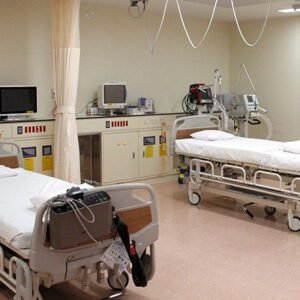
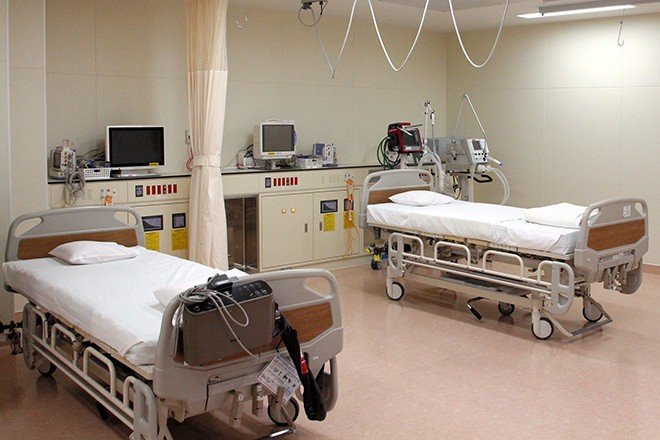
Japanese surgeons perform the world’s first heart muscle stem cell surgery using iPS-derived cells

Japan performs world’s first heart muscle stem cell surgery

A hospital in Japan has performed the world’s first surgery using commercially available sheets of heart muscle cells derived from induced pluripotent stem cells, marking a significant step in regenerative heart treatment.   The procedure was carried out on Tuesday at Osaka Keisatsu Hospital on a woman in her 50s. The hour-long operation involved transplanting sheets of heart muscle cells into her heart. The treatment received conditional government approval in Japan in March, allowing its first clinical use. “Our hope is that this will improve the patient’s quality of life,” surgeon Yoshiki Sawa, head of Osaka Keisatsu Hospital, told reporters after the operation. The regenerative therapy was previously tested on eight patients with ischaemic heart disease, a condition in which narrowed heart arteries reduce blood flow to the heart. According to Japanese media reports, all eight patients experienced an easing of symptoms, while four recorded improvements in heart function. Sawa developed the technology in collaboration with Japanese scientist Shinya Yamanaka, who won the 2012 Nobel Prize in Physiology or Medicine for his research into induced pluripotent stem cells, commonly known as iPS cells. iPS cells are created by reprogramming mature specialised cells into a more flexible, juvenile-like state, allowing them to develop into different types of cells. The therapy is primarily intended for heart patients who have exhausted other treatment options. It is expected to help improve heart muscle function, heart failure symptoms, cardiac performance and exercise tolerance. Sawa’s team plans to carry out similar procedures on 75 patients by 2033 as part of efforts to establish the treatment’s effectiveness and safety. The treatment could receive full authorisation if its benefits and safety are demonstrated during the seven-year evaluation period, according to Japanese media reports. Japan also granted conditional approval in March for an iPS cell-based treatment for Parkinson’s disease following a successful clinical trial.

Must Read

Kogi State Governor Ahmed Ododo during a meeting with Kuwait Fund officials in Kuwait

Ododo leads Kogi delegation to Kuwait for development partnership

Kogi State Governor, Ahmed Ododo, has led a high-level delegation to Kuwait to seek development financing, technical expertise and strategic partnerships for projects under the state’s Development Plan 2024–2056.   According to Channels Television, the visit has opened discussions with key Kuwaiti institutions, with technical teams expected to begin preparing priority projects for implementation. During the mission, Ododo met officials of the Kuwait Fund for Arab Economic Development (KFAED), where he presented Kogi’s development priorities and sought a long-term partnership focused on transforming the state’s natural and human resources into economic opportunities. The proposed areas of cooperation include water infrastructure, irrigation, agriculture, renewable energy, solid minerals, agro-industrial development, transport, communications and ICT, education and healthcare. KFAED expressed readiness, in principle, to work with Kogi on priority projects, subject to technical, financial and institutional appraisal processes. The governor also held discussions with Kuwait University on research, innovation, engineering, agriculture, water-resource management and technology. The talks explored knowledge exchange and capacity development between the university and tertiary institutions in Kogi. Ododo’s delegation further met Kuwait’s Minister of Electricity, Water and Renewable Energy, Dr Subaih Abdulaziz Al-Mukhaizeem, to discuss water infrastructure, irrigation, renewable energy and power development. The governor said improved water infrastructure could support communities and agriculture, while irrigation would help expand all-season farming. He also linked reliable energy to agro-processing and industrialisation, and mineral beneficiation to greater value retention within Kogi. Discussions were also held with the Governor of Al Ahmadi Governorate, Sheikh Humoud Jaber Al-Ahmad Al-Sabah, on possible cooperation in infrastructure, investment and industrial development. A key outcome of the mission was the establishment of a technical process to advance the agreements and understandings reached during the meetings. The process will include project documentation, feasibility studies, technical assessments and other preparatory work. Ododo thanked President Bola Ahmed Tinubu for the Federal Government’s diplomatic support and praised the Nigerian Embassy in Kuwait for facilitating the engagements. The governor said the mission marked a shift from high-level discussions to detailed technical work aimed at developing partnerships in water, agriculture, irrigation, energy, education, research, solid minerals, commerce and industrial development.
Read more
Kogi State Governor Ahmed Ododo during a meeting with Kuwait Fund officials in Kuwait

Ododo leads Kogi delegation to Kuwait for development partnership

Kogi State Governor, Ahmed Ododo, has led a high-level delegation to Kuwait to seek development financing, technical expertise and strategic partnerships for projects under the state’s Development Plan 2024–2056.   According to Channels Television, the visit has opened discussions with key Kuwaiti institutions, with technical teams expected to begin preparing priority projects for implementation. During the mission, Ododo met officials of the Kuwait Fund for Arab Economic Development (KFAED), where he presented Kogi’s development priorities and sought a long-term partnership focused on transforming the state’s natural and human resources into economic opportunities. The proposed areas of cooperation include water infrastructure, irrigation, agriculture, renewable energy, solid minerals, agro-industrial development, transport, communications and ICT, education and healthcare. KFAED expressed readiness, in principle, to work with Kogi on priority projects, subject to technical, financial and institutional appraisal processes. The governor also held discussions with Kuwait University on research, innovation, engineering, agriculture, water-resource management and technology. The talks explored knowledge exchange and capacity development between the university and tertiary institutions in Kogi. Ododo’s delegation further met Kuwait’s Minister of Electricity, Water and Renewable Energy, Dr Subaih Abdulaziz Al-Mukhaizeem, to discuss water infrastructure, irrigation, renewable energy and power development. The governor said improved water infrastructure could support communities and agriculture, while irrigation would help expand all-season farming. He also linked reliable energy to agro-processing and industrialisation, and mineral beneficiation to greater value retention within Kogi. Discussions were also held with the Governor of Al Ahmadi Governorate, Sheikh Humoud Jaber Al-Ahmad Al-Sabah, on possible cooperation in infrastructure, investment and industrial development. A key outcome of the mission was the establishment of a technical process to advance the agreements and understandings reached during the meetings. The process will include project documentation, feasibility studies, technical assessments and other preparatory work. Ododo thanked President Bola Ahmed Tinubu for the Federal Government’s diplomatic support and praised the Nigerian Embassy in Kuwait for facilitating the engagements. The governor said the mission marked a shift from high-level discussions to detailed technical work aimed at developing partnerships in water, agriculture, irrigation, energy, education, research, solid minerals, commerce and industrial development.
US Air Force C-130 Hercules military transport aircraft prepares to take off from Camp Victory near Baghdad International Airport.

US-led troops exit Iraq after more than a decade

The US-led coalition is ending its military mission in Iraq after more than a decade of operations aimed at defeating the Islamic State group.   Coalition troops were deployed to Iraq and Syria in 2014 after Islamic State seized large areas of both countries and carried out massacres and other atrocities. The group was defeated in Iraq in 2017 and Syria in 2019, but coalition forces remained to target its remnants. Baghdad and Washington agreed in 2024 to wind down the coalition’s mission in Iraq. Troops subsequently withdrew from bases across the country, with their presence eventually restricted to Iraq’s autonomous Kurdistan region. The final withdrawal from Kurdistan is scheduled for Wednesday, marking the end of the coalition’s mission in Iraq. Iraqi Prime Minister Ali al-Zaidi has called for October 1, the day after the withdrawal, to be observed as Sovereignty Day. The country’s top executive, legislative and judicial officials described the occasion as a milestone in Iraq’s path towards sovereignty and stressed the need to strengthen state institutions. They also called for weapons held outside state authority to be addressed according to government timelines. Dispute over armed factions The withdrawal comes as the Iraqi government seeks to strengthen its control over weapons held by powerful armed factions, many of which are backed by Iran. Zaidi, who took office this year with US backing, has pledged to reinforce the state’s monopoly on arms and persuade armed groups to hand their weapons over to government control. His administration initially set September 30 as a deadline for factions to disarm, but later withdrew the deadline as negotiations continued. Several powerful groups have opposed disarmament. They have demanded not only the withdrawal of foreign troops but also an end to what they describe as US political and economic interference. Kataeb Hezbollah, one of the powerful Iran-backed factions, welcomed the withdrawal as a step towards what it called full sovereignty. However, it also warned the Iraqi government that it could be challenged if it failed to serve the interests of the people. Security concerns in Kurdistan The US-led coalition and Iran-backed factions fought alongside each other against Islamic State during the group’s territorial expansion. Their relationship deteriorated after Islamic State’s defeat, with armed factions demanding the withdrawal of US forces and launching drone and missile attacks against coalition personnel. The United States responded with strikes that killed several faction commanders over the years. During the recent regional conflict in the Middle East, attacks on US-led forces intensified in Iraq’s Kurdistan region. Residents in Erbil, the capital of Kurdistan, have expressed concern over who will protect the autonomous region from drone attacks after coalition air defences leave. The coalition also withdrew from Syria earlier this year.

Editor's Pick

Trending News

Newsletter

Enter your email address and receive notifications of news by email.

You have been successfully Subscribed! Ops! Something went wrong, please try again.

© 2026 GongNews. All Rights Reserved.