/ Nov 18, 2026
/ Nov 18, 2026

Security

  • All
  • Africa
  • Agriculture
  • Aviation
  • Banking
  • Business
  • Crime
  • Economy
  • Education
  • Entertainment
  • fashion
  • Health
  • Home
  • International
  • Judiciary
  • lifestyle
  • Metro
  • News
  • Nigeria
  • Opinions
  • Politics
  • Religion
  • Security
  • Sport
  • sports
  • Tech
  • Technology
  • World News
222324
Next

Trending

A woman stands outside a store selling the Apple iPhone 16 in Jakarta, Indonesia, amid controversy over Apple's smartphone policies.

Apple faces Paris trial over alleged iPhone planned obsolescence

Technology giant Apple is to stand trial in Paris in June 2027 over allegations of planned obsolescence involving several iPhone models.   The case centres on claims that the company deliberately restricted repairs and refurbishment outside its authorised service network, making it difficult for independent repairers to fix affected devices. According to AFP, citing a source close to the case, Apple Distribution International and its parent company, Apple Inc., are scheduled to appear in court for a four-day trial beginning on June 17, 2027. French prosecutors are pursuing charges of “obstructing repair and refurbishment” against the US-based technology company. The allegations followed a complaint filed on December 7, 2022, by campaign group Stop Planned Obsolescence, which described the decision to proceed to trial as a first. The group welcomed the development, accusing Apple of practices that allegedly made repairing certain devices outside its authorised network impossible. The alleged conduct is said to have affected several iPhone models between November 2021 and July 2024, a period of more than two and a half years. Apple is accused of configuring its smartphone software in ways that prevented independent repairers from repairing or refurbishing affected devices. Prosecutors allege that the practices were intended to boost sales of Apple’s flagship smartphone and increase the company’s revenue. Apple, however, has rejected the allegations. “We strongly contest these unfounded allegations,” the company told AFP when contacted about the case. Planned obsolescence refers to practices by manufacturers that deliberately shorten the usable lifespan of products, particularly electronic devices, encouraging consumers to replace them more frequently. Apple generates more than $400 billion in annual revenue, with iPhone sales accounting for approximately half of its business. The Paris trial is expected to examine the allegations surrounding the company’s repair policies and the use of software restrictions affecting independent repair services.
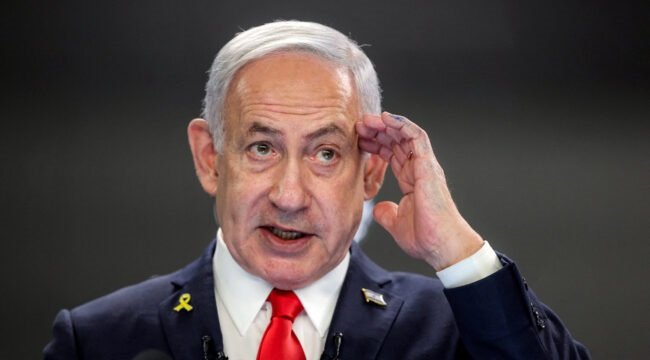
Israeli Prime Minister Benjamin Netanyahu speaking at a press conference in Jerusalem.

Netanyahu faces ‘Coup’ allegations over arrest of Arab party members

Two Israeli opposition leaders have accused Prime Minister Benjamin Netanyahu’s office of attempting to interfere with last month’s election by allegedly framing members of an Arab-Israeli political party.   Opposition leader Yair Lapid and Joint List leader Yousef Jabareen separately described the alleged actions as an “attempted coup” following media reports linking Netanyahu’s office to police complaints against members of the Raam party. According to Israel’s Channel 12, Netanyahu’s chief of staff, Ido Norden, contacted the police on the eve of the October 27 election, alleging misconduct involving members of the Arab-Israeli Raam party. Norden reportedly directed the police to an alleged intelligence source, a former employee of Netanyahu’s office, who provided information that resulted in the arrest of three Raam members. However, the three men were subsequently released after police determined that the information against them was unfounded. Reacting to the reports on Monday, Lapid wrote on X that emerging details suggested the incident went beyond an attempt to disrupt the election. “As more and more details come to light, it becomes clear: This wasn’t an attempt to disrupt the elections. It was an attempted coup,” he said. Netanyahu later accused Arab parties of electoral fraud after they secured a record number of seats. His Likud party has denied the latest allegations. Meanwhile, Israeli newspaper Haaretz reported that David Zini, head of the Shin Bet domestic security service, had sought authorisation to wiretap leaders of another Arab political bloc, the Joint List. However, the attorney general reportedly rejected the request over a lack of evidence. Jabareen also condemned the alleged actions, describing them as an attempted coup by Netanyahu. “If the findings are confirmed, this is a criminal mechanism that operated from the heart of government to rig the election results. Everyone found responsible must be held accountable, including Netanyahu,” he wrote on X. Raam’s number two, former police chief Yoav Segalovitz, called for an immediate, independent and comprehensive criminal investigation. He also accused Netanyahu of attempting to undermine the electoral process while publicly claiming that his own election was being stolen. Netanyahu’s main rival, former army chief of staff Gadi Eisenkot, also called for the caretaker prime minister to leave office. In a statement on Sunday, Eisenkot said Netanyahu could not remain at the head of the government. Neither Netanyahu’s political bloc nor Eisenkot’s opposition secured the 61 parliamentary seats required to form a government following last month’s election. The two Arab parties, the Joint List and Raam, have indicated support for Eisenkot amid the ongoing political uncertainty.
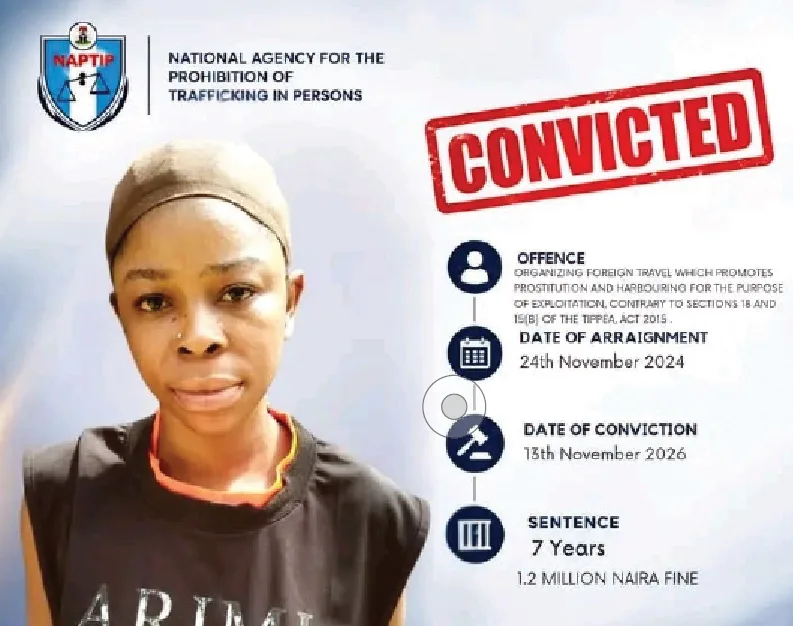
Police uncover child trafficking ring in Imo, rescue 12 minors

State police: All 36 state assemblies approve constitutional bill

All 36 State Houses of Assembly in Nigeria have approved the proposed constitutional amendment seeking to establish state police, clearing the way for the bill to be transmitted to President Bola Tinubu for assent.   The Clerk to the National Assembly, Kamoru Ogunlana, announced the development in a statement on Monday, November 16, describing the approval as a 100 per cent endorsement by the state legislatures. According to Ogunlana, the approval exceeds the constitutional requirement of at least 24 state assemblies under Section 9(2) of the 1999 Constitution, as amended. He said the proposed legislation, titled A Bill for an Act to Alter the Constitution of the Federal Republic of Nigeria, 1999 to Provide for the Establishment of State Police Services and for Related Matters, had received unanimous support from all 36 states. The development marks the completion of the state assemblies’ consideration of the proposed amendment following weeks of legislative engagements. On November 3, the National Assembly announced that 28 state assemblies had approved the bill, already exceeding the required two-thirds threshold. The Senate subsequently gave the six outstanding state assemblies until November 15 to communicate their decisions after Senate Leader Opeyemi Bamidele disclosed that 30 states had endorsed the proposal. Explaining the delay in transmitting the bill, Ogunlana said the National Assembly leadership had allowed additional time for broader consultations and consensus among the states, despite the bill having already satisfied the constitutional requirements. He stated that the legislation had met the requirements for transmission under the Constitution and the Acts Authentication Act, Cap. A2, Laws of the Federation of Nigeria, 2004. Ogunlana described the unanimous endorsement as an unprecedented demonstration of cooperation between the National Assembly and state legislatures, as well as between federal and state executive arms. He added that his office had completed the verification process and that the bill was ready for transmission to President Tinubu for assent. The Clerk also said the achievement would provide a foundation for the National Assembly to advance other proposed constitutional amendments, including the remaining Sixth Constitution Alteration Bills. The proposed amendment seeks to establish the constitutional framework for state police services alongside the existing federal policing structure. Ogunlana commended the 36 state governors, speakers and members of the state assemblies, as well as other stakeholders, for their cooperation throughout the legislative process.
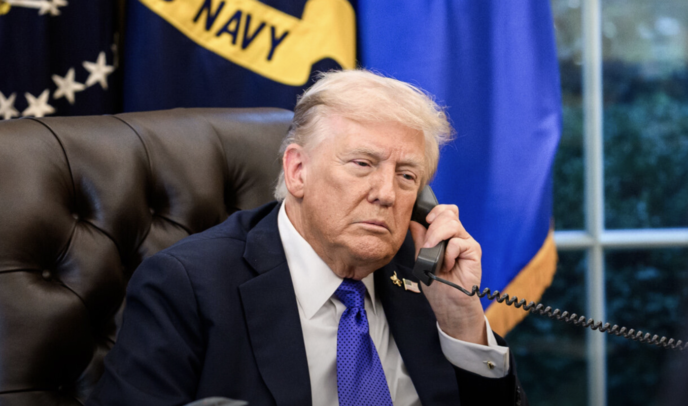
Donald Trump speaking during a press briefing at the White House. US and Iran war

US court strikes down Trump’s visa restrictions on foreign students, journalist

A United States federal judge has struck down a controversial Trump administration policy seeking to impose stricter limits on how long foreign students and journalists can stay in the country.   District Judge Dennis Saylor ruled on Monday that the proposed visa restrictions were “arbitrary, capricious, an abuse of discretion, and otherwise not in accordance with law”. The ruling followed a lawsuit filed against the Department of Homeland Security (DHS) by a coalition of unions representing universities, teachers and journalists. The proposed regulations, which were scheduled to take effect in September, had earlier been temporarily suspended by Saylor. The Trump administration has appealed the suspension to a higher court. In his ruling, the judge focused largely on the potential impact of the policy on international students, arguing that the restrictions would undermine educational opportunities that Congress intended to support. “Put bluntly, DHS is seeking to prevent or discourage the very activity — providing educational opportunities for foreign students in the United States — that Congress sought to permit and encourage,” Saylor said. He explained that the proposed rules could prevent international students from pursuing extended academic programmes, including PhD studies, obtaining joint degrees and changing their academic concentrations. Proposed Visa Restrictions Under the policy, foreign students would have been allowed to stay in the United States for a maximum of four years, after which they would need to apply for an extension. The proposed arrangement would replace the existing system, which allows international students to remain in the country for the duration of their academic programmes. Foreign journalists would also have faced shorter stays under the policy, with their permitted period reduced from five years to 240 days, or approximately eight months. They would, however, have been allowed to apply for extensions of similar duration. Chinese journalists faced even tighter restrictions, with an initial stay of just 90 days, renewable through further 90-day extensions. The visa restrictions formed part of President Donald Trump’s wider immigration crackdown, which includes intensified deportation operations and tighter controls on legal immigration pathways. According to official data, the United States hosted more than 1.1 million international students during the 2023-2024 academic year, making it the world’s leading destination for international students. The ruling represents a setback for the administration’s proposed changes to student and journalist visa regulations.

Must Read

A woman stands outside a store selling the Apple iPhone 16 in Jakarta, Indonesia, amid controversy over Apple's smartphone policies.

Apple faces Paris trial over alleged iPhone planned obsolescence

Technology giant Apple is to stand trial in Paris in June 2027 over allegations of planned obsolescence involving several iPhone models.   The case centres on claims that the company deliberately restricted repairs and refurbishment outside its authorised service network, making it difficult for independent repairers to fix affected devices. According to AFP, citing a source close to the case, Apple Distribution International and its parent company, Apple Inc., are scheduled to appear in court for a four-day trial beginning on June 17, 2027. French prosecutors are pursuing charges of “obstructing repair and refurbishment” against the US-based technology company. The allegations followed a complaint filed on December 7, 2022, by campaign group Stop Planned Obsolescence, which described the decision to proceed to trial as a first. The group welcomed the development, accusing Apple of practices that allegedly made repairing certain devices outside its authorised network impossible. The alleged conduct is said to have affected several iPhone models between November 2021 and July 2024, a period of more than two and a half years. Apple is accused of configuring its smartphone software in ways that prevented independent repairers from repairing or refurbishing affected devices. Prosecutors allege that the practices were intended to boost sales of Apple’s flagship smartphone and increase the company’s revenue. Apple, however, has rejected the allegations. “We strongly contest these unfounded allegations,” the company told AFP when contacted about the case. Planned obsolescence refers to practices by manufacturers that deliberately shorten the usable lifespan of products, particularly electronic devices, encouraging consumers to replace them more frequently. Apple generates more than $400 billion in annual revenue, with iPhone sales accounting for approximately half of its business. The Paris trial is expected to examine the allegations surrounding the company’s repair policies and the use of software restrictions affecting independent repair services.
Read more
A woman stands outside a store selling the Apple iPhone 16 in Jakarta, Indonesia, amid controversy over Apple's smartphone policies.

Apple faces Paris trial over alleged iPhone planned obsolescence

Technology giant Apple is to stand trial in Paris in June 2027 over allegations of planned obsolescence involving several iPhone models.   The case centres on claims that the company deliberately restricted repairs and refurbishment outside its authorised service network, making it difficult for independent repairers to fix affected devices. According to AFP, citing a source close to the case, Apple Distribution International and its parent company, Apple Inc., are scheduled to appear in court for a four-day trial beginning on June 17, 2027. French prosecutors are pursuing charges of “obstructing repair and refurbishment” against the US-based technology company. The allegations followed a complaint filed on December 7, 2022, by campaign group Stop Planned Obsolescence, which described the decision to proceed to trial as a first. The group welcomed the development, accusing Apple of practices that allegedly made repairing certain devices outside its authorised network impossible. The alleged conduct is said to have affected several iPhone models between November 2021 and July 2024, a period of more than two and a half years. Apple is accused of configuring its smartphone software in ways that prevented independent repairers from repairing or refurbishing affected devices. Prosecutors allege that the practices were intended to boost sales of Apple’s flagship smartphone and increase the company’s revenue. Apple, however, has rejected the allegations. “We strongly contest these unfounded allegations,” the company told AFP when contacted about the case. Planned obsolescence refers to practices by manufacturers that deliberately shorten the usable lifespan of products, particularly electronic devices, encouraging consumers to replace them more frequently. Apple generates more than $400 billion in annual revenue, with iPhone sales accounting for approximately half of its business. The Paris trial is expected to examine the allegations surrounding the company’s repair policies and the use of software restrictions affecting independent repair services.
Israeli Prime Minister Benjamin Netanyahu speaking at a press conference in Jerusalem.

Netanyahu faces ‘Coup’ allegations over arrest of Arab party members

Two Israeli opposition leaders have accused Prime Minister Benjamin Netanyahu’s office of attempting to interfere with last month’s election by allegedly framing members of an Arab-Israeli political party.   Opposition leader Yair Lapid and Joint List leader Yousef Jabareen separately described the alleged actions as an “attempted coup” following media reports linking Netanyahu’s office to police complaints against members of the Raam party. According to Israel’s Channel 12, Netanyahu’s chief of staff, Ido Norden, contacted the police on the eve of the October 27 election, alleging misconduct involving members of the Arab-Israeli Raam party. Norden reportedly directed the police to an alleged intelligence source, a former employee of Netanyahu’s office, who provided information that resulted in the arrest of three Raam members. However, the three men were subsequently released after police determined that the information against them was unfounded. Reacting to the reports on Monday, Lapid wrote on X that emerging details suggested the incident went beyond an attempt to disrupt the election. “As more and more details come to light, it becomes clear: This wasn’t an attempt to disrupt the elections. It was an attempted coup,” he said. Netanyahu later accused Arab parties of electoral fraud after they secured a record number of seats. His Likud party has denied the latest allegations. Meanwhile, Israeli newspaper Haaretz reported that David Zini, head of the Shin Bet domestic security service, had sought authorisation to wiretap leaders of another Arab political bloc, the Joint List. However, the attorney general reportedly rejected the request over a lack of evidence. Jabareen also condemned the alleged actions, describing them as an attempted coup by Netanyahu. “If the findings are confirmed, this is a criminal mechanism that operated from the heart of government to rig the election results. Everyone found responsible must be held accountable, including Netanyahu,” he wrote on X. Raam’s number two, former police chief Yoav Segalovitz, called for an immediate, independent and comprehensive criminal investigation. He also accused Netanyahu of attempting to undermine the electoral process while publicly claiming that his own election was being stolen. Netanyahu’s main rival, former army chief of staff Gadi Eisenkot, also called for the caretaker prime minister to leave office. In a statement on Sunday, Eisenkot said Netanyahu could not remain at the head of the government. Neither Netanyahu’s political bloc nor Eisenkot’s opposition secured the 61 parliamentary seats required to form a government following last month’s election. The two Arab parties, the Joint List and Raam, have indicated support for Eisenkot amid the ongoing political uncertainty.


Editor's Pick

Trending News

Newsletter

Enter your email address and receive notifications of news by email.

You have been successfully Subscribed! Ops! Something went wrong, please try again.

© 2026 GongNews. All Rights Reserved.