

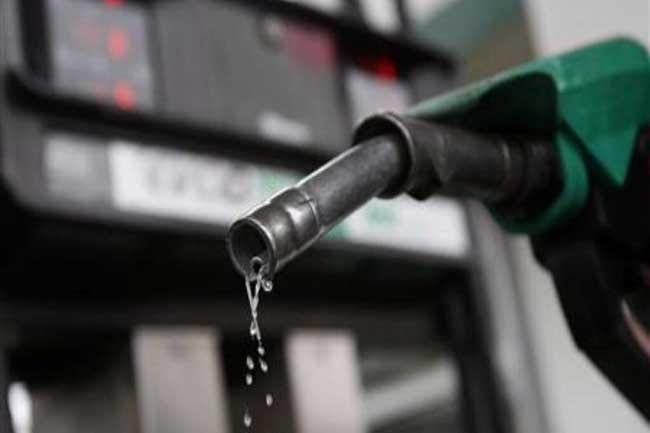
Recent reduction in petrol prices in Nigeria has sparked momentary excitement among citizens, but industry players warn that the development may portend greater danger in the oil downstream sector.
Two weeks ago, the price of petrol dropped significantly nationwide.
In Abuja and Lagos, the retail price of petrol fell between N885 to N945 per litre, down from N910 and N955, depending on the location and filling stations.
The development comes after the federal government announced the suspension of the planned 15 per cent import duty on petrol and diesel.
However, Dangote Refinery had attributed the drop to its November ex-depot price reduction to N828 per litre from N877.
Moreover, the ex-depot price of petrol as of Monday morning has increased to N854 per litre for Dangote Refinery and Pinnacle and N860 per litre for other depot owners.
Regardless of who is responsible for the price cut, stakeholders fear that the lower prices are artificial and unsustainable.
two major petroleum marketers’ bodies— the Petroleum Products Retail Outlets Owners Association of Nigeria (PETROAN) and the Independent Petroleum Marketers Association of Nigeria (IPMAN), reveal deep concerns that the current pricing is unsustainable and potentially harmful to the sector.
At the heart of the issue is the evidence that the falling pump price does not reflect genuine market forces, nor does it indicate improved efficiency in the petroleum supply chain.
Instead, it exposes the structural weaknesses and imbalances that continue to plague Nigeria’s deregulated downstream oil industry.
These prices are not real — PETROAN
PETROAN President, Billy Gillis-Harry, insisted that the current lower pump prices are “not in any way guided by fair market pricing.”
According to him, the decrease neither reflects supply-demand dynamics nor the cost realities of importing, refining, or distributing petrol.
He said “petrol prices are not determined by actual market fundamentals, thus, the market is being distorted. And distorted markets always come with consequences.”
Gillis-Harry warned that, eventually, many marketers will lack the capital to continue purchasing products, stressing that once that happens, supply shortages could re-emerge, potentially triggering another round of price hikes or scarcity.
He stressed the need for what he calls “right sizing, right pricing, fair pricing, and honest value.”
“In other words, petrol must be priced according to real market conditions, not artificial adjustments that look good on the surface but are damaging beneath,” he said.
He added that the entire market is currently “walking towards price volatility guided by Dangote,” implying that Nigeria’s downstream sector has effectively become dependent on one dominant refinery—a situation he argues is unhealthy for competition or stability.
“Lower prices today are not; they are not in any way guided by the market, fair market pricing and fair business evaluation. Neither is it determined by the market process of supply and demand.
“So basically what will happen is that down the road there will be decisions that will be made that will be very unique to the availability of petroleum products.
“Decisions like people not being able to have capital to buy products. That will stop them from making sure that there is provision of petroleum products or whatever decisions.
“So we need this decision earlier; the sooner we get back to right sizing, right pricing, fair pricing, and honest values in market forces, the better the determination of the price will be.
“No, everybody is; everybody is walking towards, walking towards the price volatility that is guided by Dangote. So it will be difficult for anyone to take credit for it.
“But it is; is it a positive? Is it a positive price value? I’ve just told you that the current pricing is not determined by fair market pricing. It’s not determined by market forces of demand and supply. So the earlier Nigerians understand that fair market.
“Adequate pricing will guarantee better availability. Everybody is crying for what is happening in the market,” he said.
Petrol deregulation exists only on paper – IPMAN
For IPMAN’s spokesperson, Chinedu Ukadike, the controversy goes deeper into Nigeria’s structural petroleum problems.
He said on paper, the Petroleum Industry Act (PIA) fully deregulated the downstream market.
“In reality, deregulation cannot function when only one major domestic refinery— the Dangote Refinery— is active while government-owned refineries in Port Harcourt, Warri and Kaduna remain grounded,” he stated.
A deregulated market is supposed to operate on a “willing seller, willing buyer” basis, with fluctuating prices driven by competition, cost variations, and supply diversity. But with Nigeria depending on a single source of refined products, market forces are effectively weakened.
Ukadike argued that if state-run refineries and modular refineries were functional, the current volatility and the vulnerability of marketers would not exist.
“Multiple sources of supply would create real competitive pricing, reducing the risk of sharp price movements tied to one supplier.
“Well, the Petroleum Industrial Act has deregulated the petroleum market. In a deregulated petroleum market you can’t fix the price.
“It is a deregulated market influenced by forces of demand and supply. It gives room for a free economy and a willing-buyer-willing-seller relationship.
“Marketers’ prices will keep fluctuating. But it has to keep on fluctuating for competitive prices.
“The problem we are facing in this country is an open problem. We have only one source of refined petroleum products, which is Dangote Refinery. Any move by Dangote Refinery affects marketers.
“If there were other functional refineries such as NNPCL Port Harcourt, Warri, Kaduna and other modular refineries, the problem of the inability for marketers to buy the product won’t arise, because they can be accessed from multiple sources,” he disclosed.
The position of petrol retailers and marketers showed that Nigeria is experiencing what economists call a “false equilibrium”— a temporary price stability that is not rooted in market fundamentals.
Such stability often collapses once cost pressures mount or supply bottlenecks emerge.
Both PETROAN and IPMAN agree on the core dangers: one refinery controlling supply leads to price instability; marketers may soon struggle with capital to purchase products; artificially low prices threaten long-term availability, and true deregulation cannot exist without multiple competing refineries.
If the current pricing trend continues without structural reforms, Nigeria may face renewed fuel scarcity, abrupt price spikes, or supply disruptions.
Way forward
Nigeria’s petrol market finds itself in a vacuum — deregulated by law yet functionally dependent on only two suppliers, Dangote Refinery or imported products.
The result is a sector where neither government regulation nor market competition is strong enough to guarantee stability.
For now, cheaper pump prices offer short-term relief to Nigerians already battling inflation and economic hardship.
But industry players say the country must choose between the illusion of low prices today and the sustainability of petrol availability tomorrow.
Until Nigeria diversifies its refining capacity, restores public refineries, and strengthens market competition, the debate over petrol pricing will remain a recurring national dilemma.
















https://t.me/site_official_1win/140
https://t.me/s/ROX_officials
Alright, time to check out xin88oregan. I think I am gonna try this! What can it hurt? Click here to check out the site: xin88oregan
Okay, hear me out, I found selcuksportshdlink when I couldn’t find the match *anywhere* else. It worked! Not the best quality, but I saw the goals live, so, yeah. selcuksportshdlink, definitely kept them in mind for emergencies.
https://t.me/s/official_pokerdom_pokerdom
Fortunesnakebr, alright, let’s see what you got! Heard they got some cool slots. Trying my hand at a few. Fingers crossed! Good vibes so far!. fortunesnakebr
В мире игр, где любой сайт норовит зацепить гарантиями легких выигрышей, рейтинг онлайн казино на рубли
является именно той картой, что проводит сквозь дебри рисков. Игрокам хайроллеров да новичков, которые надоел из-за пустых заверений, он инструмент, чтобы увидеть реальную rtp, будто ощущение золотой ставки в руке. Обходя пустой воды, лишь реальные сайты, в которых rtp не только цифра, но реальная удача.Подобрано из яндексовых запросов, как ловушка, что ловит самые горячие тренды на интернете. В нём нет пространства про стандартных трюков, каждый элемент будто карта у покере, где обман проявляется немедленно. Хайроллеры понимают: по стране манера речи и иронией, в котором юмор скрывается под рекомендацию, позволяет миновать обмана.На https://www.don8play.ru такой топ находится будто раскрытая раздача, подготовленный к раздаче. Посмотри, коли желаешь увидеть пульс реальной ставки, обходя мифов да провалов. Для тех ценит тактильность приза, он будто держать фишки в пальцах, а не смотреть в дисплей.
I dugg some of you post as I cogitated they were very beneficial very helpful
Some truly grand work on behalf of the owner of this internet site, absolutely great articles.