
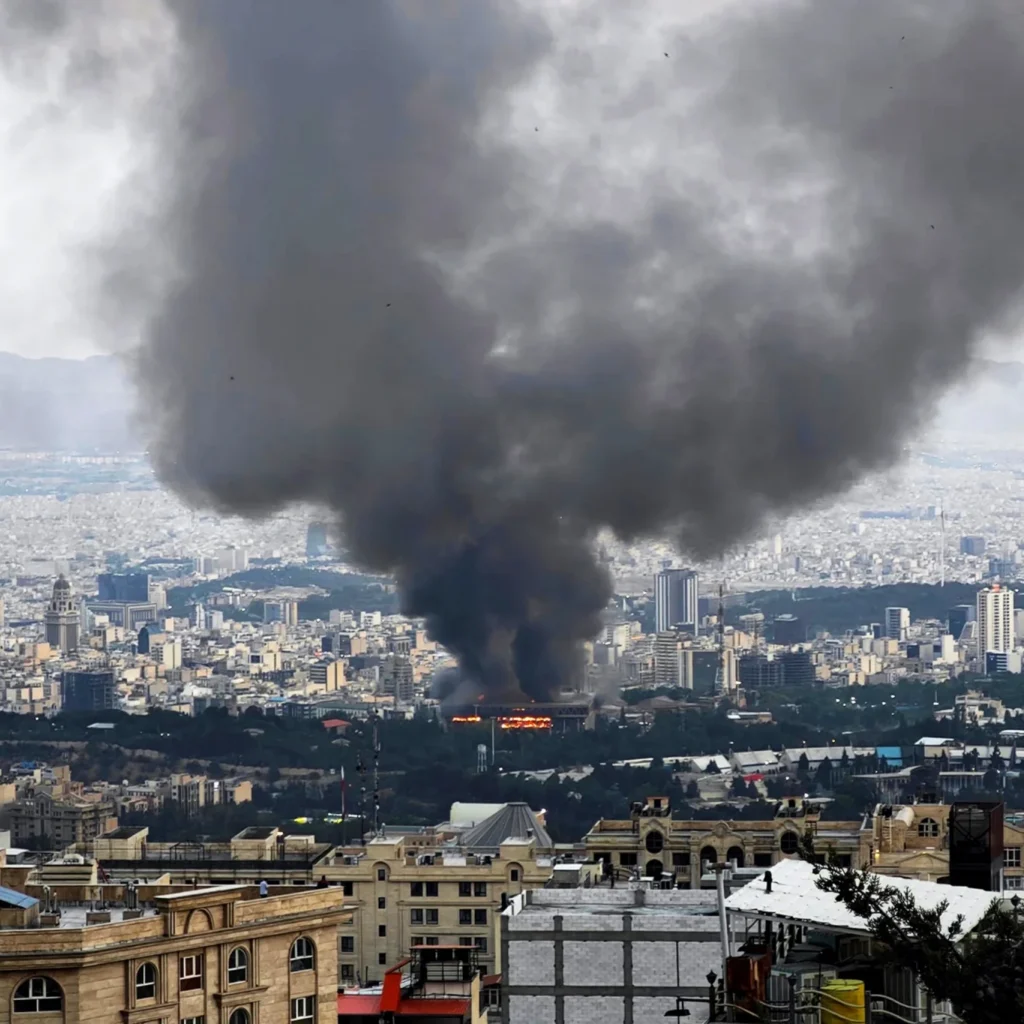
Iran has launched a fresh wave of attacks on United States military facilities across the Middle East after a sixth consecutive night of American airstrikes on Iranian military targets, escalating fears of a wider regional conflict and renewed disruption to global energy supplies.
According to Reuters, Iran said it targeted US facilities in Bahrain, Kuwait and, for the first time, a US command centre in Syria in retaliation for continued American attacks on its military infrastructure.
The US Central Command confirmed it carried out another round of precision strikes overnight, targeting military installations near Bandar Abbas and on Qeshm Island. Washington said the operation hit dozens of Iranian military assets, including coastal surveillance systems, air defence sites, logistics infrastructure and maritime capabilities aimed at weakening Tehran’s military capacity.
Iranian state media reported that seven people were killed after US strikes hit bridges in the southern port city of Bandar Khamir, while another civilian was reportedly killed in Pasabandar near Chabahar. Reuters said it could not independently verify the casualty reports.
In Qatar, authorities said a child was injured by shrapnel after explosion-like sounds were heard in the capital, Doha, during the latest exchange of attacks.
Iran also claimed its Revolutionary Guards struck a US special operations command centre at al-Tanf in Syria, marking the first direct Iranian attack on Syrian territory since the conflict intensified. Tehran said the strike was in retaliation for the deaths of Iranian soldiers in Iranshahr.
The latest escalation has once again severely disrupted shipping through the Strait of Hormuz, a vital route for global oil and gas exports. Tehran has resumed its blockade of the strategic waterway, while the United States has tightened restrictions on Iranian ports.
The growing tensions have pushed oil prices higher and renewed concerns about inflation and the impact on the global economy. Reuters also reported that Iran has warned it could encourage Yemen’s Houthi movement to close the Bab al-Mandeb Strait if Washington attacks additional Iranian infrastructure.
Despite the escalating hostilities, the White House said President Donald Trump remains open to diplomacy while insisting the United States would respond to attacks on international shipping and regional security.
One Tehran resident told Reuters that living under the constant threat of war had become exhausting and urged both sides to return to negotiations.
The renewed fighting follows the collapse of a truce reached last month, with both sides now engaged in daily military exchanges that have heightened instability across the Middle East.
Inside Iran, residents expressed growing anxiety over the renewed conflict.