

/ May 18, 2026
/ May 18, 2026

Heatwave: Firefighters tackle wildfires in Portugal

Published on

By

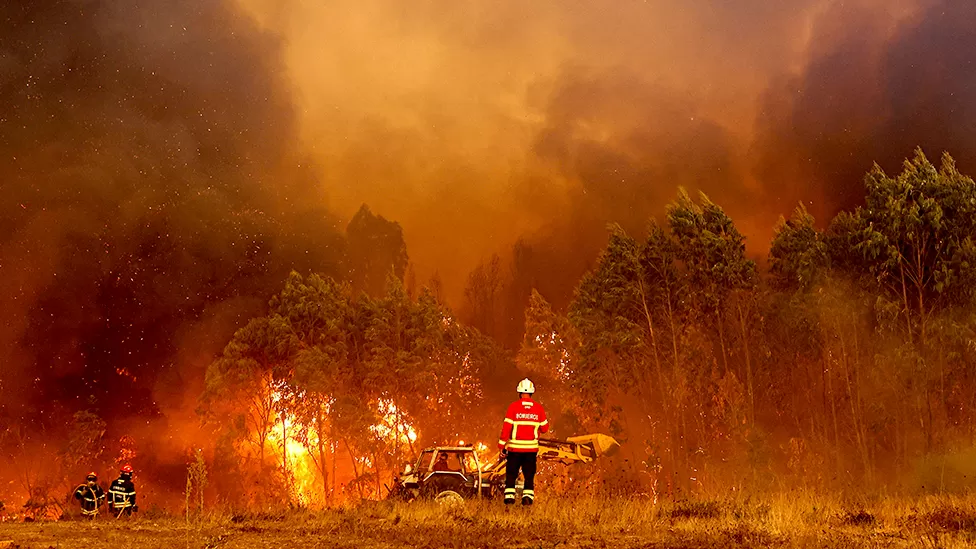
Firefighters in Portugal are battling to contain wildfires engulfing thousands of hectares amid soaring temperatures.

Around 800 personnel attended a fire near the southern town of Odemira overnight on Monday, with more than 1,400 people having to evacuate.

At least nine firefighters have been injured tackling the fires.

Temperatures in excess of 40C (104F) are expected to hit much of the Iberian peninsula this week.

Three major fires that scorched hundreds of hectares in Spain over the weekend have been brought under control, but weather alerts remain in place across much of the country.

Read More: Three killed in fire fighting helicopter crash

In Portugal, Monday saw a temperature of 46.4C (116F), the hottest of the year so far, recorded in Santarém.

The fire near Odemira began on Saturday and was driven south into the hilly interior of the Algarve, Portugal’s main tourism region, by strong winds.

It has so far destroyed some 6,700 hectares (16,600 acres) of land, while a total of 19 villages, four tourist accommodations and a camping site have been evacuated.

The town’s mayor, Helder Guerreiro, has said the situation is “critical, difficult, and complex”.

In the centre of the country, other major fires prompted the closure of several stretches of motorway, including parts of the A1 between Lisbon and Porto.

Sixteen waterbombing aircraft have been deployed to support firefighting efforts across the two areas.

Authorities have declared more than 120 municipalities across Portugal at maximum risk of wildfires.

In Spain, fires near the south-western coastal cities of Cadiz and Huelva and in the northern Catalonia region scorched more than 1,000 hectares (2,470 acres) in total on Saturday and Sunday.

This week’s heatwave will mark the third to hit the Iberian peninsula this summer.

Ruben del Campo of Spain’s State Meteorological Agency told Reuters it was being caused by a large mass of hot, dry air from North Africa and would be “generally more intense, more widespread and a little longer-lasting” than the two that hit in July.

Climate change increases the risk of the hot, dry weather that is likely to fuel wildfires.

The world has already warmed by about 1.1C since the industrial era began and temperatures will keep rising unless governments around the world make steep cuts to emissions.


You May Like

Leave a Reply

Your email address will not be published. Required fields are marked *

Most Popular

Must Read

DAPPMAN warns over Dangote refinery lawsuit challenging fuel import licences issued by NMDPRA, raising concerns about Nigeria’s downstream fuel supply stability.

DAPPMAN warns as Dangote refinery sues FG over import licences

Depot and Petroleum Products Marketers Association of Nigeria (DAPPMAN) has raised concerns over a legal action by the Dangote Petroleum Refinery challenging fuel import licences issued to marketers and the Nigerian National Petroleum Company (NNPC Limited), warning it could destabilise Nigeria’s downstream petroleum sector, according to reporting by TheCable. The dispute follows a decision by the Nigerian Midstream and Downstream Petroleum Regulatory Authority (NMDPRA) on March 25 to ease petrol import restrictions by issuing new import licences to marketers to bridge supply gaps. However, the Dangote Petroleum Refinery later filed a suit at the Federal High Court in Lagos, seeking to void the licences. The refinery argues that the approvals breach a prior court order and violate provisions of the Petroleum Industry Act, which it says allows imports only when domestic supply is insufficient. In response, DAPPMAN said the licences are essential legal instruments that sustain Nigeria’s fuel supply chain and ensure energy security. The association stressed that members had invested heavily in depot infrastructure and logistics based on the validity of the licences. It warned that attempts to retroactively cancel them could introduce uncertainty into the downstream sector and disrupt operations. While acknowledging the refinery’s right to seek legal redress, DAPPMAN maintained that regulatory responsibility to guarantee adequate fuel supply must not be undermined by private commercial interests. The association added that Nigeria’s downstream market depends on multiple participants operating competitively, cautioning that restricting access could ultimately affect consumers. The development highlights rising tensions over fuel import regulation, domestic refining capacity, and market competition in Nigeria’s petroleum sector.
Read more

Editor's Pick

Trending News

Newsletter

Enter your email address and receive notifications of news by email.

You have been successfully Subscribed! Ops! Something went wrong, please try again.

© 2026 GongNews. All Rights Reserved.