
/ Nov 24, 2026
/ Nov 24, 2026

Mother told children to leave her, get help, in Colombia plane crash

Published on

By

The mother of four children rescued after 40 days in the Amazon jungle was alive for four days after their plane crashed.

Magdalena Mucutuy told her children to leave and find help as she lay dying.

Speaking to reporters, the children’s father, Manuel Ranoque, said his eldest daughter told him their mother urged them to “get out” and save themselves.

The siblings, aged 13, nine, five, and one, were rescued and airlifted out of the jungle on Friday.

They were moved to a military hospital in the nation’s capital, Bogota.

“The one thing that [13-year-old Lesly] has cleared up for me is that, in fact, her mother was alive for four days,” Mr. Ranoque told reporters outside the hospital.

“Before she died, their mom told them something like, ‘You guys get out of here. You guys are going to see the kind of man your dad is, and he’s going to show you the same kind of great love that I have shown you,” he said.

Details have been emerging about the children’s time in the jungle and their miraculous rescue, including the first things the children said when they were found.

Rescue worker Nicolás Ordóez Gomes recalled the moment they discovered the children.

“The eldest daughter, Lesly, with the little one in her arms, ran towards me. Lesly said, ‘I’m hungry,'” he told public broadcast channel RTVC.

“One of the two boys was lying down. He got up and said to me, ‘My mom is dead.'” He said rescuers responded with “positive words, saying that we were friends and that we were sent by the family”.

Mr. Ordóez said the boy replied, “I want some bread and sausage.”

The children are members of the Huitoto indigenous group, and their grandfather told Colombian media that their knowledge of edible fruit and seeds had been key to their survival.

The eldest child, 13-year-old Lesly, has been credited with keeping her siblings alive.

Henry Guerrero, an indigenous man who was part of the team that finally located the children, said they managed to build a small shelter.

“They had made a small tent from a tarpaulin and placed a towel on the ground. They always stayed near the river, and she only carried a small soda bottle, which she used to fill with and carry water.”

In footage released on Sunday of the children’s rescue, the four siblings appeared to be emaciated from the weeks they spent fending for themselves in the wilderness.

Mr. Guerrero said that “the only thing they had in mind was to eat, eat”, when they were found. “They wanted to eat rice pudding; they wanted to eat bread,” he said.

Ms. Mucutuy and her children had been travelling on the Cessna 206 aircraft from Araracuara, in Amazonas province, to San José del Guaviare on May 1.

Their plan was to join the children’s father, who had fled their home after receiving threats from a rebel group.

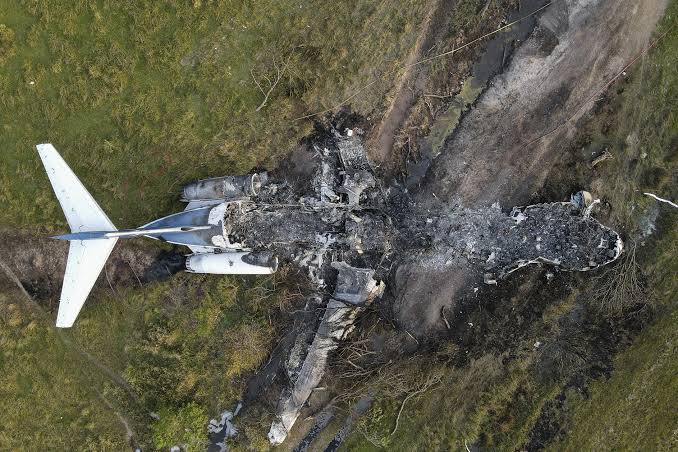
The plane crashed nose-first into dense jungle in the south of Colombia after experiencing engine failure. It took search teams two weeks to locate the wreckage.

The bodies of the adults on board—the children’s mother and the two pilots—were found at the crash site by the army, but it appeared that the children had wandered into the rainforest to find help.

The missing children became the focus of a huge rescue operation involving more than 100 soldiers, local indigenous people, and sniffer dogs.

The search teams repeatedly spotted signs in the jungle, including footprints and fruit that had been bitten into, which led them to believe the children had survived the crash.

Helicopters flew over the area, broadcasting a recorded message from their grandmother in the Huitoto language, urging them to stay put to make it easier to locate them.

The children told their rescuers that they had heard the helicopters and the message.

They were finally located on Friday in a small clearing by a team of rescuers who had heard one of the siblings crying. “When we found them, it was really a great happiness,” Mr. Guerrero said, describing the moment.

Their grandfather, Fidencio Valencia, said they were “very weakened; they have small wounds and bruises; they have illnesses that they contracted in the jungle; but overall, they’re well; they’re in good hands”.

He added that a bag of cassava flour the children had found on the plane had sustained them for the first few weeks.

They are being treated in the hospital for malnutrition and dehydration and have been visited by their family and members of the search operation.

The Colombian military tweeted drawings the children had painted, one of which shows a sniffer dog known as Wilson.

Wilson, who lost contact with his handlers, is thought to have tracked the children down and spent some time with them in the jungle but is now unaccounted for.

The Colombian military said it would continue searching for the dog, assuring Colombians in a tweet that “we leave no one behind”.

You May Like

Leave a Reply

Your email address will not be published. Required fields are marked *

Most Popular

Must Read

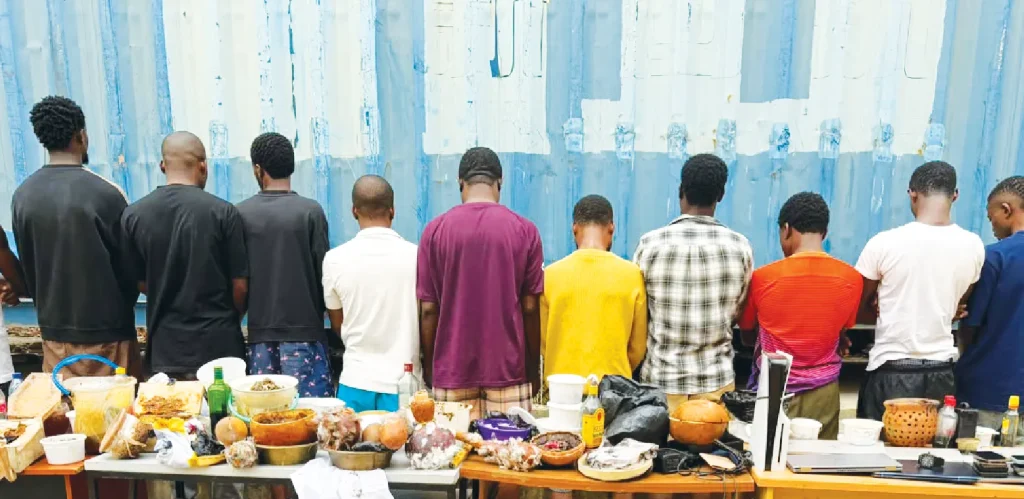
Police uncover child trafficking ring in Imo, rescue 12 minors

NEC approves fresh ₦130bn for police training, $850m projects

The National Economic Council (NEC) has approved an additional ₦130 billion for the rehabilitation of police training institutions across Nigeria, while endorsing two World Bank-backed development projects valued at $850 million.   The decisions were reached on Monday during the council’s 162nd meeting, held virtually and presided over by Vice President Kashim Shettima. The latest approval brings total committed funding for the police training rehabilitation programme to ₦230 billion, following an initial ₦100 billion allocation authorised after President Bola Tinubu recommended the establishment of an intervention committee in October 2025. Enugu State Governor Peter Mbah, who chairs the NEC Ad-Hoc Committee on the Rehabilitation of Police Training Institutions, told the council that construction work was ongoing at 13 locations nationwide, with about 30 per cent of the work completed. According to the committee, the additional funding will accelerate infrastructure upgrades to support the planned recruitment and training of 50,000 new police personnel ahead of the anticipated introduction of state policing. NEC Endorses $850m World Bank Projects In a separate resolution, the council approved two memoranda presented by the Minister of Budget and Economic Planning, Atiku Bagudu, involving proposed World Bank financing of $850 million. The first is the $350 million Accelerating Resilience through Investment Systems and Engagement (ARISE-Nigeria) Project. The six-year programme is designed to strengthen federal and state governments’ capacity to manage natural disasters, including floods, droughts and fires. Between five and 10 states will participate in the initial phase, based on their exposure to disaster risks and institutional readiness. The second initiative is the State-Led Early Childhood Development Programme, backed by proposed World Bank financing of $500 million and a potential $30 million grant from the Global Financing Facility. The programme aims to integrate primary healthcare, childcare and preschool services across all 36 states and the Federal Capital Territory. Nigeria’s Economy Records Growth Briefing the council on the economy, the Minister of Finance and Coordinating Minister of the Economy, Taiwo Oyedele, reported improvements in several macroeconomic indicators. He said Nigeria’s real Gross Domestic Product grew by 4.43 per cent in the second quarter of 2026, compared with 4.23 per cent during the corresponding period in 2025. Headline inflation also declined for the fifth consecutive month to 14.06 per cent in October 2026, its lowest level since September 2020. The country’s external reserves stood at $54.87 billion as of November 12, 2026. Oyedele further disclosed that Nigeria’s trade surplus nearly doubled from ₦10.2 trillion in the first half of 2025 to ₦20.1 trillion in the corresponding period of 2026. Net revenue distributed through the Federation Account Allocation Committee (FAAC) also increased by 44 per cent, rising from ₦15.2 trillion in 2024 to ₦21.9 trillion in 2025. However, he cautioned that the improvements had yet to translate into sufficient relief for households and businesses. He identified persistent food inflation, which stood at 19.13 per cent in October, alongside high lending rates and energy costs, as continuing economic challenges. NEC Addresses NIN Integration, Pension Reforms The council also discussed national identity management and pension administration. Members urged state governments to collaborate with the National Identity Management Commission (NIMC) under the proposed NIMC Act 2026 to accelerate citizen registration and integrate the National Identification Number (NIN) into public services. The initiative is expected to help address payroll and pension fraud. Following a presentation by the Director-General of the National Pension Commission (PenCom), Omolola Oloworaran, NEC also urged state governors to establish clear timelines for the full implementation of the Contributory Pension Scheme. Earlier, Vice President Shettima called on ministries and state governors to strengthen institutions capable of sustaining the Federal Government’s economic reforms. He emphasised the importance of cooperation between federal and state governments, as well as citizen participation in development programmes. Shettima said investments such as the ARISE-Nigeria project were important in protecting vulnerable households and businesses against economic shocks. He added that people affected by government interventions should have opportunities to contribute to decisions shaping such programmes.
Read more

Editor's Pick

Trending News

Newsletter

Enter your email address and receive notifications of news by email.

You have been successfully Subscribed! Ops! Something went wrong, please try again.

© 2026 GongNews. All Rights Reserved.