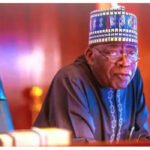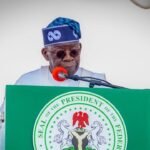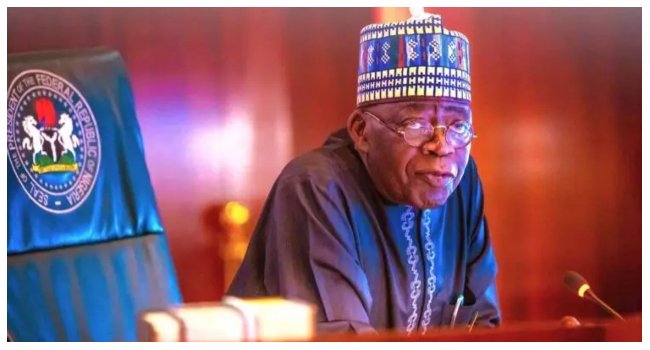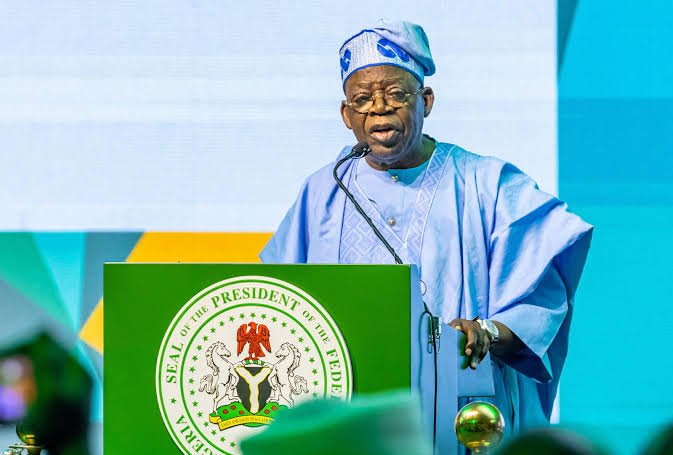

President Bola Tinubu has declared that Nigeria’s most difficult phase of economic reforms is over, saying the country has moved from an “age of reform” into an “age of prosperity”.
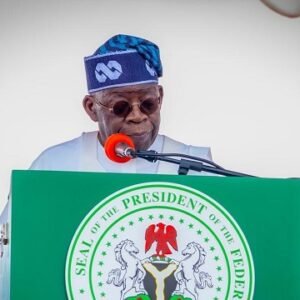
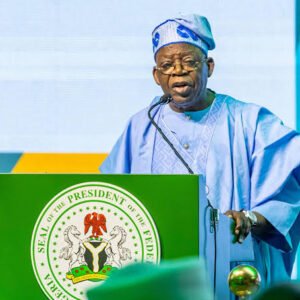
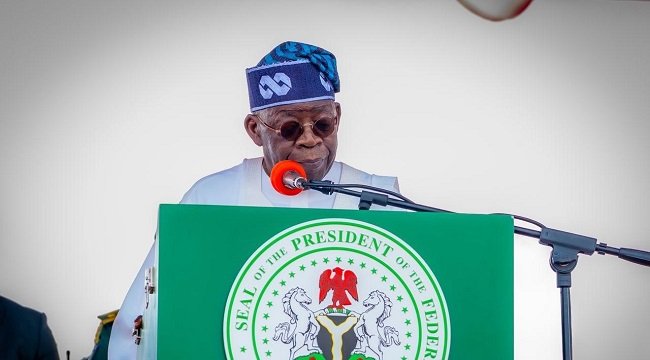
Tinubu made the declaration on Thursday in his Independence Day address to mark Nigeria’s 66th anniversary, themed “From Reform to Prosperity.”
The President defended his administration’s decision to remove petrol subsidies and reform the foreign exchange market, arguing that the measures were necessary to address long-standing economic weaknesses.
He compared Nigeria’s economic situation before the reforms to a cancer patient who had to choose between painful treatment and temporary relief.
“For too long, Nigeria’s leaders chose morphine while praying for a miracle that never came,” Tinubu said in the address.
Tinubu warns against subsidy return
The President also criticised calls for a return to petrol subsidies, urging Nigerians to reject what he described as a “siren song” to reverse the policy.
“Now, as certain influential but regressive voices would have us abandon the treatment and return ourselves to the abuse of addictive subsidies, we must resist their siren song,” he said.
Tinubu said his administration’s reforms did not create Nigeria’s economic weaknesses but confronted problems that had been left unresolved by previous governments.
He said the reforms had helped produce stronger economic indicators, claiming that Nigeria’s economy had grown by more than four per cent in 2026, while inflation had fallen from its peak, foreign reserves had been rebuilt and the foreign exchange market had stabilised. He also said non-oil export revenue exceeded $6bn in 2025.
PUNCH separately reported that the Federal Government cited real GDP growth of 4.2 per cent in the first half of 2026 as evidence of improving economic conditions.
‘Emergency treatment is over’
Tinubu said the government’s economic priorities had now shifted from stabilisation and reform to delivering broad-based prosperity.
“The emergency treatment is over. The foundation has been repaired,” he said.
According to the President, the next phase will focus on making prosperity visible in the daily lives of Nigerians through improved agricultural production, reliable electricity, easier access to credit, productive employment and more affordable food and transportation.
He said the government would expand mechanised irrigation and dry-season farming, improve access to seeds and fertiliser, invest in storage and transport infrastructure, and strengthen links between farms, factories and markets.
Tinubu promises jobs and industrial growth
The President also placed jobs, enterprise and industrial expansion at the centre of the next phase of his administration.
He said the government would use Nigeria’s gas resources to power industries, support the revival of factories, expand digital connectivity and invest in skills required by employers.
“I want to see more Nigerians making things,” Tinubu said, adding that he wanted Nigerian businesses to produce for domestic consumption and export to international markets.
The President also highlighted support programmes including the Nigerian Education Loan Fund and CREDICORP, saying they were intended to provide opportunities and financial support for Nigerians who could not wait for longer-term economic improvements.
He said the government was also strengthening the National Social Register to improve support for vulnerable households.
Cost of living remains a major issue
Tinubu acknowledged that millions of Nigerians continue to struggle with food costs, school fees, healthcare expenses and transportation.
He said the government’s approach would be to reduce the cost of producing and moving goods rather than relying solely on direct interventions.
“When a farmer produces more cheaply, when fewer crops are lost between the farm and the market, when a manufacturer spends less on electricity, when a truck reaches its destination faster, and when the business environment fosters fair competition, all those savings will ultimately find their way into the price of goods in the market,” he said.
However, economists, while acknowledging improvements in some macroeconomic indicators, said Nigeria still faced significant challenges involving poverty, unemployment, insecurity and weak productivity.
Tinubu acknowledged that the government could not erase in four years problems that had accumulated over decades, but said his administration could change the country’s economic direction.
“We will defeat” poverty, he said, while acknowledging that achieving the goal would require sustained economic growth and the creation of millions of productive opportunities.
The President ended his Independence Day address by declaring that Nigeria had “corrected its course” and urged Nigerians to move forward without looking back.
“The age of reform has done its work. Now begins the age of prosperity,” Tinubu said.