
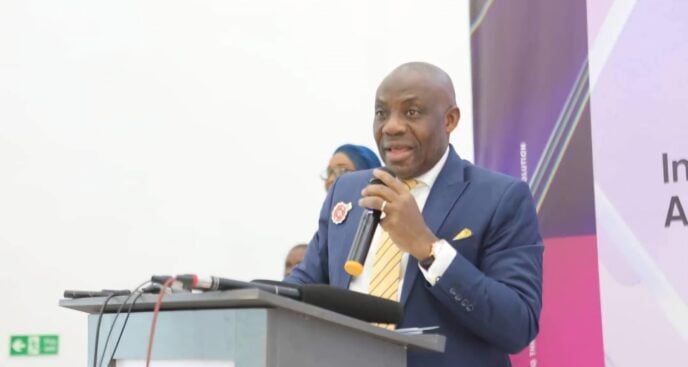
Nigeria’s Minister of Education, Tunji Alausa, has disclosed that the North-West and North-East regions continue to record the country’s lowest literacy and numeracy levels despite receiving 80 per cent of education donor funding over the past decade.
Alausa made the disclosure on Monday during the Education World Forum in London, where he met with education ministers and global stakeholders to discuss Nigeria’s foundational learning reforms.
According to a statement issued by his Special Adviser on Media and Communication, Ikharo Attah, the minister said recent education data revealed serious concerns about the effectiveness of donor funding allocation.
“NEDI data revealed a key issue: 80% of donor funds in the last decade went to the North-West and North-East, yet those zones still have the lowest literacy and numeracy rates. We now have the data to redirect resources where they deliver results,” he said.
Alausa explained that the Federal Government has now unified foundational literacy delivery under a national standard covering both formal and non-formal education systems.
He said the government is scaling the RANA programme for Primary 1 to 3 pupils and the Teaching at the Right Level initiative for Primary 4 to 6 pupils across 15 states through the Universal Basic Education Commission.
According to him, the programmes rely on structured lesson plans, weekly teacher coaching, and regular assessments to improve learning outcomes.
The minister also highlighted the Accelerated Basic Education Programme developed by the Nigerian Educational Research and Development Council, stating that it enables out-of-school children and adolescents to achieve foundational literacy and numeracy within three years.
He noted that both formal and non-formal education systems now report into the National Education Data Initiative, allowing authorities to monitor nationwide education coverage through a single dashboard.
Speaking on Nigeria’s out-of-school children crisis, Alausa said the Accelerated Basic Education Programme provides pathways for children outside the formal school system to transition into junior secondary education.
He added that state Universal Basic Education Board officials supervise both formal schools and ABEP centres across 15 states using the same learning materials and coaching tools.
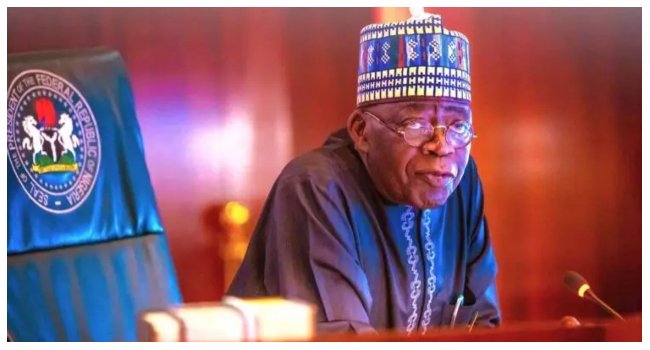
The minister further stated that foundational literacy and numeracy have become central to President Bola Tinubu’s Renewed Hope agenda.
He said the government is finalising a national policy on foundational literacy and numeracy to establish a sustainable legal and institutional framework for reforms across federal, state, and non-formal education systems.
Alausa also revealed that 70 per cent of funding under Nigeria’s Partnership Compact with the Global Partnership for Education is tied to measurable outcomes in learning, teacher management, and data usage.
He added that the Federal Government plans to increase the Universal Basic Education Commission’s share of the consolidated revenue fund from two per cent to four per cent.