


Nigeria’s total public debt may hit N118.37tn in the next three years, findings by reporters have shown.
The figure was based on analysing Nigeria’s current debt profile and the debt projections in the Medium Term Expenditure Framework and Fiscal Strategy Paper 2024-2026.
According to the new MTEF/FSP, the Federal Government plans to take N26.42tn loans between 2024 and 2026.
The fiscal policy also indicates that debt servicing will gulp N29.92tn in three years.
The data show that the national government plans to borrow N7.81tn in 2024, slightly less than the N8.84tn targeted for the same year in the previous MTEF/FSP.
A breakdown for 2024 shows that the Federal Government plans to get N6.04tn from domestic lenders and N1.77tn from foreign creditors.
By 2025, the Federal Government plans to borrow N8.54tn, which is also less than the N10.62tn targeted for the same year in the previous MTEF/FSP.
A breakdown for 2025 showed that the Federal Government plans to get N6.42tn from domestic lenders and N2.12tn from foreign creditors.
The Federal Government plans to borrow N10.07tn by 2026, which consists of N8.94tn domestic loans and N1.13tn external debt.
Based on our analysis, the Federal Government is reducing its appetite for foreign loans to focus more on borrowing from domestic lenders.
Reporters also found that the country had borrowed about N5.05tn between January and June from its N9.62tn borrowing plan for 2023, which means that the Federal Government will likely still borrow at least N4.57tn more this year.
The Debt Management Office recently said Nigeria’s total public debt hit N87.38tn at the end of the second quarter.
The figure represents an increase of 75.29 per cent or N37.53tn compared to N49.85tn recorded at the end of March 2023.
The increase was primarily due to the N22.7tn Ways and Means Advances of the Central Bank of Nigeria to the Federal Government and the naira devaluation that added about N13.38tn to the external debt figure.
With an N87.38tn debt as of June 2023, the likelihood of N4.57tn new debt before the end of this year, and a plan to borrow N26.42tn in three years, Nigeria’s total public debt is expected to hit and even exceed (due to subnational borrowing) N118.37tn by the end of 2026.
Despite the rising debt, the Federal Government has insisted that it will stick to its borrowing plan.
Over the years, Nigeria’s low revenue generation has pushed the government to borrow more.
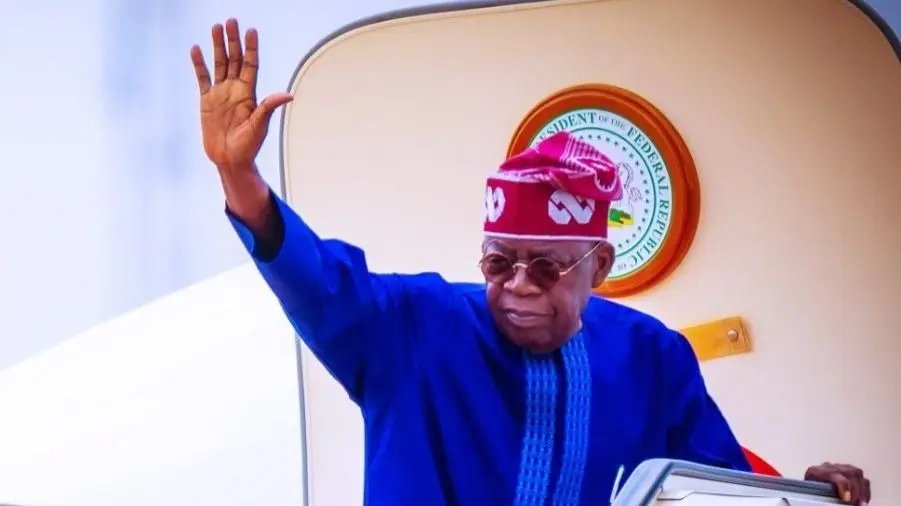
However, President Bola Tinubu recently expressed his administration’s commitment to breaking the cycle of overreliance on borrowing for public spending and the resultant burden of debt servicing it placed on the management of limited government revenues.
Tinubu recently said the country could not continue to service its debt with 90 per cent of its revenue.
He noted that the country was heading for destruction if that continued.
The President said, “Can we continue to service external debts with 90 per cent of our revenue? It is a path to destruction. It is not sustainable. We must make the very difficult changes necessary for our country to get (wake) up from slumber and be respected among the world’s great nations.
“To build a great nation, we must make bold decisions; even though it may be painful, it is not about you and me. It is about generations yet unborn.”
However, the Federal Government said although it could not keep borrowing, it would still maintain its borrowing plan.
Recently, the Minister of Finance and Coordinating Minister for the Economy, Wale Edun, while unveiling an eight-point agenda for the economy, said, “The government is not in a position to borrow if you consider 90 per cent debt service to revenue, and behind that, a rising debt to GDP ratio. If you look at the last budget, you will see a borrowing requirement built into it and appropriated by the National Assembly. And that is ongoing.”
Debt servicing
The rising debt has led to an increasing cost of debt servicing over the years for the Federal Government.
The World Bank recently projected that debt servicing would gulp 123.4 per cent of the Federal Government’s revenue in 2023.
The Federal Government has already spent 75.92 per cent of its aggregate revenue on debt servicing between January and July 2023.
The MTEF/FSP 2024-2026 showed that the Federal Government had an aggregate revenue of N5.19tn in the first seven months of 2023 but spent N3.94tn on debt servicing within the same period.
The document added, “The aggregate expenditure for FY 2023 is estimated at N21.83tn, with a pro-rata spending target of N12.29tn at the end of July. The actual spending was N8.60tn. Of this amount, N3.94tn was for debt service, and N2.68tn for personnel costs, including pensions. Only about N857.08bn (25 per cent of the pro-rata budget) has been released for MDAs’ capital expenditure as of July 2023.”
Read Also:
Poverty: Peter Obi says I will pull millions of multidimensionally poor Nigerians out
The debt servicing cost breakdown showed that the Federal Government spent N1.71tn on domestic debt, N530.48bn on external debt, and N1.7tn on interests on ways and means advances.
The Federal Government spent N109.99bn more than its debt servicing budget of N3.83tn for the period under review.
An analysis by reporters also shows that debt servicing will gulp about N29.92tn in three years.
The MTEF/FSP 2024-2026 shows that the Federal Government’s debt servicing bill will cost N8.25tn in 2024, N10.06tn in 2025 and N11.61tn in 2026.
Capital expenditure
The total debt servicing costs would exceed what the country plans to spend as capital expenditure in three years by N8.41tn.
The Federal Government has a total projection of N21.51tn for aggregate capital expenditure, which consists of N6.87tn in 2024, N7.31tn in 2025, and N7.33tn in 2026.
The previous administration had claimed that the Federal Government had to borrow to finance infrastructure.
However, despite the huge infrastructural deficit in the country, the Federal Government has continued to spend more on debt service than capital expenditure.
The MTEF/FSP 2024-2026 showed that only N857.08bn was spent on capital expenditure between January and July 2023, while debt servicing gulped N3.94tn within the same period.
The World Bank recently described Nigeria’s infrastructure level and quality as low, despite the Federal Government’s claim to have borrowed to finance infrastructure.
In its Nigeria public finance review report, the World Bank said Nigeria’s physical infrastructure gap would likely reach $3tn in the next 30 years.
The Federal Government, however, noted the need for higher revenue to meet up with its capital expenditure obligation.
“Higher revenue collections would enable the government to deliver public services more effectively, enhance infrastructure investment, improve investment in human capital booster establish fiscal buffers,” the MTEF/FSP 2024-2026 noted.
The country’s debt had crossed the Total Public Debt to the Gross Domestic Product ratio of 40 per cent.
The MTEF/FSP 2024-2026 put the country’s Total Public Debt/GDP at 41.15 per cent as of June 2023.
It was, however, noted that an “approval for an increase is in process”, which would allow the Federal Government to acquire more borrowing within its stipulated debt threshold.
In the document, the Federal Government admitted that there had been a significant increase in public debt over the years due to inadequate revenues and the need to finance budget deficits.
The Federal Government also claimed to be concerned about the sustainability of Nigeria’s public debt.
The document read in part, “The sustainability of public debt remains a significant concern, as high debt servicing costs and limited fiscal space constrain the government’s ability to invest in critical sectors such as healthcare, education, and infrastructure.”
It added, “In the medium term, the Federal Government will adopt innovative ways to expand government’s fiscal space, diversify revenue sources, and raise the revenues required to finance its expenditure. The medium-term target is to increase the Public Revenue-to-GDP ratio to 15 per cent, up from about 10 per cent. It is expected that growth, in the medium term, will generate the revenue necessary for future expansion of public service delivery, rebuild fiscal space, and narrow new borrowing requirements.”
To ensure debt sustainability, the Federal Government planned to target cheaper and more flexible borrowing options.
“Government will explore cheaper and more flexible borrowing options to finance fiscal deficits,” the document noted.
The Federal Government further admitted that the increasing public debt had led to potential fiscal risks for the government, stressing the need for prudent debt management.
The MTEF/FSP 2024-2026 stated, “The rapid accumulation of public debt, with resultant high debt service costs, has created potential fiscal risks for the FGN. If not managed prudently, high debt levels can negatively impact FGN’s ability to fund essential expenditures.
“The probability of crystallisation of this risk is moderate, considering factors such as borrowing conditions and debt sustainability. To mitigate this risk, the FGN shall adopt a more prudent debt management strategy, enhanced debt transparency, strict adherence to fiscal rules, and overall improvement in public financial management.”
A political economist, Prof Pat Utomi, recently cautioned against fresh borrowings, saying, “It is not advisable to seek new loans.”
FG advised
He stressed that the country needed a thorough review of the current loans and how they had been utilised to ensure economic growth.
“The government has not shown enough discipline in how it has deployed borrowed money earlier,” Utomi added.
He called for a 50 per cent cut in the cost of governance and transparency in using borrowed funds to stir production and boost foreign exchange in the country.
The outgoing Resident Representative for the IMF in Nigeria, Ari Aisen, recently said the country’s economy could become stable without new IMF financing, urging the government to strengthen oil production and the tax base.
He said, “The Nigerian economy can aspire to stabilise without the IMF. It is certainly a sovereign decision of every member country to approach us in case of need. Let us not forget that oil prices are very supportive. The balance of payment is in a reasonable position. There are current account surpluses, meaning that the trade position is good. So, it is really a question of bringing more of this surplus into the economy. Making sure oil production benefits the economy is critical.
“Oil revenue and exports should benefit through an increased production of oil. That is part of why we believe that the government should actually re-double efforts to increase the oil sector’s intake. In parallel, revenue should also increase in the non-oil sector through better compliance. The compliance gap is very large in Nigeria. Very few are paying their dues. Those who pay may feel they are bearing the entire burden, so it is essential to broaden the tax base and include more taxpayers. In parallel, governance and good use of funds must accompany those increased tax payments so everyone feels more comfortable with the new reality.
“With a revenue-to-GDP ratio of eight per cent, it is tough to make a meaningful contribution to improve social indicators in Nigeria. There is an existential issue for the country, and I think the new administration is spot on in terms of conversations with the private sector on how everyone can start collaborating to boost revenue and provide public goods and services.”






https://t.me/s/iGaming_live/4864
https://t.me/s/officials_pokerdom/3366
https://t.me/s/dragon_money_mani/35