/ Oct 22, 2026
/ Oct 22, 2026

Tinubu sends bills to overhaul NDLEA, NSIB, replace ASCON

Published on

By

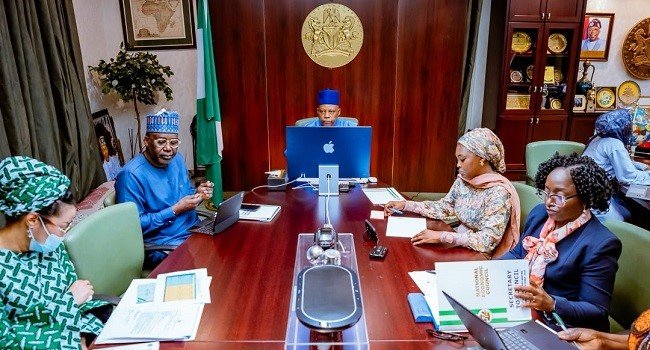
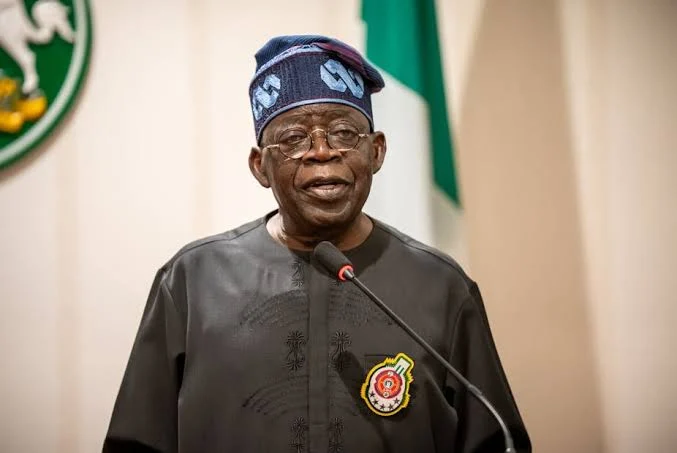
President Bola Tinubu has transmitted three executive bills to the House of Representatives seeking to overhaul Nigeria’s drug law enforcement framework, expand transport safety investigations and replace the Administrative Staff College of Nigeria (ASCON) with a National School of Government.


The bills, dated October 12, 2026, were conveyed in three separate letters received by the Office of the Speaker on October 13 and read by Speaker Tajudeen Abbas during plenary on Thursday.

According to PUNCH Newspapers, Tinubu transmitted the bills pursuant to Section 58(2) of the 1999 Constitution, as amended, and urged lawmakers to give them expeditious consideration.

The proposals cover the National Drug Law Enforcement Agency (NDLEA), the Nigerian Safety Investigation Bureau (NSIB) and the establishment of the National School of Government, Nigeria.

Tinubu Seeks New Legal Framework for NDLEA

The NDLEA Bill, 2026, seeks to repeal the existing National Drug Law Enforcement Agency Act, Cap N30, and the Indian Hemp Act, Cap 16, Laws of the Federation of Nigeria, 2004.

The proposed legislation would consolidate the laws into a single framework for tackling the cultivation, processing, sale, trafficking and use of hard drugs.

In his letter to the House, Tinubu said the bill would also empower the agency to investigate people suspected of involvement in drug-related activities.

The proposed changes are intended to bring provisions currently contained in separate laws under a unified legal instrument governing the agency’s operations.

The NDLEA is responsible for combating illicit drug production and trafficking, investigating drug-related offences and enforcing relevant laws.

The bill will require legislative scrutiny and approval before any changes to the existing legal framework can take effect.

NSIB to Expand Beyond Aviation Investigations

The second proposal, the NSIB Bill, 2026, seeks to amend the Nigerian Safety Investigation Bureau (Establishment) Act, No. 35 of 2022.

The amendment would expand the bureau’s responsibilities beyond aviation accidents and incidents to cover rail, maritime and other transport-related occurrences.

Tinubu said the proposed legislation would reposition the NSIB as an independent, multimodal safety investigation authority.

It would also transfer supervisory oversight to the Presidency and strengthen the bureau’s institutional, operational and administrative powers.

Established under the 2022 Act, the NSIB investigates accidents and incidents, identifies their causes and makes safety recommendations aimed at preventing similar occurrences.

If approved, the amendment would extend the bureau’s statutory responsibilities to additional transport sectors, bringing investigations involving railways and maritime transport within its mandate.

National School of Government to Replace ASCON

The third bill seeks to repeal the Administrative Staff College of Nigeria Act, Cap A4, Laws of the Federation of Nigeria, 2004, and establish the National School of Government, Nigeria.

According to Tinubu, the proposed institution would serve as a national centre for leadership development, policy delivery and executive capacity building.

The school is expected to focus on strengthening the capabilities of public officials and improving policy implementation across government.

ASCON has traditionally provided management training, research and consultancy services for public- and private-sector organisations, contributing to the development of administrators and managers.

The proposed replacement would establish a broader institutional framework for leadership training and executive capacity development within the public service.

If enacted, the National School of Government Bill would provide the legal foundation for the new institution and define its functions and administrative arrangements.

Bills Await Legislative Consideration

The three executive bills will now undergo the House of Representatives’ legislative process, including consideration by relevant committees.

Their transmission to the National Assembly marks the beginning of the legislative process. The proposals must secure legislative approval and satisfy the constitutional requirements for enactment before they can become law.

You May Like

Leave a Reply

Your email address will not be published. Required fields are marked *

Most Popular

Must Read

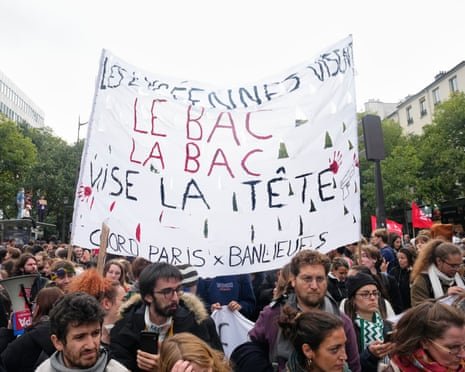
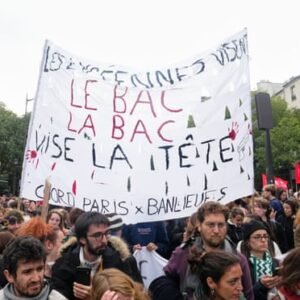
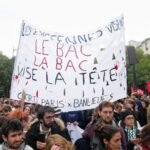
Protesters march during a demonstration in Paris, France, on October 6, 2026, amid nationwide protests over rising living costs and learning conditions.

Macron tightens security as France bans new protests

French authorities have imposed fresh restrictions on protests across the country following violent clashes, looting and vandalism that erupted during demonstrations over the rising cost of living.   President Emmanuel Macron announced the measures on Thursday, October 22, after meeting key ministers and intelligence officials. The restrictions include curfews and bans on demonstrations organised by what the government describes as groups without legitimacy. Macron said restoring calm was the government’s immediate priority, adding that he would chair another defence council meeting on Friday to determine how to respond to nationwide demonstrations planned for Saturday and beyond. He blamed organised far-left groups for the worst of last weekend’s violence, accusing them of attempting to undermine the French republic. France Tightens Protest Restrictions The latest measures follow clashes on October 17, when demonstrations involving more than half a million people against rising living costs were followed by widespread looting and damage to public buildings. The government has acknowledged that police lost control during the unrest, while political candidates seeking to succeed Macron in presidential elections expected in six months have questioned the authorities’ ability to restore order. In Paris, a student demonstration went ahead on Thursday after an emergency court overturned a police ban. Hundreds attended the rally, which followed four weeks of student protests before the October 17 demonstrations. Student leader Coppelia Moreau accused the authorities of attempting to distinguish between acceptable and unacceptable protesters, arguing that the restrictions threatened the right to demonstrate. Authorities in Lyon, France’s third-largest city, banned all protests scheduled for Saturday. The city experienced the looting of between 200 and 300 shops during last weekend’s unrest, while a tourist office was set on fire. Other cities, including Grenoble, Rouen, Le Havre and Toulon, also announced restrictions on demonstrations in their city centres. In Paris, police said a march planned for Saturday could proceed in the eastern part of the capital, beginning at Bastille, but would not be allowed to enter the city centre, where major public buildings and shops are located. The Yellow Vest movement, which has joined trade unions in organising the cost-of-living demonstrations, rejected the restrictions. Meanwhile, Art Basel Paris, the capital’s biggest art fair, announced that it would close two days earlier than scheduled because of the planned protests. France’s Interior Ministry said 20 per cent more police officers would be deployed on Saturday than during the previous weekend’s demonstrations. Arrests Rise as Government Seeks Dialogue The French government has promised a firm response to the violence, although Macron has ruled out declaring a state of emergency. Justice Minister Gerald Darmanin said on Thursday that 217 of the 2,700 people arrested during and since last weekend’s unrest had been detained, while another 1,000 were facing prosecution. Prosecutors also confirmed the arrest of a 66-year-old man over the arson attack on the 19th-century town hall in Limoges. Another man in his 30s had been arrested on Tuesday in connection with the same incident. The unrest has intensified political divisions ahead of the presidential elections scheduled for April and May. Marine Le Pen, the far-right leader who is topping opinion polls, accused Macron and his centrist government of being too weak in their response to the violence. Jean-Luc Mélenchon, a far-left presidential candidate who has faced criticism from the government over his response to the unrest, blamed what he described as the authorities’ continued use of excessive force. Prime Minister Sébastien Lecornu also began consultations with political leaders and other stakeholders in an effort to address the crisis. On Thursday, he met representatives of France’s major political parties, although Le Pen’s National Rally sent a lower-ranking official rather than a senior party leader. Lecornu was scheduled to meet mayors next, followed by discussions with student groups, trade unions and the employers’ federation on Monday. The government’s next steps are expected to be determined following Friday’s defence council meeting, as authorities prepare for further demonstrations across the country.
Read more

Editor's Pick

Trending News

Newsletter

Enter your email address and receive notifications of news by email.

You have been successfully Subscribed! Ops! Something went wrong, please try again.

© 2026 GongNews. All Rights Reserved.